Moon-Sugar

“This one brings you good news, my cats and kittens, tigers and tigresses—especially for everyone who loves moon-sugar! And that’s all of us, isn’t it, my lion-hearts, because admit it: nothing makes our tails twitch like a moon-sugar-glazed sweet roll!”

-“Moon-Sugar for Glossy Fur? Yes!” by Rathuni-la Dawnwhisker, The Elder Scrolls Online

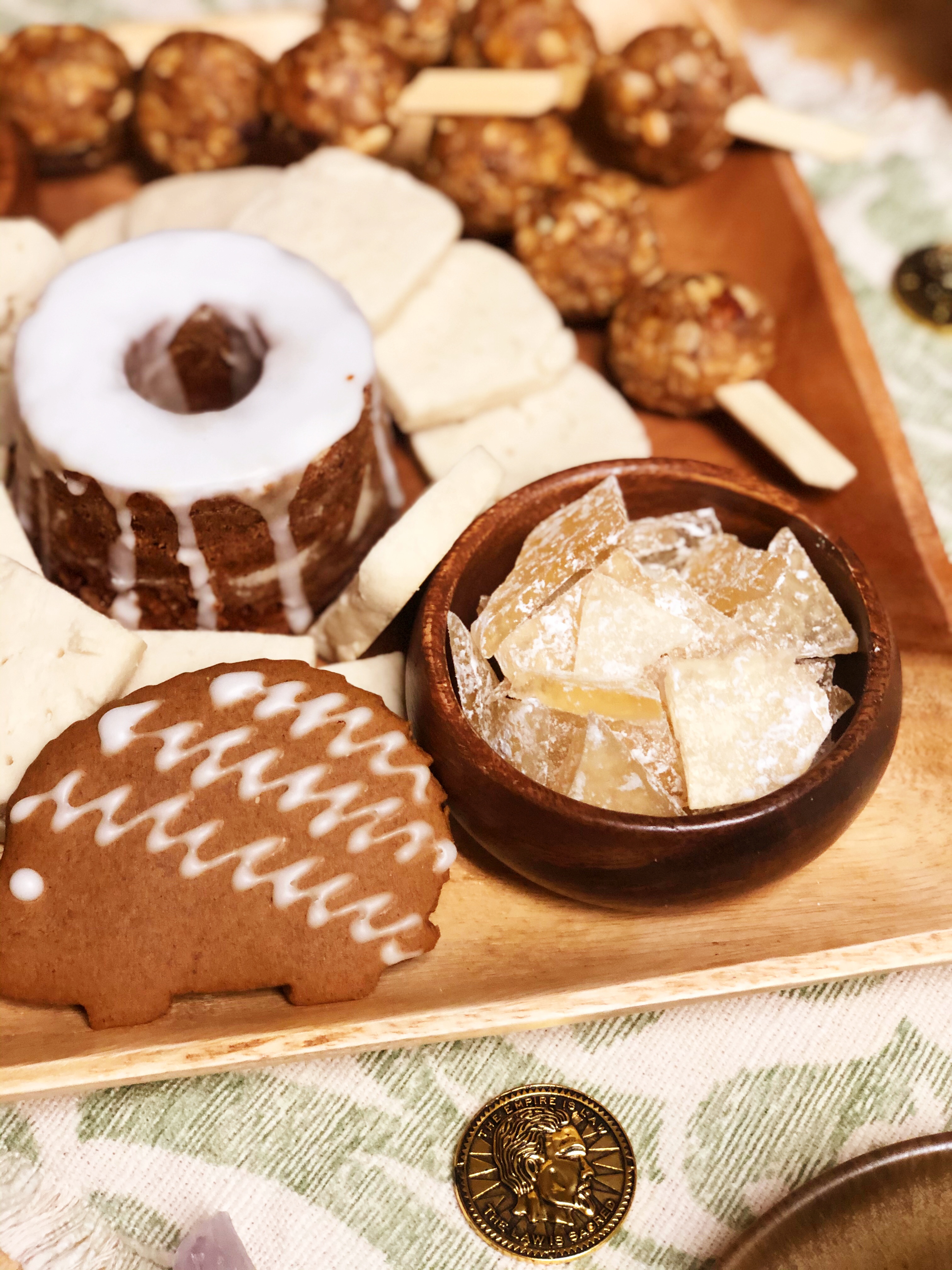
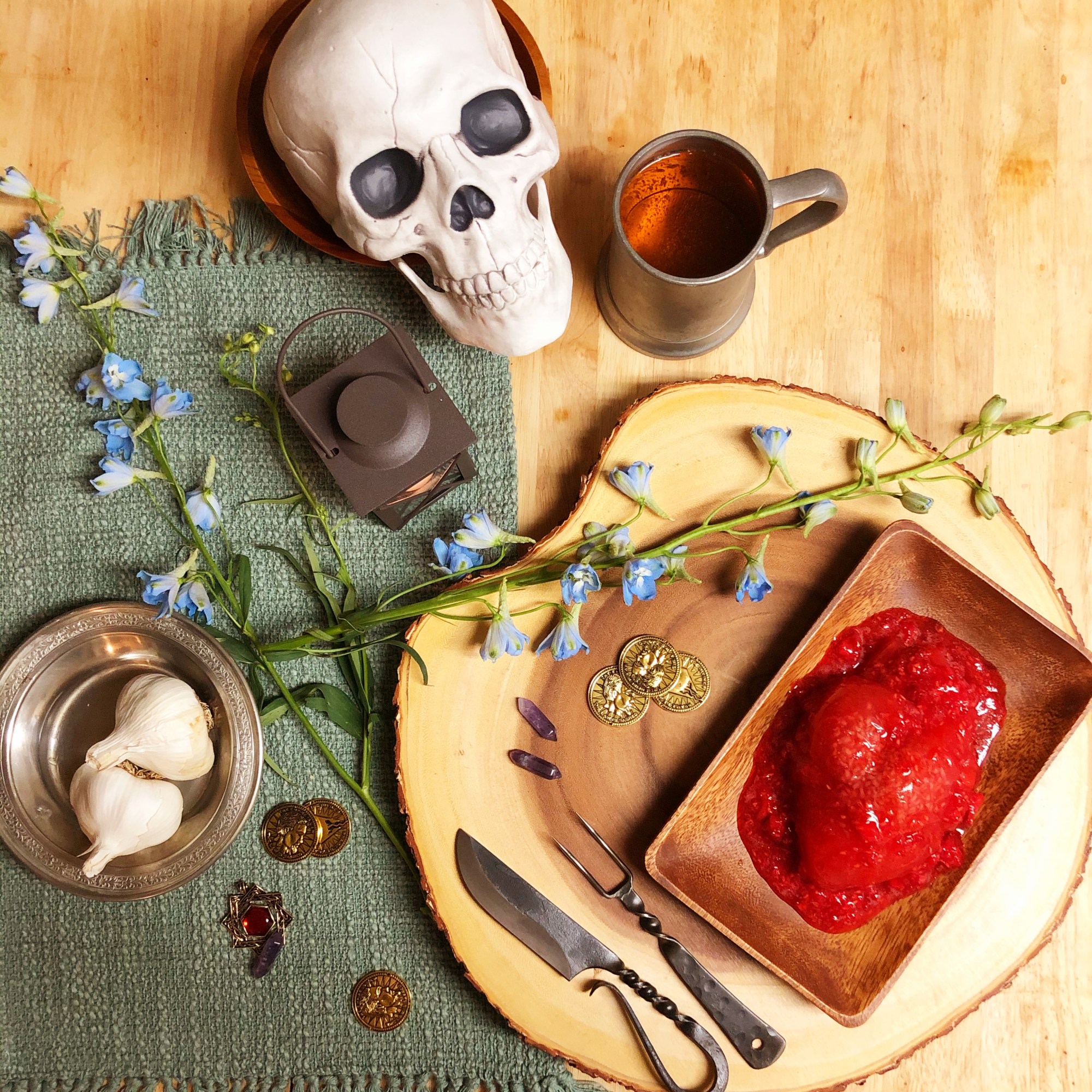
Creating edible alchemical ingredients is a special passion of mine, and there is none as iconic as Moon-Sugar. As a longtime fan of Khajiit, bringing this sugary treat to my holiday sweets smorgasbord was a must! When bringing fictional food to life, however, a Provisioner occasionally has to decide between two sometimes conflicting traits: should it taste as described, or look as shown? In the case of Moon-Sugar, creating a sweet treat that resembles a bowl of the ingredient was my primary purpose, with a secondary goal of creating a flavor that would suit an Elder Scrolls theme, while not behaving in the real world the way Moon-Sugar behaves in the video games. The candy we will be making is a hard candy often called “Shattered Glass Candy,” but with the slight change of using a herbal tea for flavoring and coloring.

To start, gather your ingredients. You will need 2 cups of granulated sugar, 3/4 cup of light corn syrup, 1/4 tsp Vanilla extract, and 1/2 cup strongly brewed herbal tea. I used a Citrus Lavender tea by Teavana, but you can really branch out and pick whichever tea sounds good to you! This tea created a soft yellow color that resembled the images of Moon-Sugar in Skyrim, which was one of the reasons why I picked it. If the color is not important to you, you could even substitute strongly brewed coffee! When steeping my tea I used two tea bags in a little over 1/2 cup of hot water and steeped it until the water had cooled. If you’re using herbal tea you can use this method, but if you decide to use any tea with actual tea leaves, I recommend using an extra tea bag and not steeping for more than five minutes, to avoid excess tannins causing bitter and astringent flavors in the tea.

As you prepare to make the Moon-Sugar, I also recommend wearing shoes and making sure no pets or small children can wander freely in the kitchen. You will be working with molten sugar!
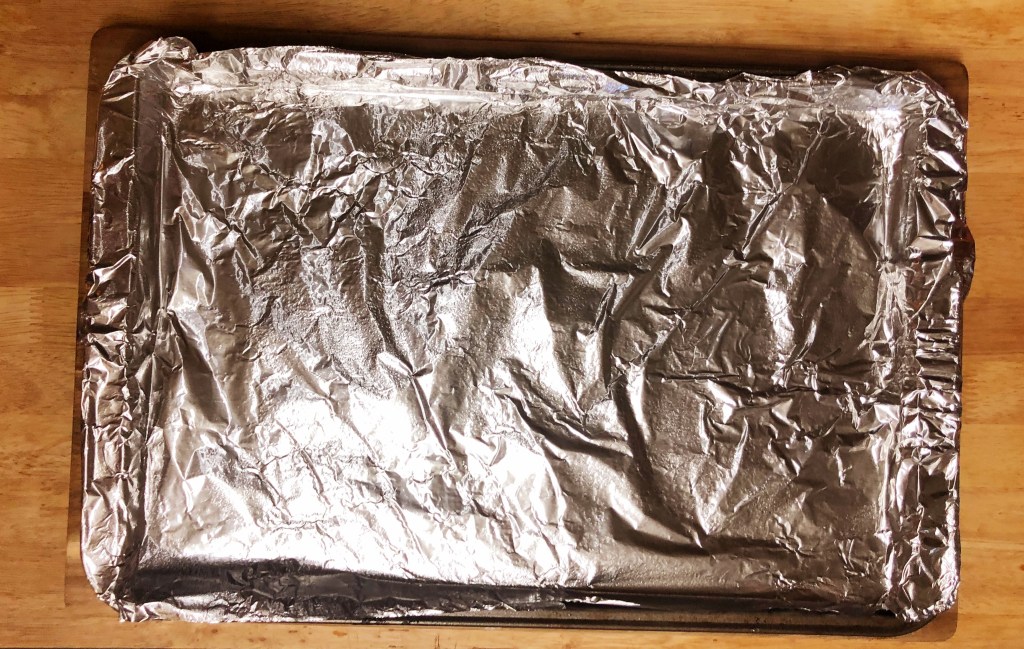
Before beginning with the sugar, line a medium-sized cookie sheet with tinfoil and spray with non-stick spray. If you would like, you could substitute a cookie sheet with a silicone mat instead.
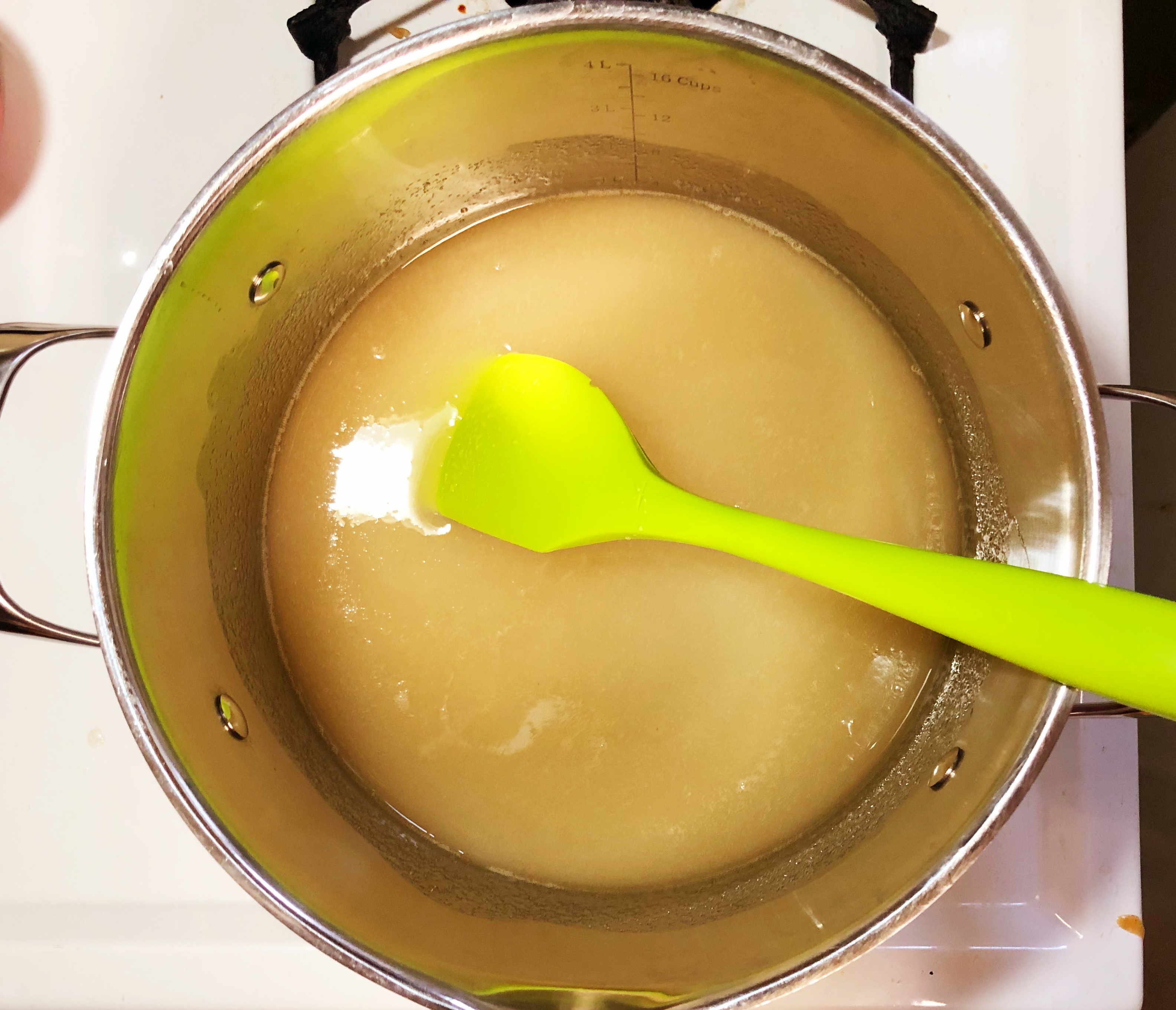
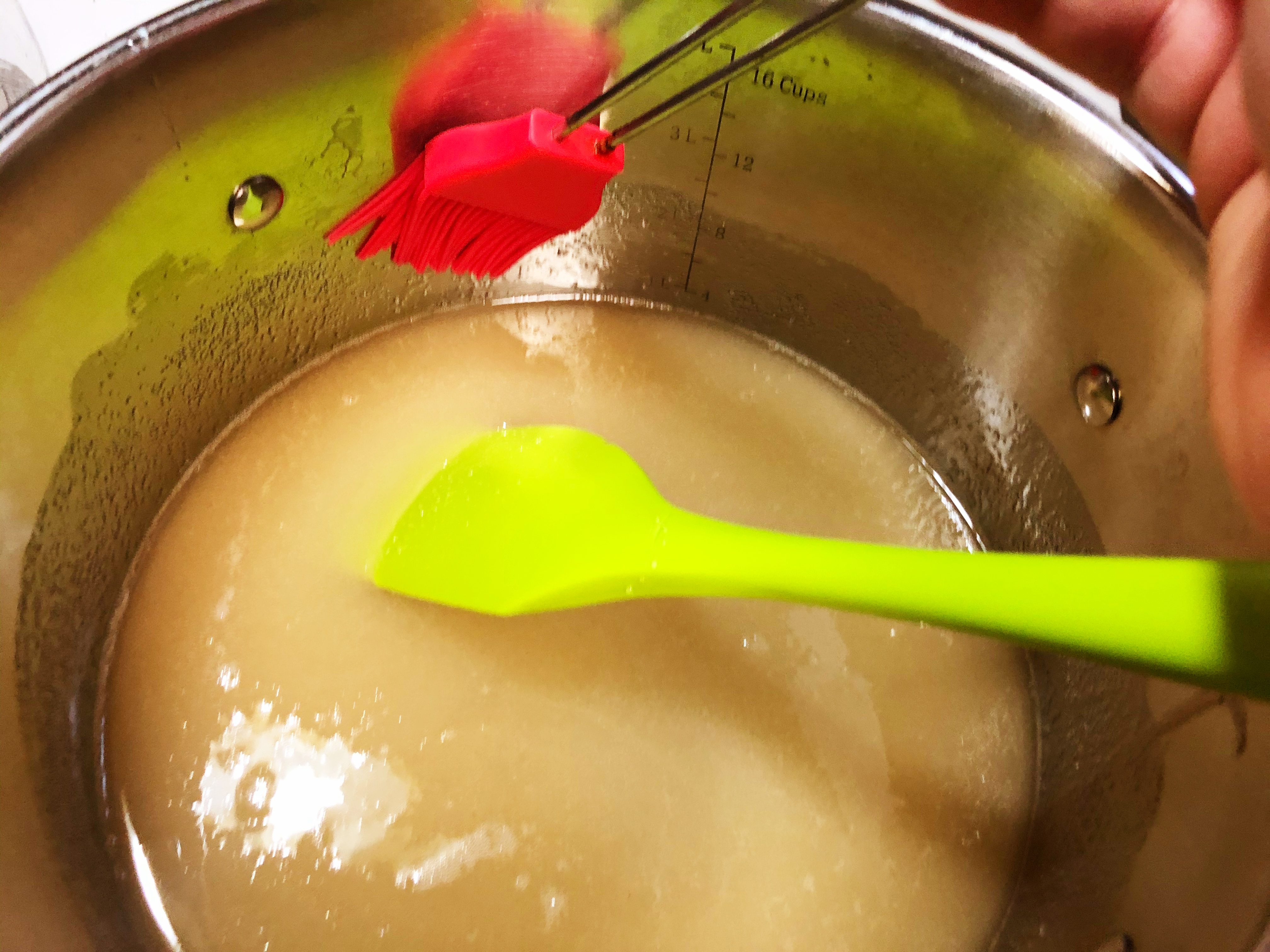
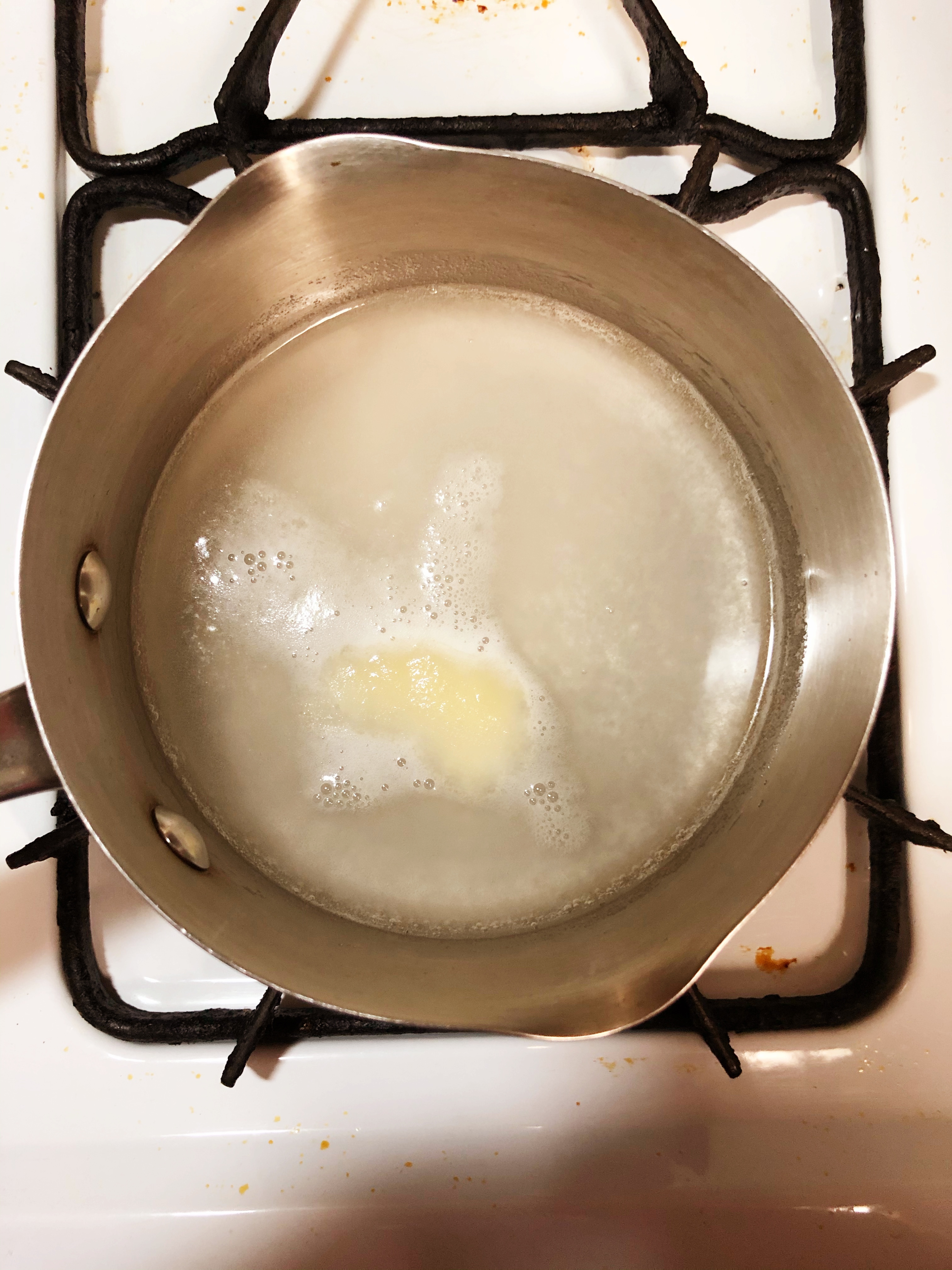
Begin by bringing the sugar, corn syrup, and tea to a boil in a high-walled pot, stirring frequently until the sugar is fully dissolved. Brush down the sides of the pot with warm water to help prevent sugar crystals from forming up the sides.
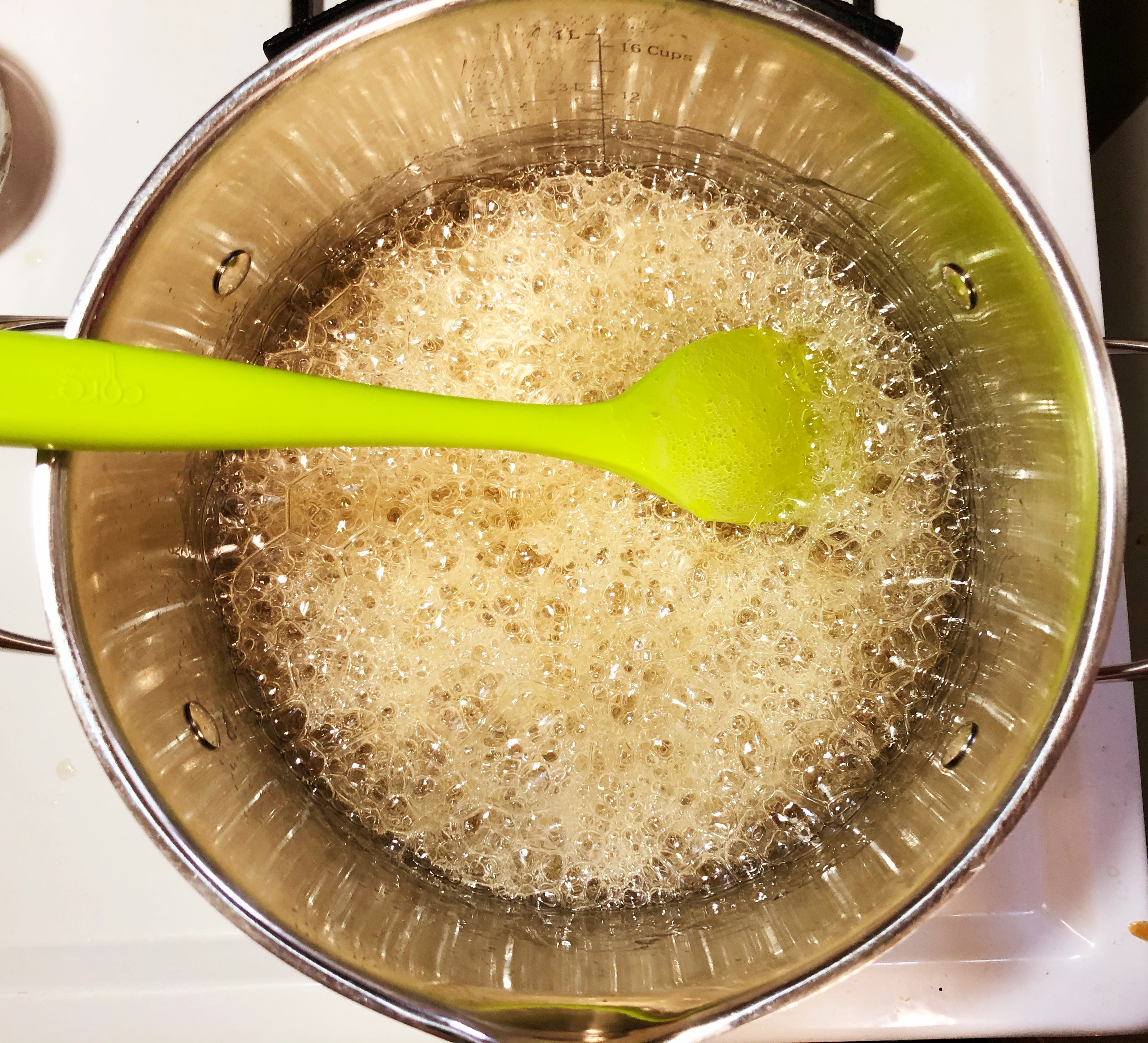
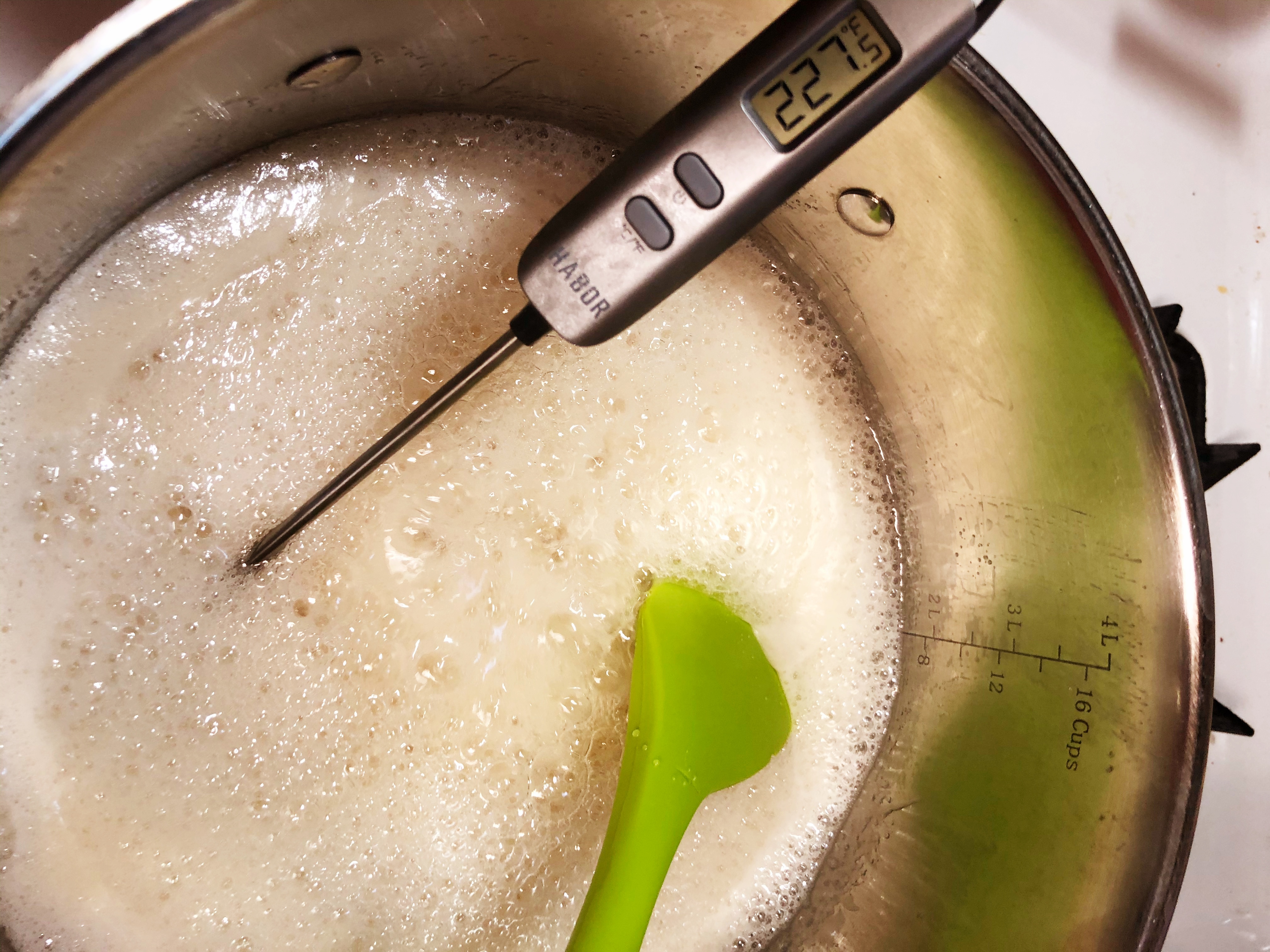
When the sugar mixture has come to a boil, continue stirring occasionally and insert a high-temperature thermometer. Continue boiling and stirring occasionally until the temperature reaches 300 degrees Fahrenheit. Turn off the heat and allow the pot to sit for a moment until the sugar stops bubbling (there will still be bubbles, but no new ones forming). Stir in the vanilla extract.

Pour the sugar syrup carefully into the prepared pan and allow it to cool completely and harden, about an hour.
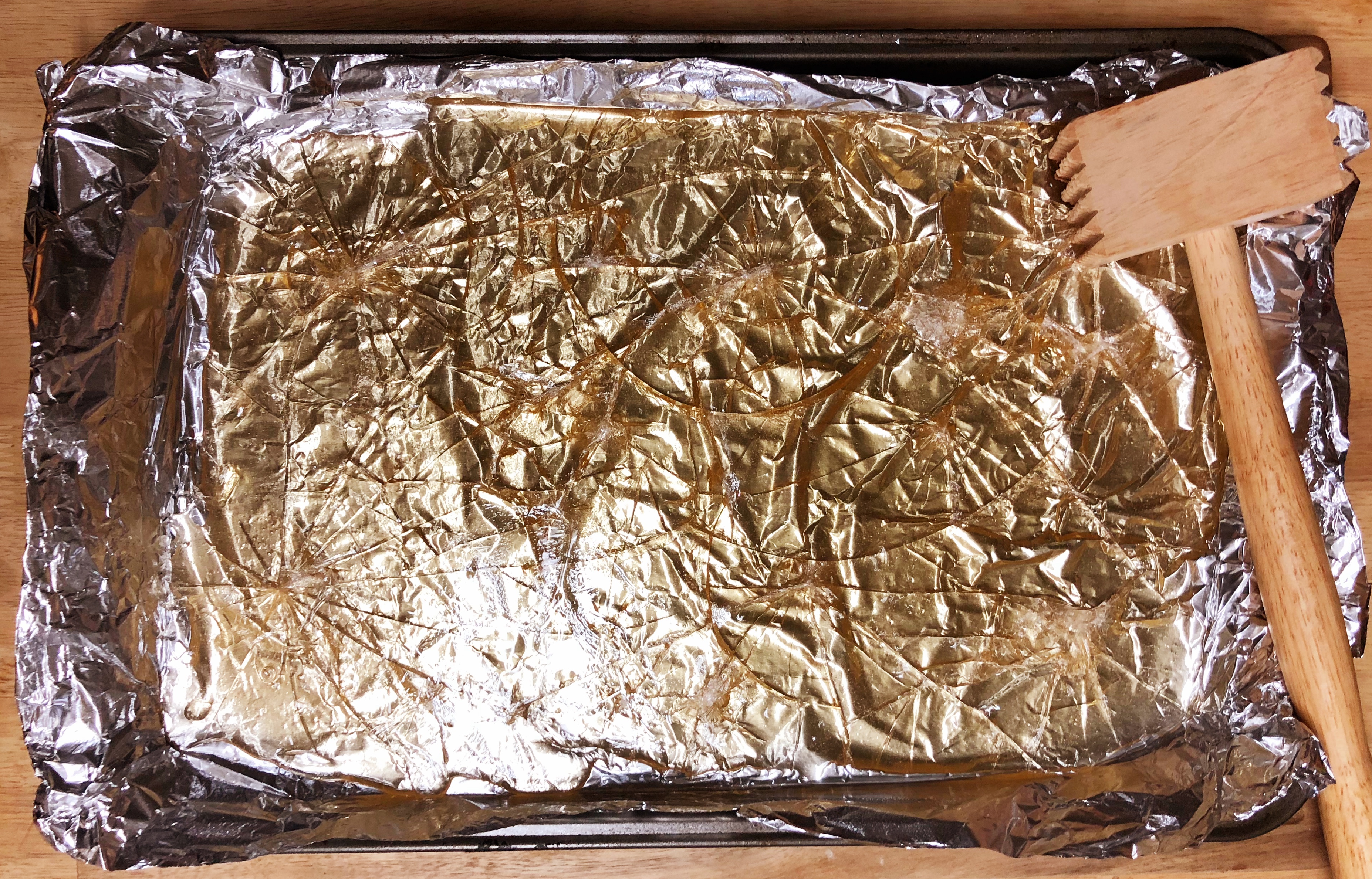
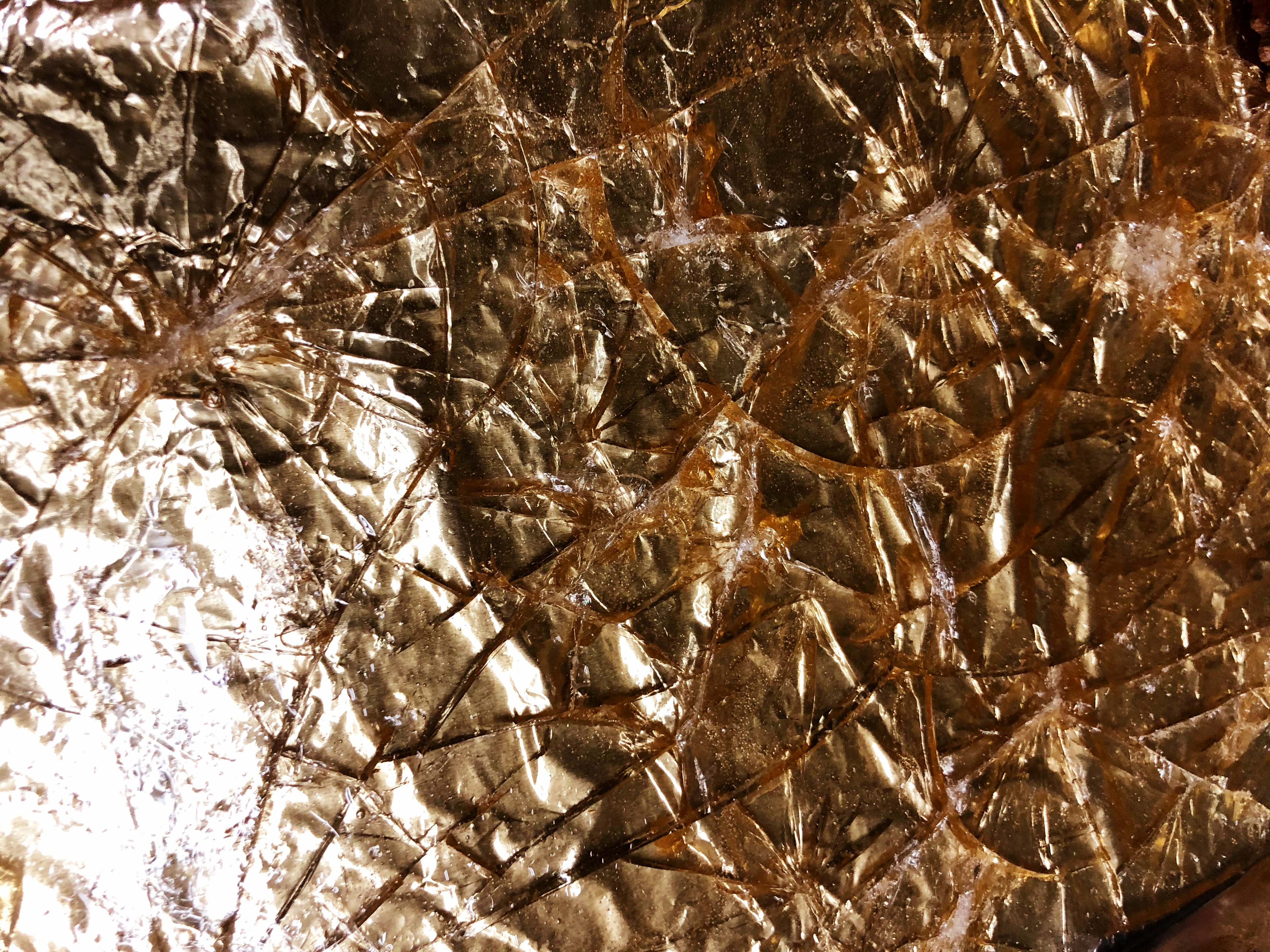
Using a kitchen mallet or meat tenderizer (or a heavy bottomed pot) shatter the hard candy. I recommend striking it in several places until the pieces are your desired size.
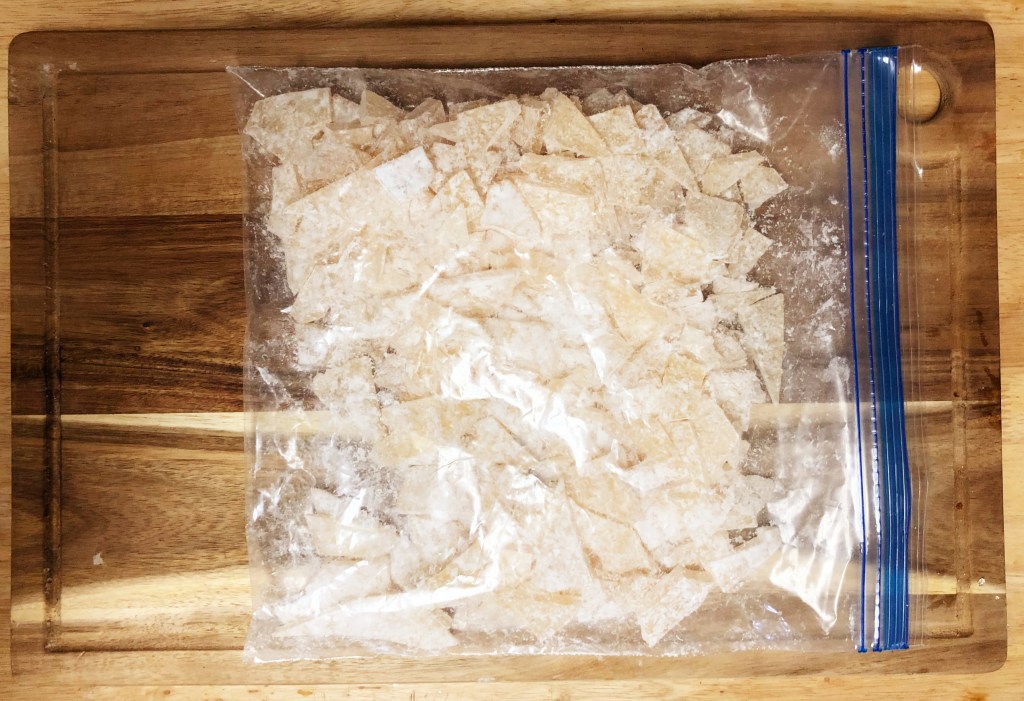
Add all of the candy shards as well as 1/4 cup powdered sugar, and shake until the candies are evenly covered. Store in an airtight container (or the aforementioned baggie). It will keep for several weeks, if it lasts that long!

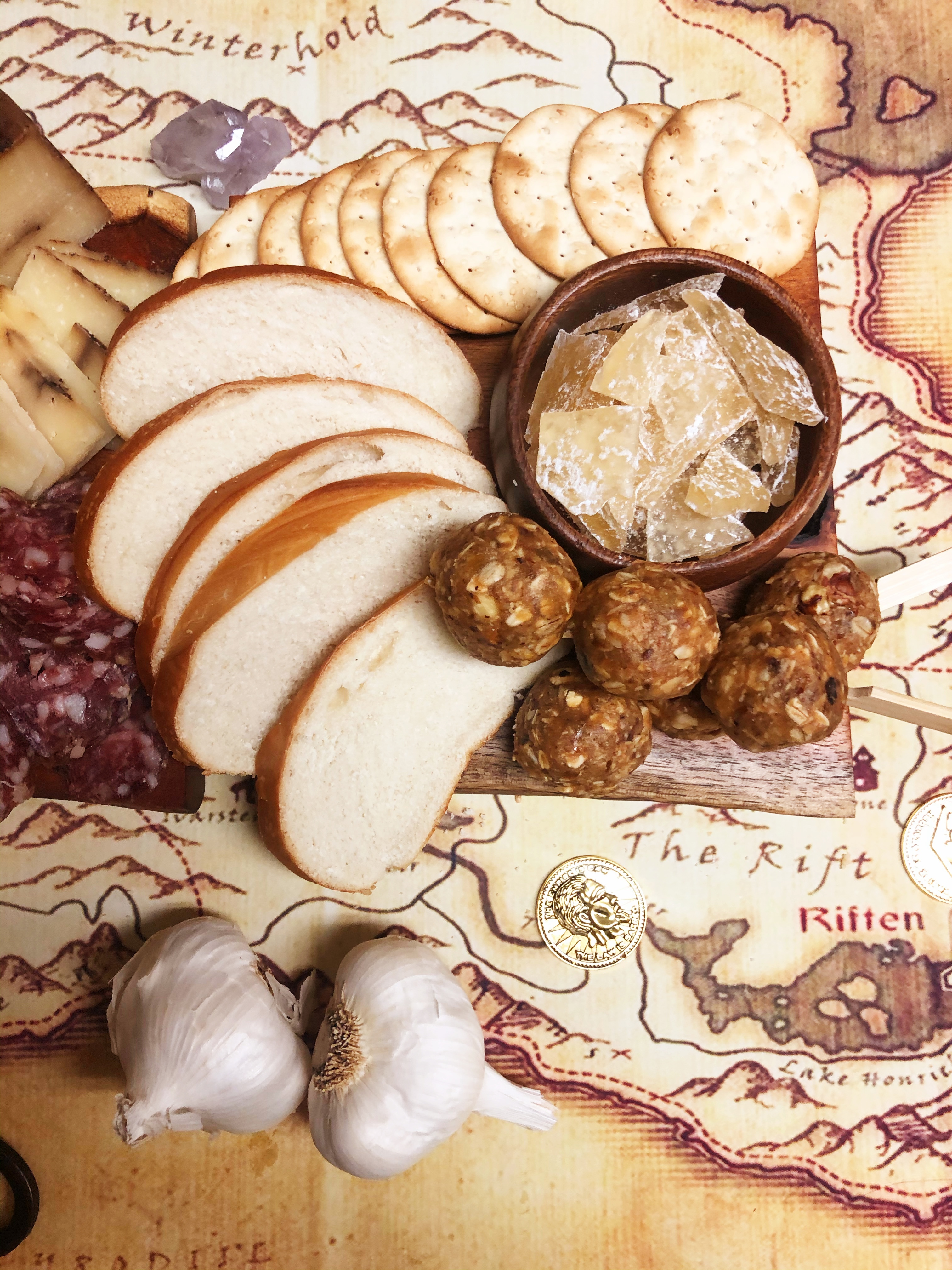
Moon-Sugar

  • Servings: 10-12
  • Difficulty: Medium
  • Print

The holiest of treats in the Khajiiti culture.


Ingredients

-2 Cups Sugar

-3/4 Cups Light Corn Syrup

-1/2 Cup Strongly Brewed Herbal Tea

-1/4 tsp Vanilla Extract

-1/4 Cup Powdered Sugar


Directions

  1. Gather your ingredients. Line a cookie sheet with tinfoil and spray with nonstick cooking spray.
  2. Bring sugar, corn syrup, and tea to a boil over medium heat, stirring frequently. Wipe down the sides of the pot with warm water to avoid sugar crystals forming.
  3. When sugar mixture reaches a boil, insert a high temperature thermometer. Stir occasionally until the temperature reaches 300 degrees Fahrenheit.
  4. Turn off the heat and allow the sugar mixture to sit until bubbles stop forming. Stir in the vanilla extract.
  5. Pour the sugar mixture carefully and evenly into the prepared cookie sheet. Allow to full cool and set (about one hour).
  6. Using a kitchen mallet or meat tenderizer, shatter the candy into small pieces.
  7. Add the candy pieces and powdered sugar to a large baggie and shake until the candy is evenly coated. Candy will keep for about two weeks and can be served immediately.
No comments to show.

Colovian Roast Turkey

“Skingrad County is famous for its wines, tomatoes, and cheeses, and the town of Skingrad is one of the cleanest, safest, and most prosperous towns in Cyrodiil. Located in the heart of the West Weald highlands, Skingrad is the gem of Old Colovia, and a model of the Colovian virtues of independence, hardwork, and tough-mindedness.”

-Alessia Ottus, Guide to Skingrad, The Elder Scrolls IV: Oblivion

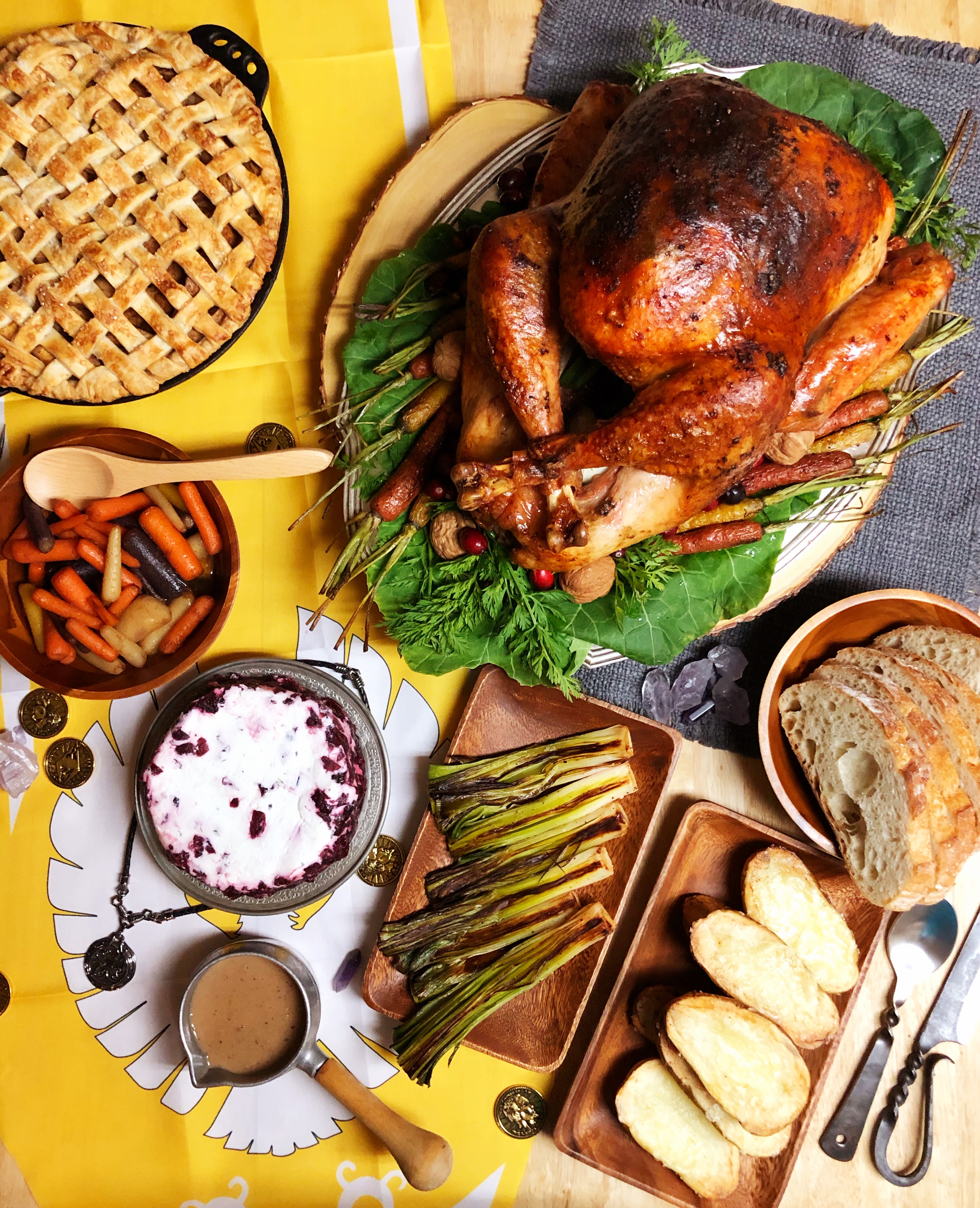
For years I’ve followed the same Turkey Recipe every Thanksgiving (and usually a few times after Thanksgiving, while Turkeys are on sale at our local supermarkets. It’s hard to resist the siren song of a cheap bird that can feed us for several days). This year however, with the Cellarhog’s Blog fresh and new, I decided it was high time we try something new.

Colovian Roast Turkey is based on a Provisioning Recipe from the Elder Scrolls Online, named for the region Colovia, a part of Cyrodiil. Colovia is known for their austere, hard-working, and self-sufficient people, the frontier-men of Colovia, who make up many of the higher ranks of the Imperial Legion. Adapting Provisioning Recipes comes with some difficulty in that there’s not much of an image of what the end product should look like, and for flavor each recipe often only includes two or three ingredients by way of explanation. So further research is necessary. The two primary ingredients of Colovian Roast Turkey in the Elder Scrolls Online was poultry and tomato.

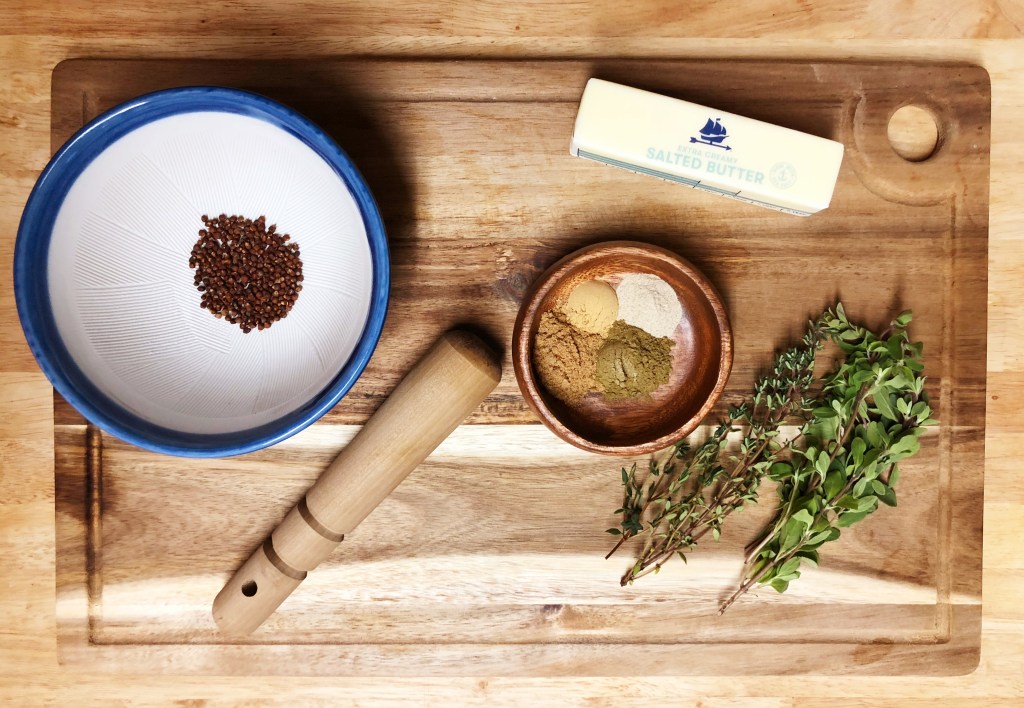
By way of seasoning, I leapt into some research. Visually, Cyrodiil seems to be based more or less on Ancient Roman cultures, so I looked there for seasonings that may have been commonly in use during that era. I found that, not surprisingly, many of the spices I settled on are featuring as “Imperial Spices” in the Official Elder Scrolls Cookbook. I was traveling down a road that had been tread before, naturally. The seasonings I settled on were: Grains of Paradise (Aframomum melegueta), Coriander, Savory, Ground Ginger, Fresh Marjoram, Fresh Thyme, and white pepper.
I found it difficult to find ground grains of paradise, so I ground my own using my Suribachi, which is a Japanese mortar and pestle. You can use any mortar and pestle or even an electric or burr mill spice grinder if you have one. For this recipe you will need 1 teaspoon grains of paradise, 1/2 teaspoon ground ginger, 1 teaspoon ground coriander, 1 tsp ground savory, 1/2 tsp white pepper, 1 tsp fresh minced thyme, and 1 tablespoon fresh minced marjoram, as well as one stick of salted butter softened at room temperature.

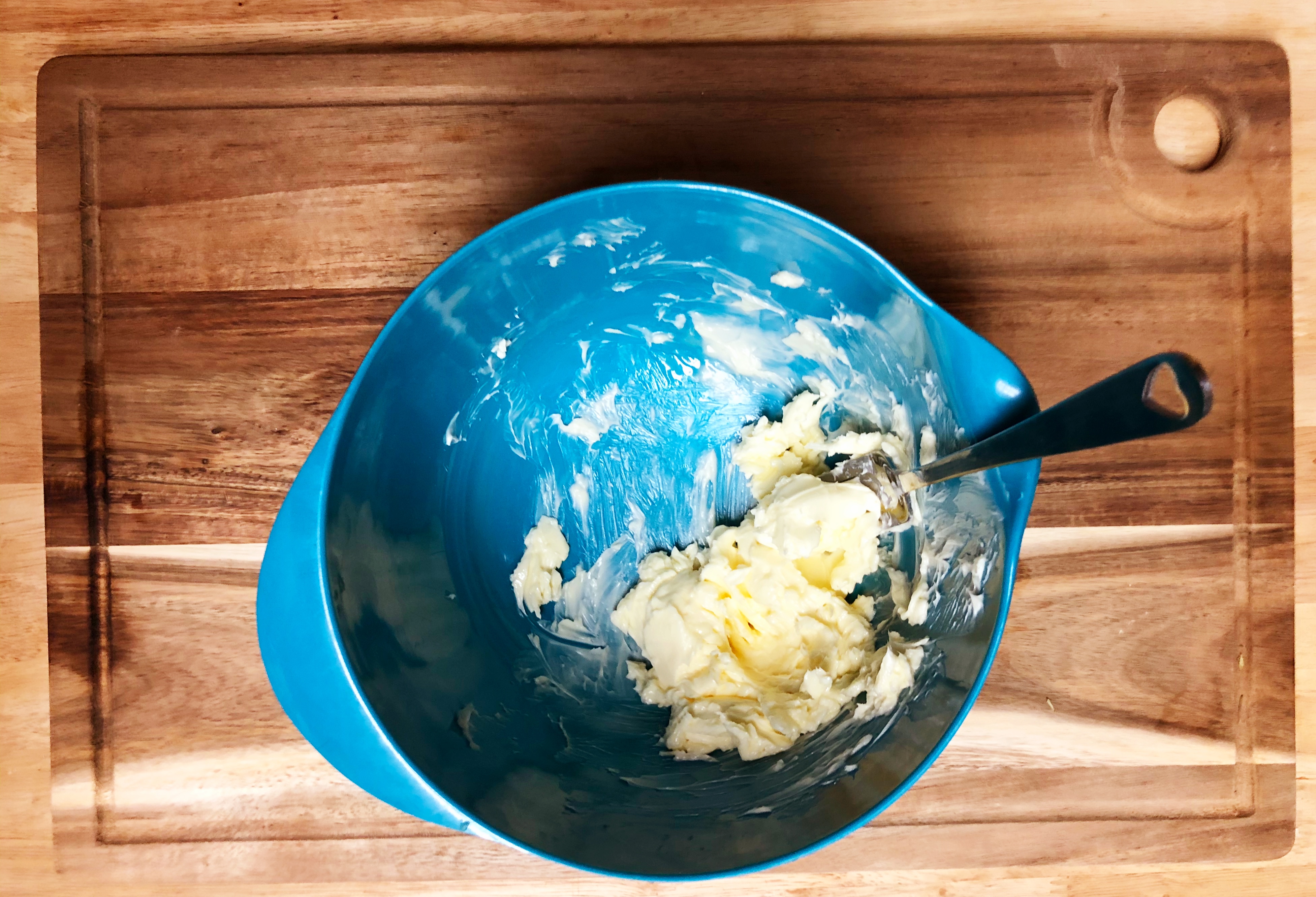
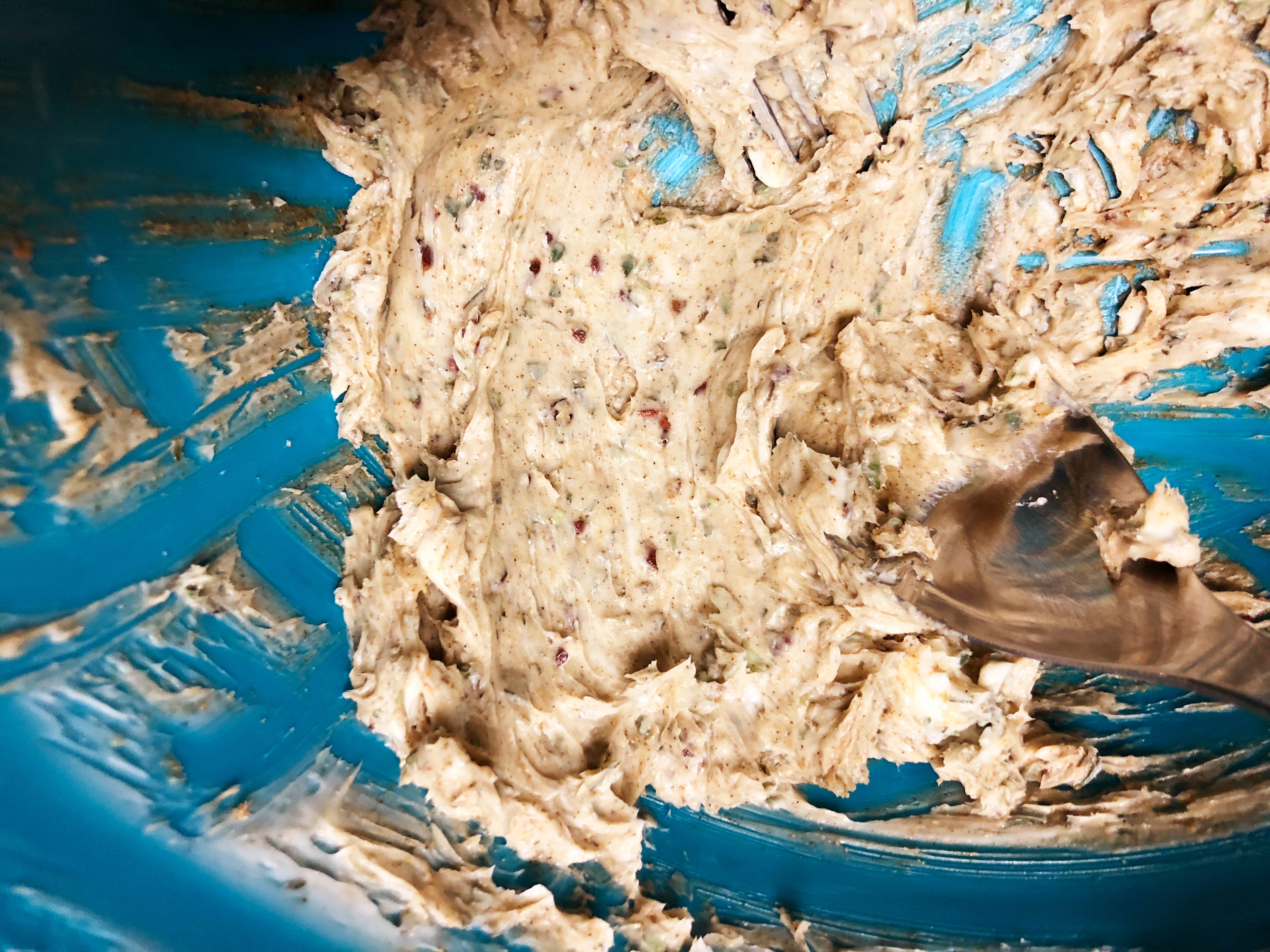
Preheat oven to 350 Degrees Fahrenheit. Using a small mixing bowl and a fork, mash the butter to soften it further, and then add the spice and herb blend and mix well. Set aside.

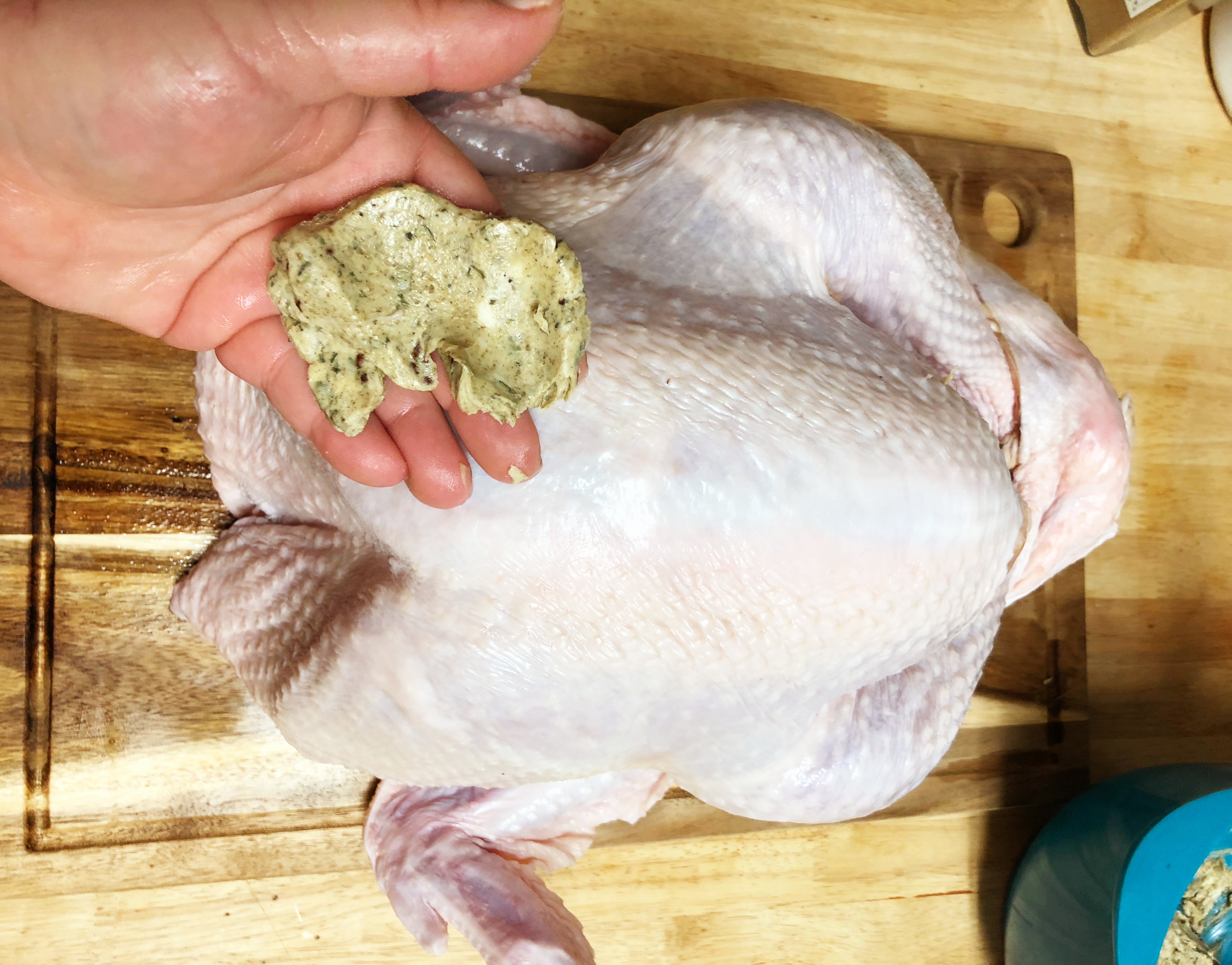
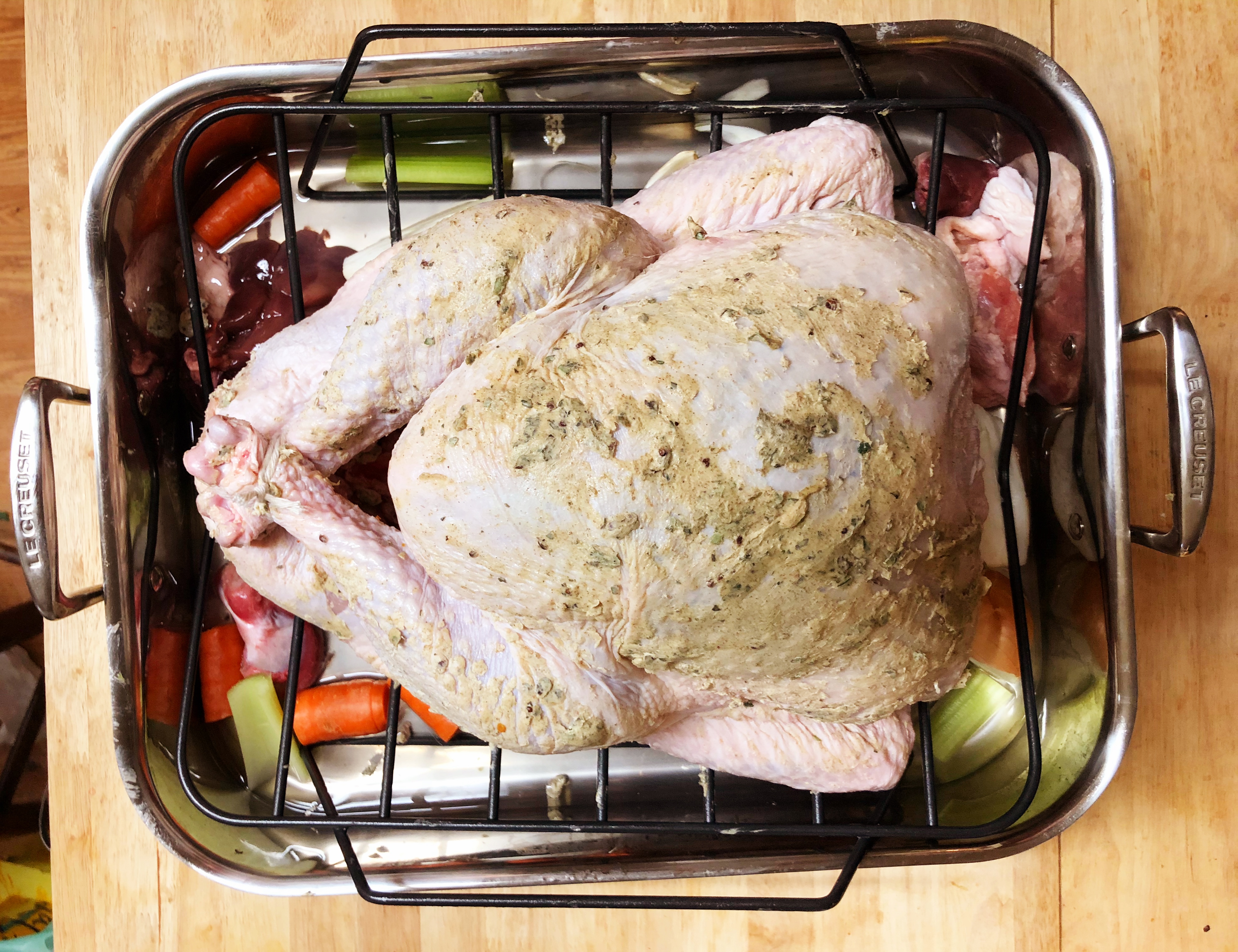
To prepare your turkey (I recommend 14-16 pounds for this recipe), first remove the giblets and neck from the cavity (remember to check both the main cavity and the neck cavity to make sure you don’t miss any. Set these items aside, you won’t want to lose out on the flavor they add to your gravy. Lay the turkey breast side up and, working from the bottom towards the neck, slide your hands under the skin to loosen it. You may need to trim away a little excess skin, if you do set it aside with the giblets. Take care not to tear the skin, and take your time to do this part gently. You should be able to completely loosen the skin from the breasts all the way up to the neck, and across the sternum. Next, using a handful at a time, soften the butter mixture in your hands and work it under the skin, thoroughly covering both breasts. Continue until you have only about one and half tablespoons of butter mixture left. Use the remaining herb butter to coat the outside of the turkey, spreading it over the entire bird. Generously salt and pepper the turkey.
Set the turkey aside and make space to work with the aromatics.

You will need twelve cloves of garlic, two large carrots, washed and dried, the greens from two leeks (save the whites and lighter green parts for another purpose, grilled leeks for example make a delicious accompaniment), three ribs of celery, two onions, and 1/2 cup of sundried tomatoes. Cut the carrot into one inch chunks, the leeks and celery into two inch chunks, peel the garlic cloves, and peel the onions and slice them into quarters.

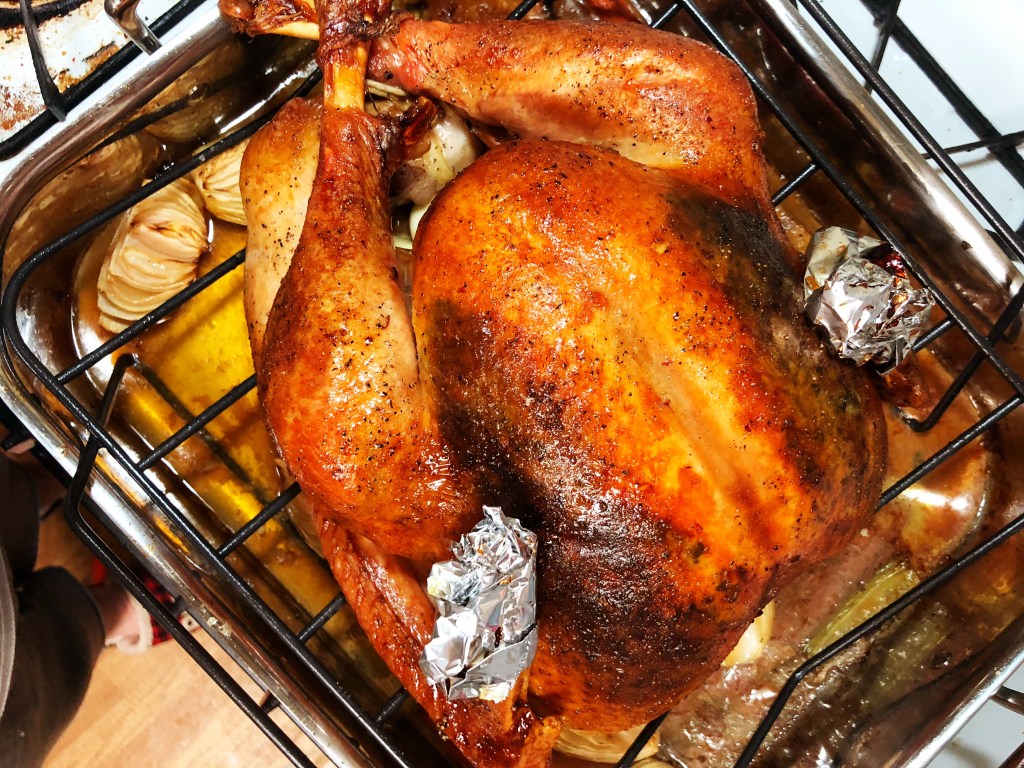
Place the carrots, celery, and all but one wedge of the onions along with the giblets, neck, and any skin trimmings in the bottom of the roasting pan. Add two cups of water to the roasting pan, and place the rack and turkey over the top of these aromatics. Carefully stuff the turkey first with the garlic, then the sundried tomatoes, followed by leeks, and finally the onion wedge. This order of stuff helps to keep everything inside the turkey. Tie the legs with kitchen twine, this is sufficient to keep the stuffing inside of the turkey. Bend the wings under the turkey, you may have to break the joints to do this, but I find with care I’m usually able to avoid it. If you do not like the appearance of the wings bent under the turkey, you can make a little tinfoil shield for each wingtip, to avoid burning.

Loosely tent the turkey with foil and roast at 350 degrees for one hour, then begin basting every thirty minutes (baste the turkey and the giblets in the pan) until an instant read thermometer inserted in the thickest part of the thigh reads 125 degrees. This will take about three hours. If the level of liquid in the roasting pan drops too far, add an extra cup of water.

Note: If your oven is older or has “hot spots” I also recommend rotating the turkey each time you baste. This will help you more thoroughly baste every part of the turkey, but also ensure that it cooks evenly.

When the thermometer reads 125 degrees, raise the temperature to 400 and continue roasting, basting every 20 minutes, until an instant read thermometer inserted into the thickest part of the thigh reads 165 degrees. This will take about an additional 45-60 minutes depending on the size of your turkey.

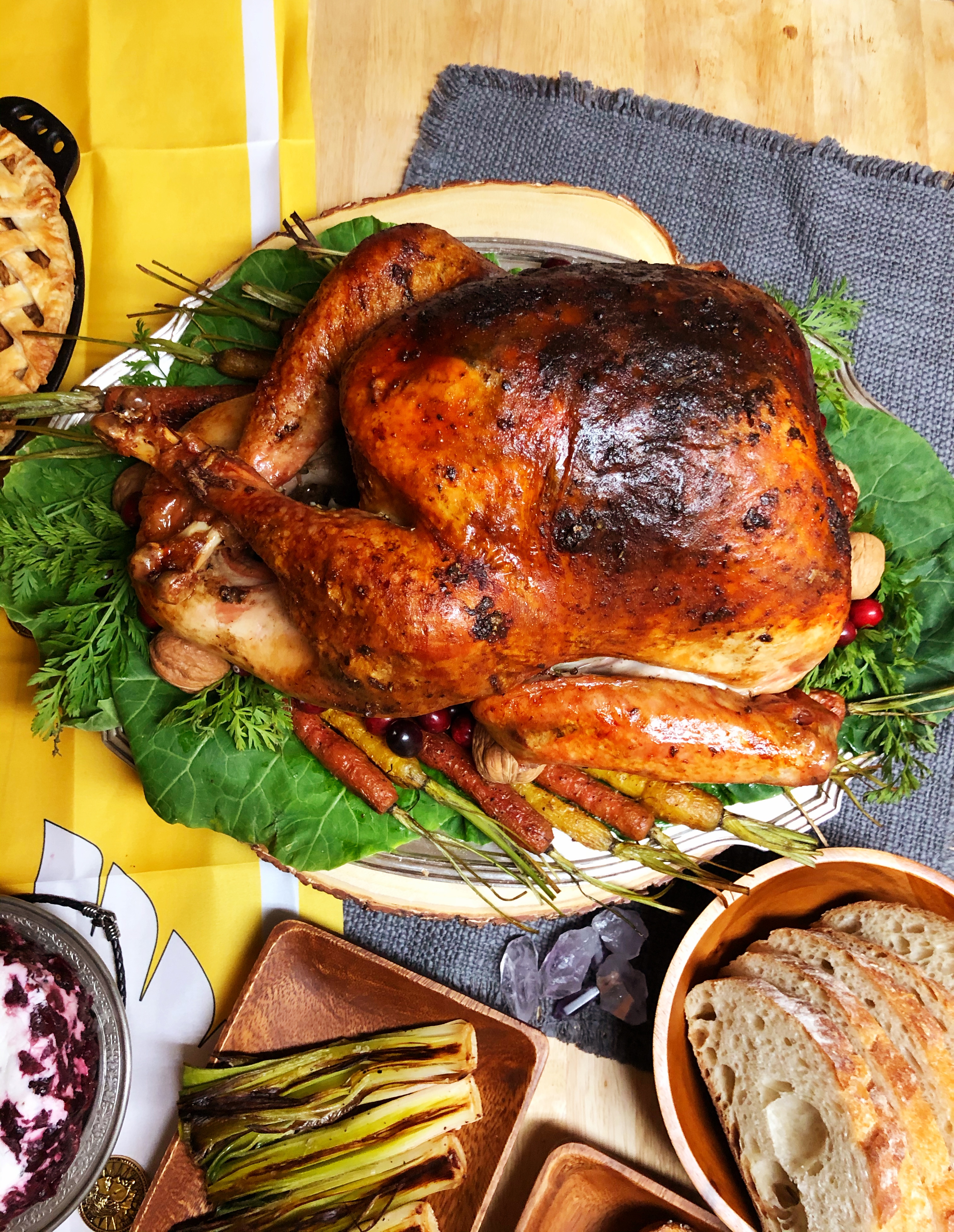
Remove the turkey from the oven and set aside, loosely tenting with foil. Allow the turkey to rest at least 30 minutes before carving to allow the juices to settle. The herb butter may cause some dark spots on the breasts of the turkey, but it is only a visual imperfection, the turkey is not burned and will still taste delicious.

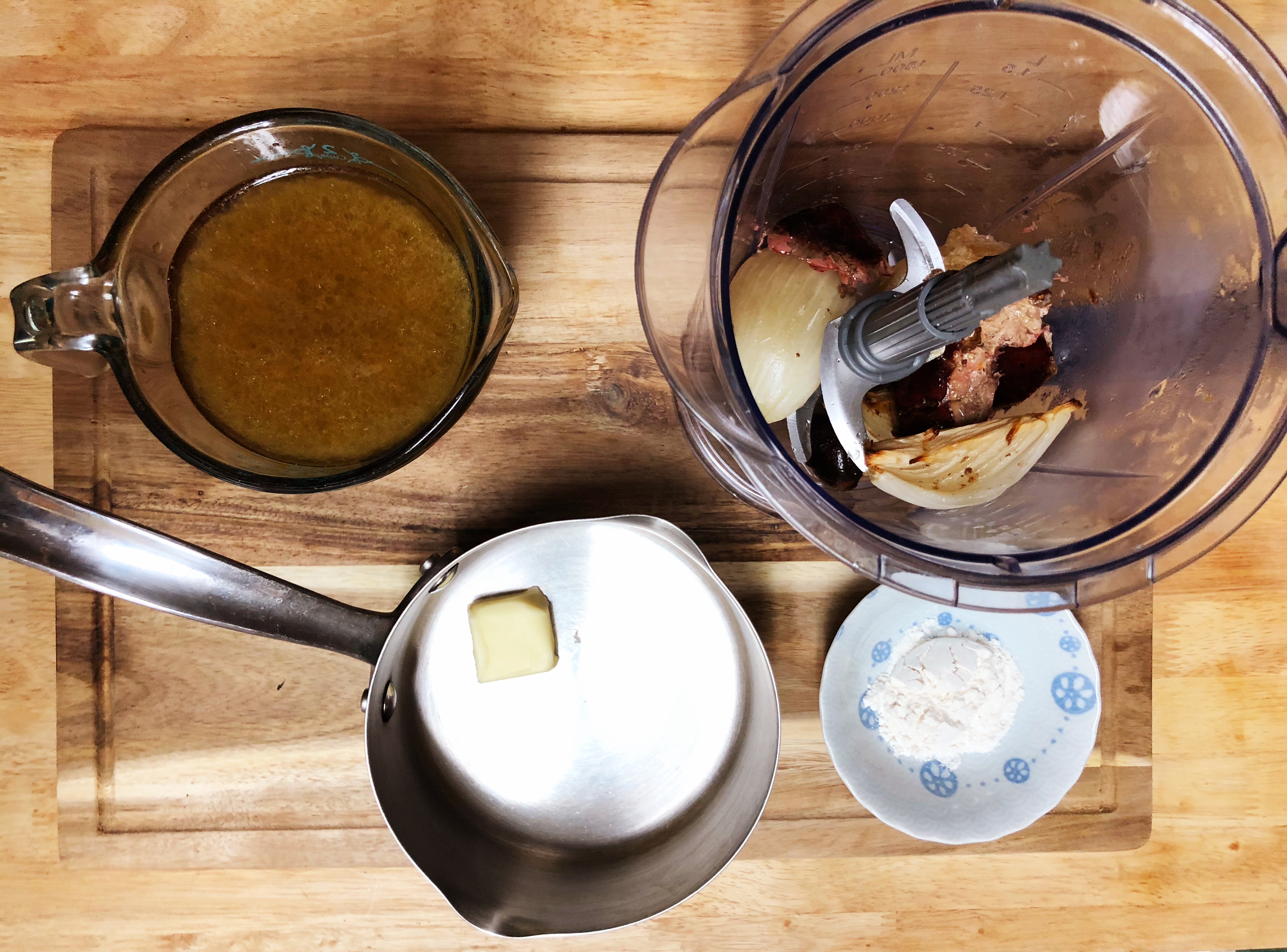
Now it is time to prepare the gravy while the turkey rests. You’ll need two cups of drippings from the pan (if you don’t have quite enough you can top it up with chicken stock), the roasted giblets and onions from the pan, two tablespoons of butter, and two tablespoons of flour. Blend the giblets and onions until they resemble a fine paste, if your blender struggles to blend them, pour about half a cup of the drippings from the pan into the blender. I save the roasted turkey neck to add to the stockpot along with the rest of the carcass after dinner (you do not want to miss out on the stock from this recipe) but if you don’t plan on making stock the meat from the neck can be added to the blender too.

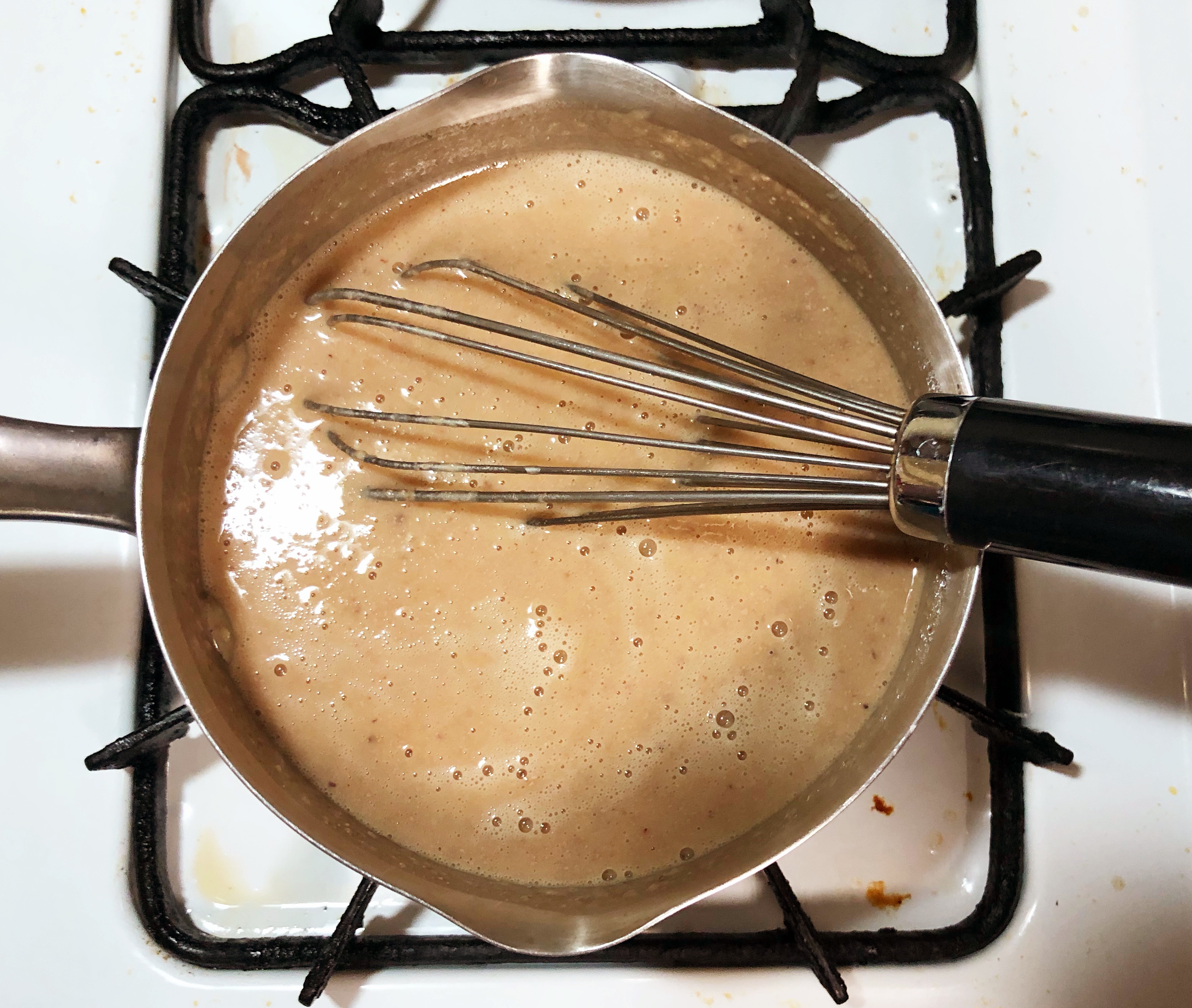
Next is the roux. Melt the butter over medium-low heat in a small pot and add the flour when it has melted. Stir continuously with a rubber spatula or wooden spoon for about one minute to cook off the raw flour flavor, taking care not to burn the butter. Add in the turkey drippings a little as a time, switching from the spatula to a whisk when the consistency becomes more liquid than solid, and continue whisking until you have added all of the drippings. Heat the gravy until just under boiling, and pour in the giblet mixture from your blender, whisking continuously as you add. Continue to simmer the gravy until it has reached the desired consistency. Salt and pepper to taste.

Note: I can feel the more squeamish of my readers balking at the use of the giblets, but hang in there: this will be one of the most rich and delicious gravies you will ever have the pleasure of eating. Our morning after Thanksgiving tradition has long been leftovers Loco Moco using gravy made from this technique.

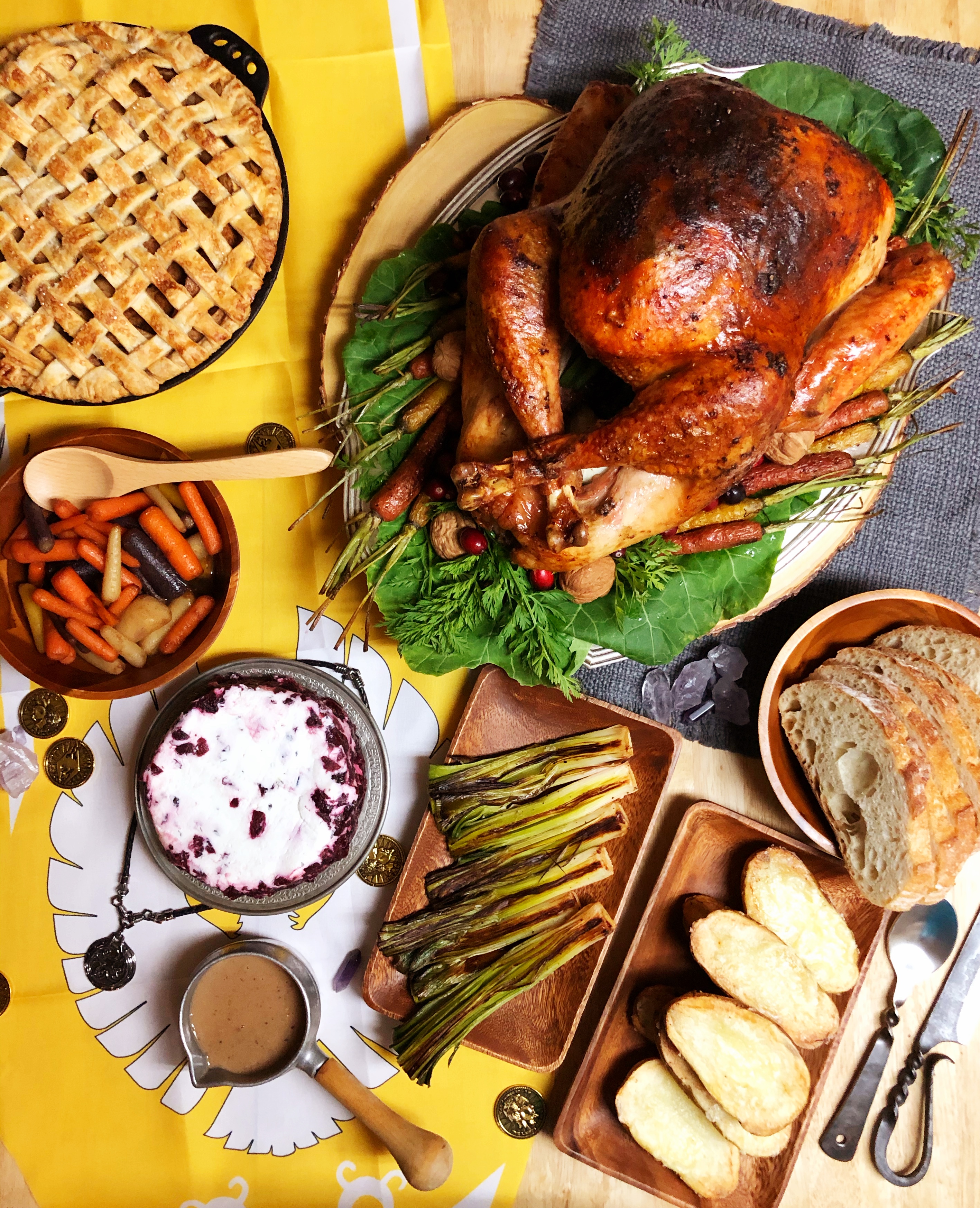
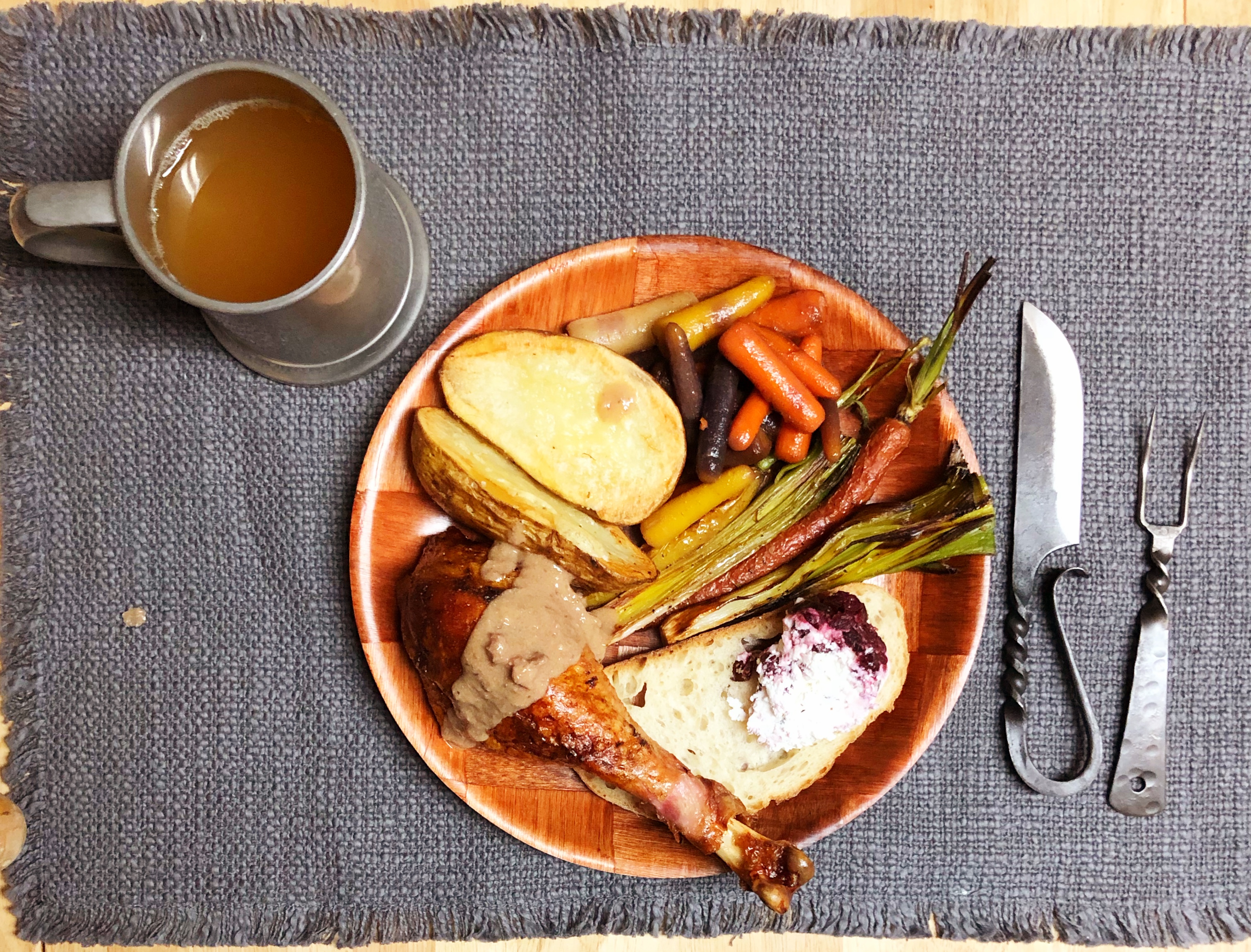
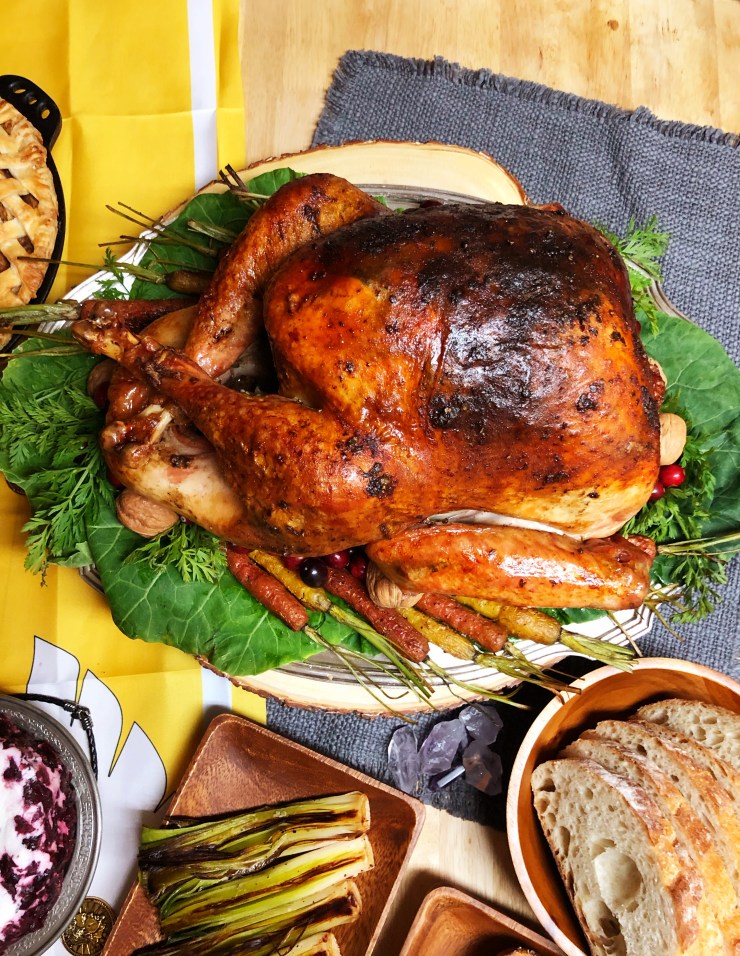
After your gravy has reached the desired consistency, your turkey should be ready to carve and serve! Serve with your favorite sides, or some Skyrim inspired ones (we used several from the Elder Scrolls cookbook, along with homemade cranberry chevre, and enough homemade metheglin to drown a horse.)

Please note that Amazon links provided are affiliate links.

Colovian Roast Turkey

  • Servings: 6-8
  • Difficulty: Medium
  • Print

A roast turkey recipe inspired by the flavors of the Colovian Estate.


Ingredients

-1 14-15lb Turkey

-2 Ribs of Celery

-2 Large Carrots

-3 Medium Onions

-12 Cloves of Garlic

-Greens of Two Leeks

-1/2 Cup Sundried Tomatoes

-1 stick plus 2 tbs Salted Butter at Room Temperature

-1 tsp Grains of Paradise

-1/2 tsp Ground Ginger

-1 tsp Coriander

-1 tsp Savory

-1/2 tsp White Pepper

-1 tsp Fresh Minched Thyme

-1 tbsp Fresh Minced Marjoram

-2 tbsp All Purpose Flour

-Salt and Pepper to taste


Directions

  1. Gather your ingredients. Preheat oven to 350 degrees Fahrenheit.
  2. Grind grains of paradise with a mortar and pestle. Further soften butter by mashing it in a small mixing bowl with a fork. Add grains of paradise, ginger, coriander, savory, white pepper, thyme, and marjoram to the butter and combine thoroughly with the fork.
  3. Remove giblets and neck from the cavities of the turkey. Carefully work your hands under the skin over the breasts, starting at the bottom and working to the top to gently separate the skin without tearing it. Using a handful at a time, work the herb butter under the skin, repeating as necessary until all but 1 and 1/2 tablespoons has been used. Use the remaining herb butter to smother all over the turkey. Generously salt and pepper the turkey and then set aside on the roasting rack.
  4. Cut carrots into 1 inch chunks, celery and leek greens into 2 inch pieces, and peel onions and cut into quarters. Add carrots, celery, and all but 1 1/4 piece of onion to the roasting pan, along with giblets and neck. Add two cups of water to roasting pan and place rack above it with the turkey.
  5. Stuff the turkey, first with the garlic cloves, then sundried tomatoes, then leek greens, and finally the remaining onion quarter. Tie legs with kitchen twice to block stuffing from coming out. Tuck the wings under the turkey gently, or cover wingtips with tinfoil.
  6. Loosely tent the turkey with tinfoil at roast at 350 degrees for one hour, then begin basting the turkey and the giblets every thirty minutes until an instant read thermometer inserted into the thickest part of the thigh reads 125 degrees, about three hours.
  7. Raise temperature to 400 and continue to roast the turkey, basting every twenty minutes until an instant read thermometer inserted into the thickest part of the thigh reads 165 degrees, about 45-60 more minutes. Remove turkey from the oven and allow to rest, loosely tented with tinfoil, for at least thirty minutes.
  8. Prepare gravy: Measure out two cups of drippings from the pan. Add caramelized onions and giblets to a blender and blend until they have a pasty consistency, supplementing with turkey drippings if necessary. Melt 2 tbsp butter in a small pot and add 2 tbsp flour. Cook the roux for about one minute taking care not to brown the butter. Add turkey drippings a little at a time while stirring continuously, switch to using a whisk when gravy is more liquid than solid. Heat until just under boiling and add contents of the blender, whisking continuously. Continue to simmer, whisking occasionally until desired consistency is reached. Add salt and pepper to taste.
  9. Carve, serve, and enjoy!

No comments to show.

Skyrim-Style Apple Pie

“You might as well have some sweets. I made them for the festival after all.”

-Bendt, The Elder Scrolls V: Skyrim, “Tending the Flames”

Nothing fits more firmly in the Holiday Season in the United States than Apple Pie, it’s so ubiquitous as a staple in American foods that it’s hard to imagine it in any other setting. And yet, sitting there on Bendt’s counter during the Burning of King Olaf is a row of ostensibly fresh baked apple pies. Where do apple pies fit in the pseudo-medieval fantasy setting of Skyrim? Actually, the humble apple pie can be traced back, at least, to the 14th Century manuscript “The Forme of Cury,” or translated, The Method of Cooking. This apple pie recipe in many ways doesn’t resemble a modern apple pie, calling for apples, figs, pears, raisins, and spices and being cooked within a coffyn, an inedible pastry shell.

The next known apple pie recipe is from “A Proper Newe Booke of Cokerye,” the oldest edition of which can be dated to 1545. This recipe in some way more closely resembles a modern apple pie, with the addition of quince, as well as apples, cinnamon, ginger, and sugar. Building off of these two recipes, I took a little liberty in the development of my own apple pie recipe, hoping to please the modern palates of my roommates for Thanksgiving. Considering that Skyrim is still a fantasy world, and that the Apple Pies found throughout the fictional country resemble a modern latticed apple pie more than a medieval one, I built off of the latter of the two apple pie recipes mentioned with considerations for modern palates and Skyrim imagery.

To start, you will need a double batch of my previous recipe, Grammy’s Butter Crust, chilled overnight as two separate rounds.

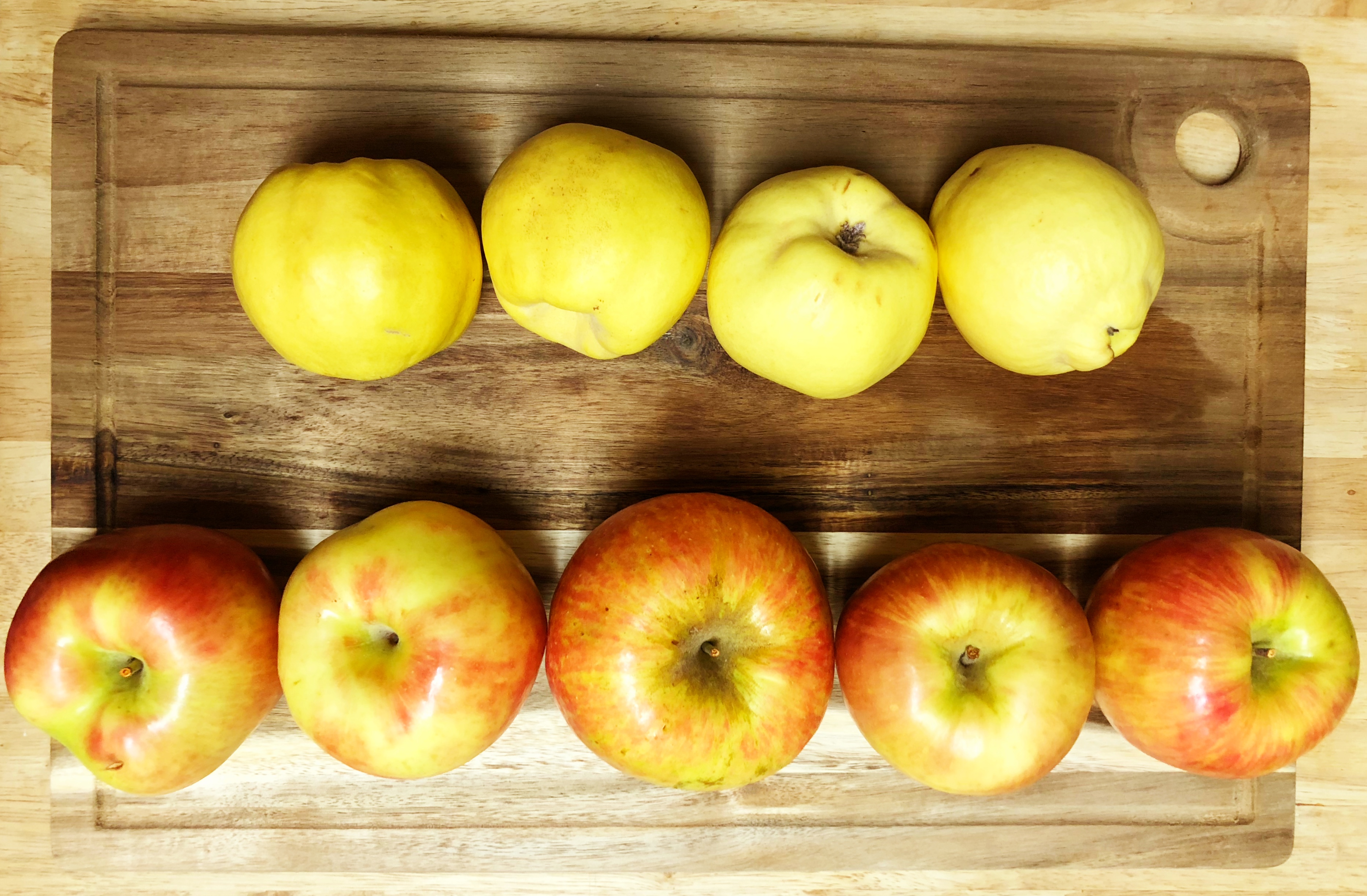
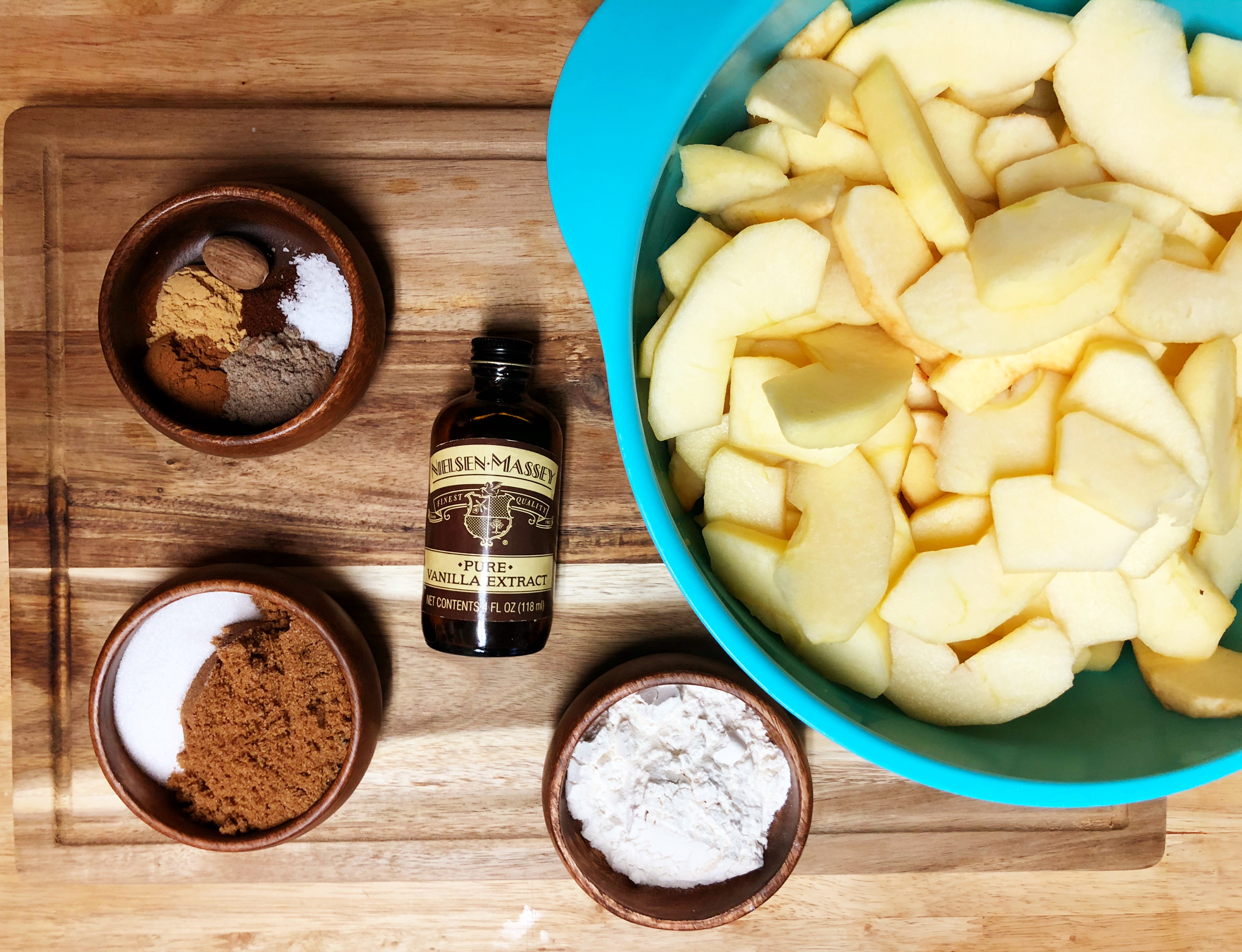
Start with 4-5 Honeycrisp apples (4 large apples or 5 medium) and 4 Quince. Peel, core, and slice the apples and quince into 1/4 inch thick slices. You’ll want to wind up with 8-9 cups of sliced fruit. If they start to oxidize and brown a little in the air, it’s fine, they’ll change color in the oven anyway. Add your apple and quince slices to a large bowl and assemble the rest of the ingredients for the filling: 1 tsp cinnamon, 1 tsp ground ginger, 1 tsp ground cardamom, 1/4 tsp ground cloves, 1/4 tsp coarse kosher salt, 1 tsp vanilla extract, 1/2 tsp fresh grated nutmeg, 1/4 cup all purpose flour, 1/4 cup white sugar, and 1/4 cup dark brown sugar. Add everything to the fruit and turn with your hands until everything is thoroughly mixed together.

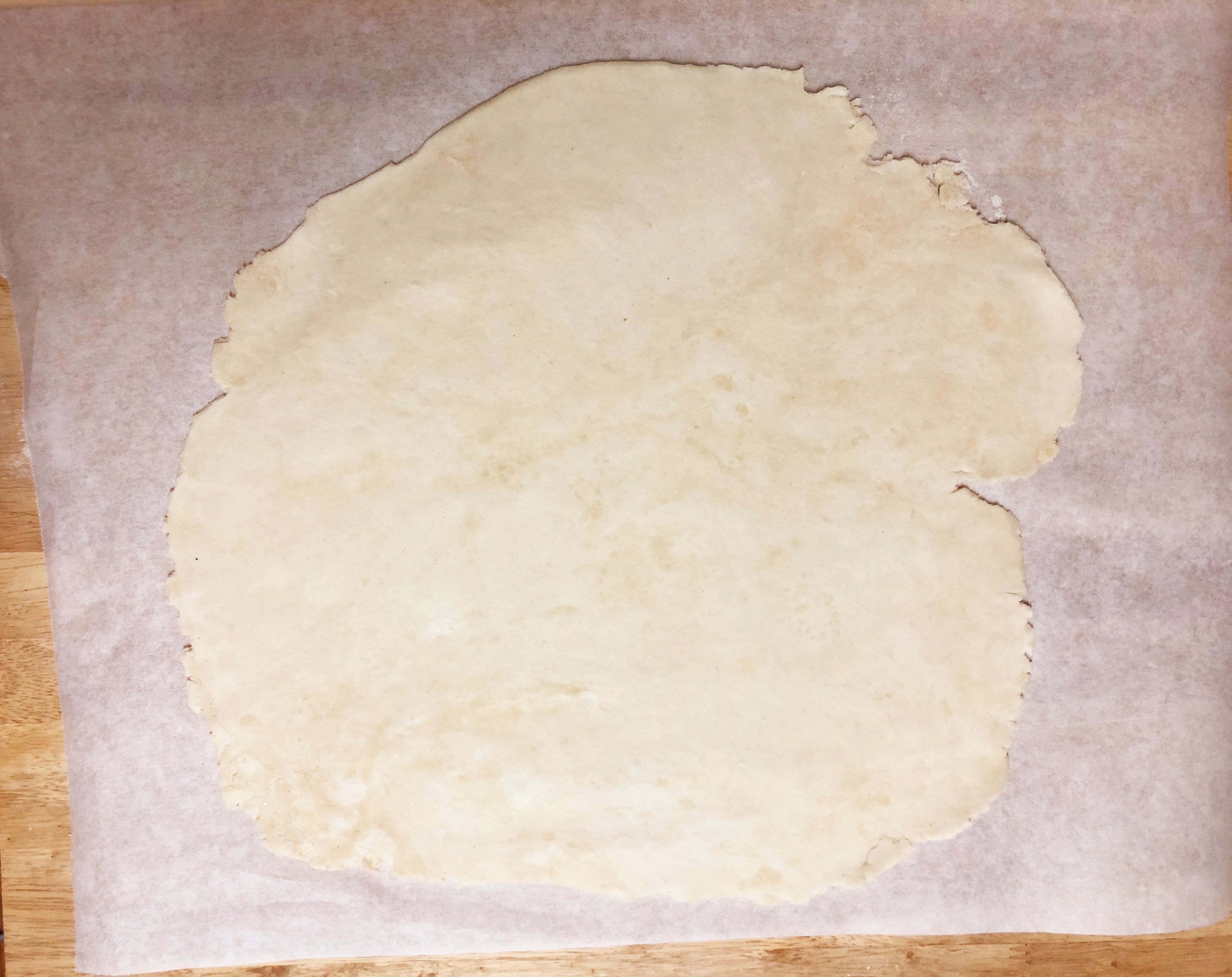
Set aside the filling mix and lay down wax paper over your workspace. Lightly flour the wax paper and roll out the first round of butter crust until it is about 1/6th inch thick. I find flipping the pie dough a few times during rolling and redusting my rolling pin as necessary helps to prevent it from sticking while maintaining an even thickness.

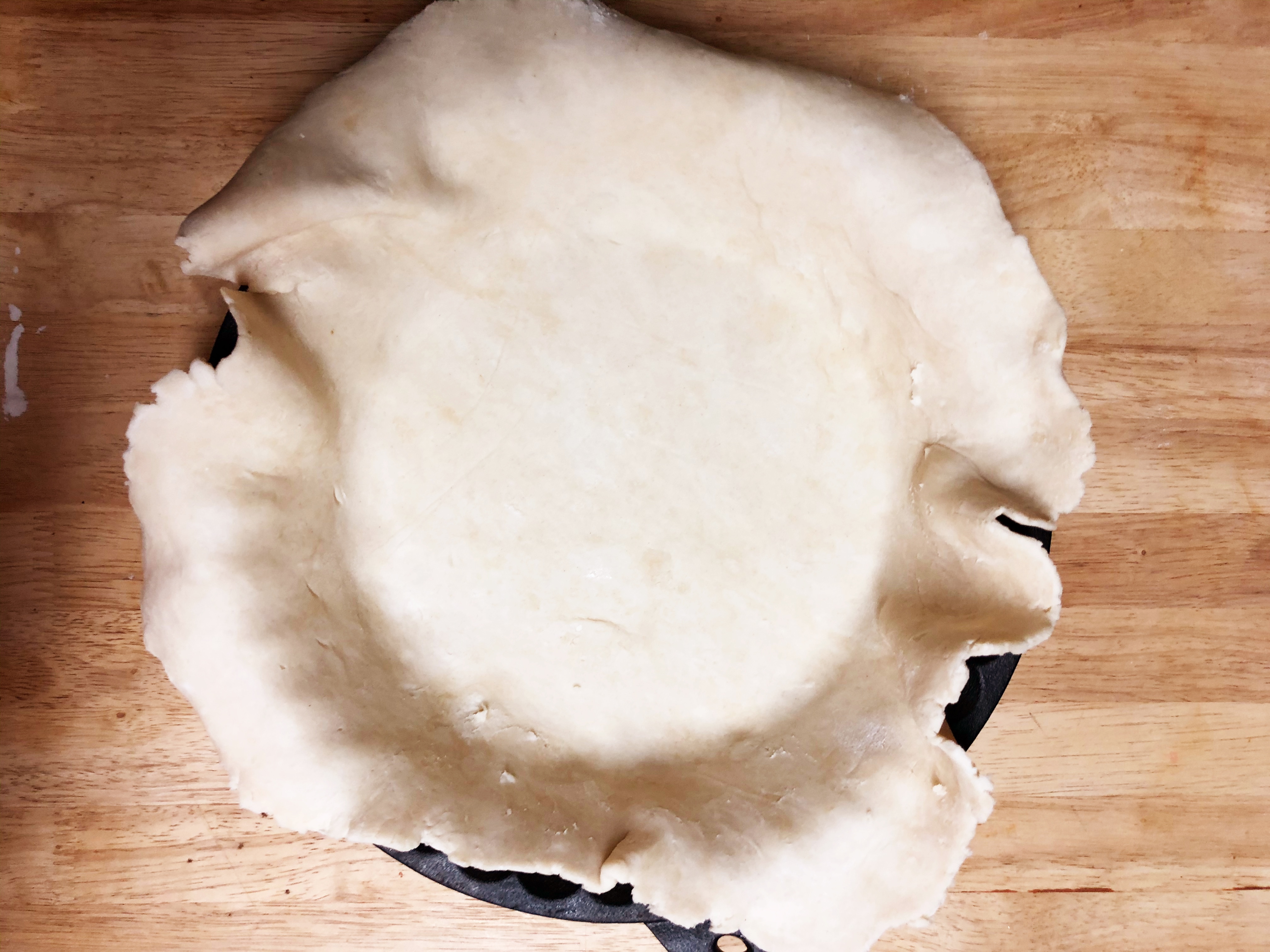
Using the wax paper, flip your pastry dough into a pie pan. Push down along the sides to make sure that the dough fills in any possible bubbles, and use your thumbs to push along the edges. Using a sharp paring knife, cut away any excess dough. Use a fork to pierce the bottom of the crust in several spots to avoid possible air bubbles during baking. For this recipe I used this cast iron pie pan (please note this is an affiliate link) that I have subsequently fallen in love with. It gives a perfect even brown crust every time!

Stir the fruit filling to ensure that the juices that have formed evenly coat every piece of fruit, and pour it into the pie pan. If it domes up a little over the edge of the pie pan that’s totally okay.

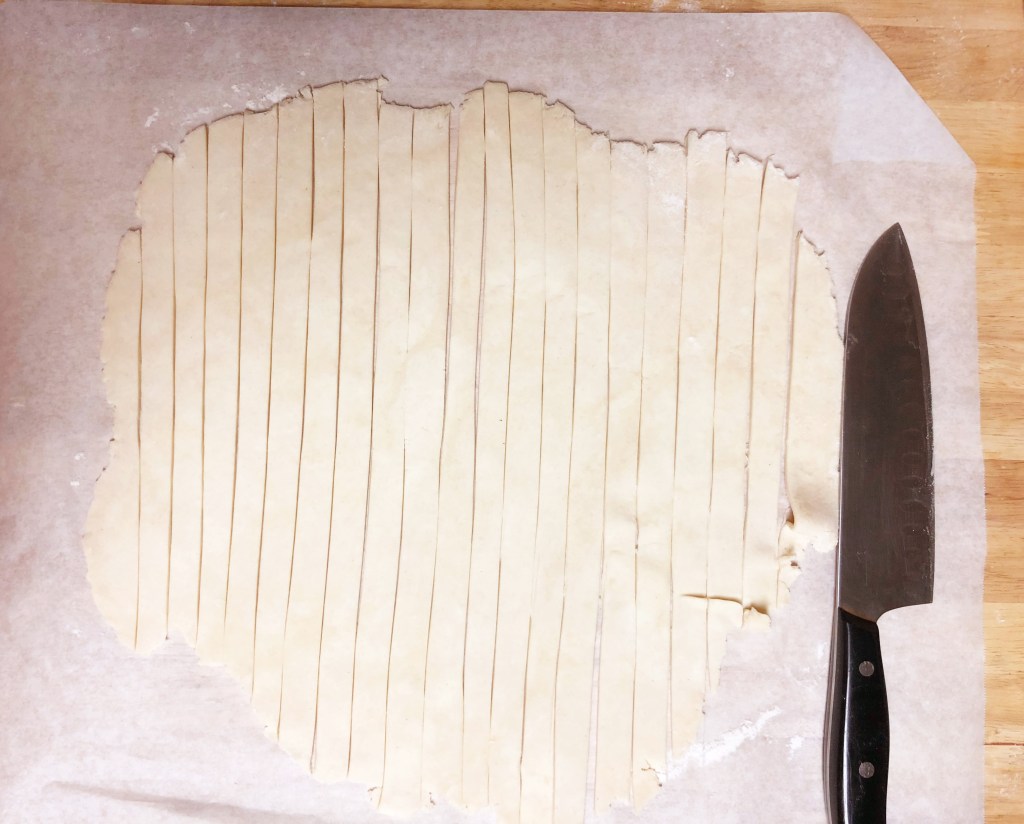
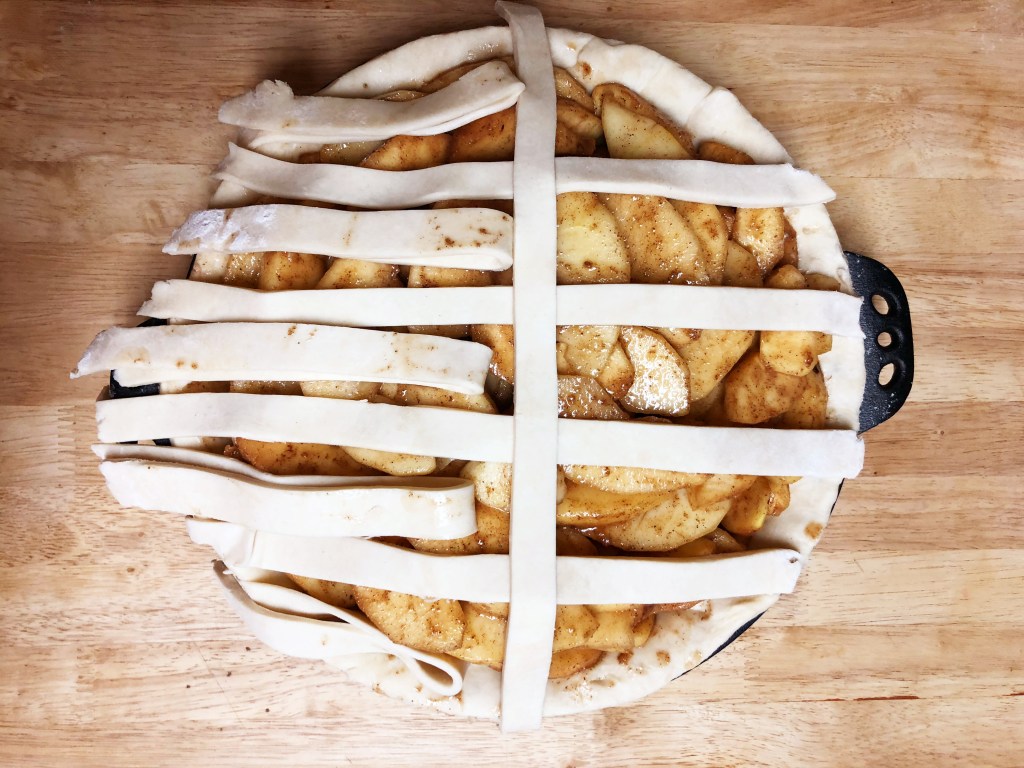
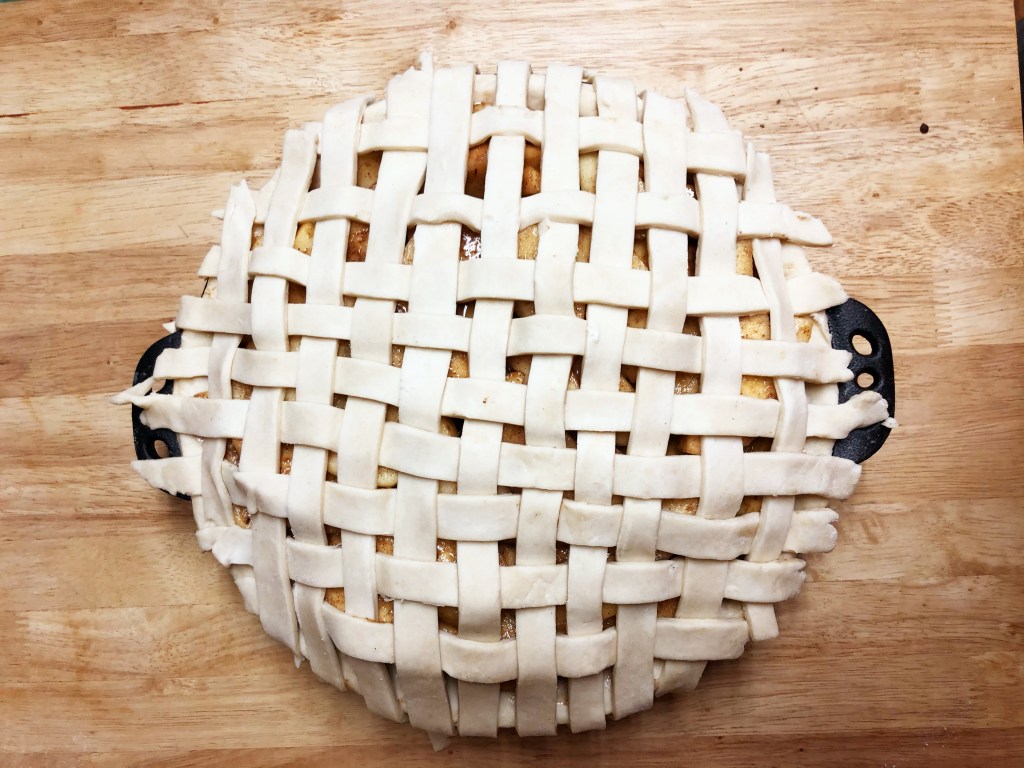
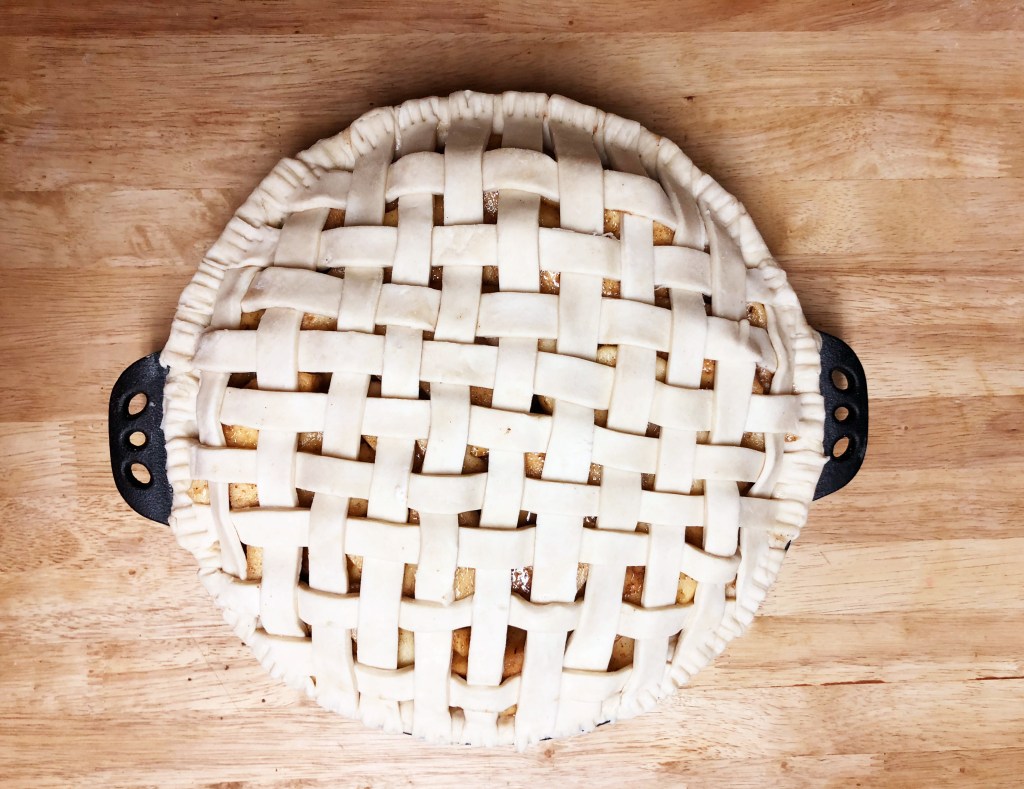
Now it’s time to make a lattice top crust with the remaining dough round. If you’ve never made a lattice crust it’s a lot easier than it looks. Start by rolling out the pastry dough on lightly floured wax paper until it is about 1/6th inch thick again. Using a large knife, cut the dough into 1/2 inch strips. Lay half of the strips across the top of the pie facing one direction (imagine window blinds). Fold over backwards every other strip of dough and lay one strip across the middle (as shown in the second photo in the top row). Lay the folded strips back out straight, and fold back the opposing set of horizontal strips. Lay down another strip of dough and keep repeating this alternate weave until you have finished one half of the pie. Then repeat the process working from the middle on the other half of the pie. When you have finished weaving your lattice top, push down with your fingertips along the edge of the pan to form a seal, and use a sharp paring knife to cut away any excess dough. Finally, take a fork and press along the edges to ensure a perfect seal.

Lastly, brush the top of the finished pie with milk, and sprinkle coarse sugar over the top. This will help to brown the top and make it pleasantly sweet as well. If you cannot find sparkling or coarse sugar, demerara or turbinado sugar makes a suitable substitute. Refrigerate the pie for 20-30 minutes, and in the meantime preheat the oven to 400 degrees with a rack in the lower third of the oven.

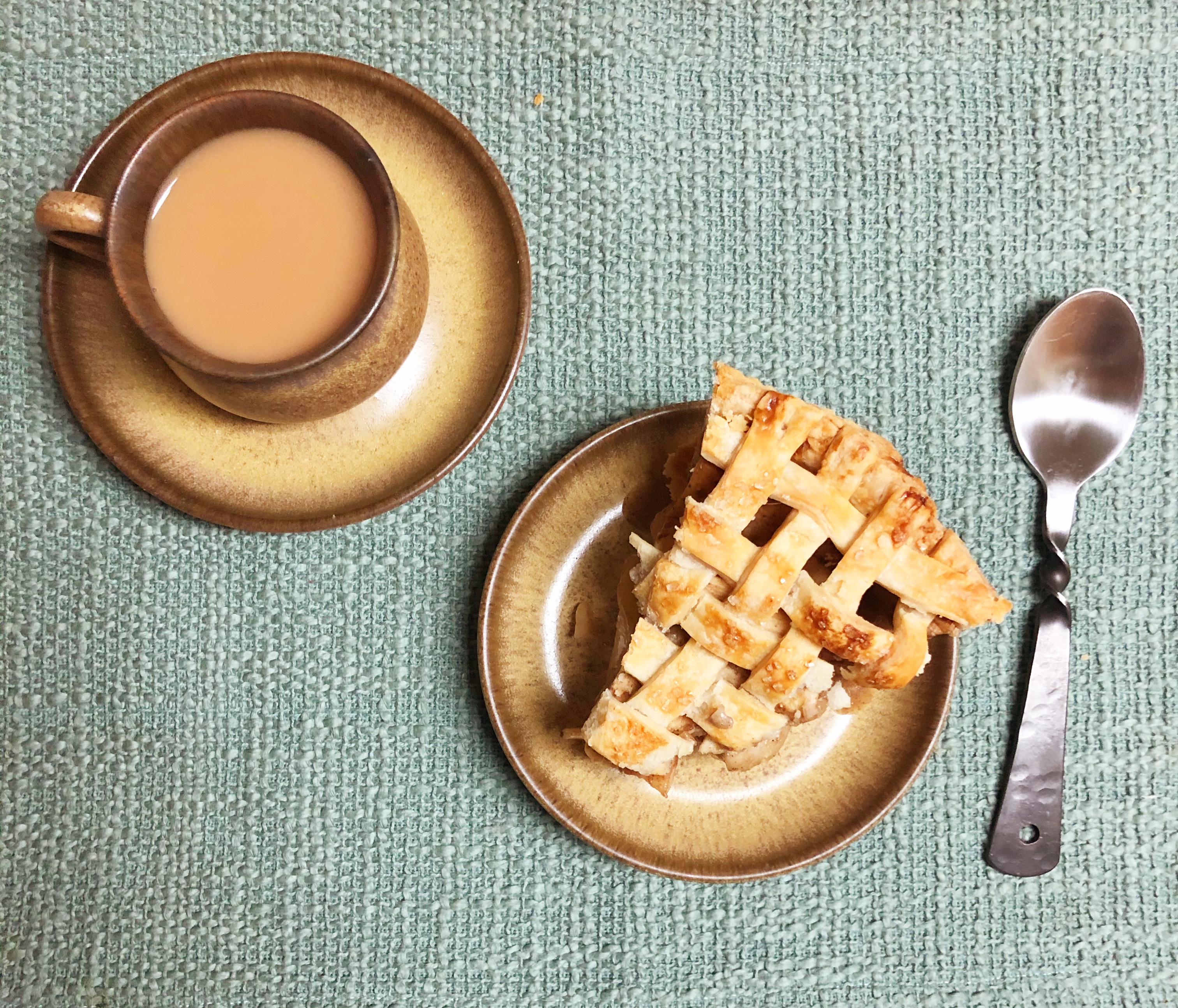
After 30 minutes, bake the pie at 400 degrees for 20 minutes, then reduce the temperature to 350 degrees Fahrenheit. Bake the pie for 50-60 minutes longer (if using cast iron) or 40-50 minutes (if using an aluminum or ceramic pie tin). Check on the pie about halfway through the baking time to make sure the crust isn’t browning too fast, and if it is loosely tent the pie with tinfoil. You’ll know the pie is done when the inside is bubbling a little bit and the top crust is golden brown. Allow the pie to cool at room temperature for at least two hours before serving. Serve with Black Tea or Metheglin and a sense for adventure. After serving, leftovers can be stored covered in the fridge for up to five days.

This recipe was part of my 2020 Elder Scrolls Thanksgiving Feast. (Held with only the members of my household, all of whom were unable to be home with their families due to the COVID Pandemic).

Skyrim Apple Pie

  • Servings: 6-8
  • Difficulty: Easy
  • Print

A medieval apple pie straight from the food stalls of Skyrim to your Holiday table.


Ingredients

-4 Large Honeycrisp Apples

-4 Quince

-1 Double Batch of Grammy’s Butter Crust (chilled overnight as two rounds)

-1 tsp Cinnamon

-1 tsp Ginger

-1 tsp Cardamom

-1/4 tsp Ground Cloves

-1/2 tsp Freshly Grate Nutmeg

-1 tsp Vanilla Extract

-1/4 Cup Flour

-1/4 Cup White Sugar

-1/4 Cup Dark Brown Sugar

-1 Tbsp Whole Milk

-2 tsp Coarse Sugar


Directions

  1. Gather your ingredients. Peel, core, and slice apples and quince into 1/4 inch thick slices.
  2. Mix sliced fruit, spices, vanilla, sugars, and flour in a large bowl with your hands until thoroughly combined. Set aside.
  3. Roll out first round of Butter Pastry Dough over lightly floured wax paper. Transfer into pie pan using the wax paper to lift. Push out any air bubbles and ensure the dough is evenly distributed in the pan. Using fingertips push along the edges to create an even crust. Cut away excess dough using a sharp knife. Pierce bottom of pie in several places using a fork to ensure no air bubbles form.
  4. Stir fruit filling to ensure it is well combined and pour into prepared pie pan.
  5. Build lattice crust (see instructions above).
  6. Brush top of pie with milk, and sprinkle with coarse sugar.
  7. Set pie aside to chill in refrigerator for 30 minutes. Preheat oven to 400 degrees Fahrenheit.
  8. After chilling, bake pie for 20 minutes at 400 Degrees, then reduce temperature to 350 Degrees. Bake for 50-60 minutes if using cast iron, or 40-50 minutes if using an aluminum pie tin. Check midway through and tent with tinfoil if browning too quickly. Allow to cool for at least two hours at room temperature before serving.

No comments to show.

Daedra heart (Gin and Jam Tonic Jelly)

Daedra Heart

“I may have a deal we could work out. I need a Daedra’s Heart. Jarl wants me to cool his new sword in blood.”

-Moth gro-Bagol, Understone Keep (Skyrim)

If you’re looking for a recipe to astound at a Halloween party next weekend, or just looking to appease the Daedric Prince Malacanth, this jelly is sure to cause a commotion wherever it shows up. Gin, Tonic, and Fresh berries lead in with their natural flavors and colourful pop to bring one of the goriest alchemical ingredients in the Elder Scrolls to life. The end result is a visually enchanting edible cocktail that will keep your friends talking for days.

The basis for this recipe is a combination of the classic Gin and Tonic, and the Gin and Jam Cocktails. The recipe itself doesn’t add any sugar to the jelly mold (aside from what occurs in the Jam) to allow the natural botanicals of the gin and the bitterness of the quinine in the tonic to come forward, complemented but not overpowered by the natural sweetness of the berries. If you want something sweeter to serve, you can add up to three tablespoons of granulated sugar without affecting the setting ability of the recipe.

Notes about your ingredients:

  • Tonic Water: Just about any will do, I’ve always been happy with Fever-Tree’s tonic.
  • Kanten, or Agar Agar: I use Kanten, which is a Japanese product that’s very similar to Agar. If you can’t find Kanten at your local Japanese market, Agar will do in a pinch. And if you can’t find Agar, you can substitute the same quantity of unflavored Gelatine. The nice thing about Agar or Kanten is that they’re actually vegan-friendly, if you want to serve your Daedra Heart to someone with dietary restrictions.
  • Gin: Use your favorite Gin for this recipe, but if you’re not a Gin fan you can substitute in the same amount of your preferred Vodka, or any other clear spirit. If you’re looking for a Gin suggestion, I live and die by Suntory Roku Gin.
  • Strawberry Jelly: You’ll want a jelly rather than preserves with large pieces of strawberry in them. I use my homemade strawberry jelly from my Grammy’s recipe, and unlike my Grammy I’ll share the secret with you: It’s the same strawberry freezer jelly recipe that comes packaged with Certo Sure Jell Liquid Pectin, the secret is in using a food processor to puree the strawberries. If that sounds like a lot of work to you, grab whatever you have on hand. This is a surprisingly versatile recipe.
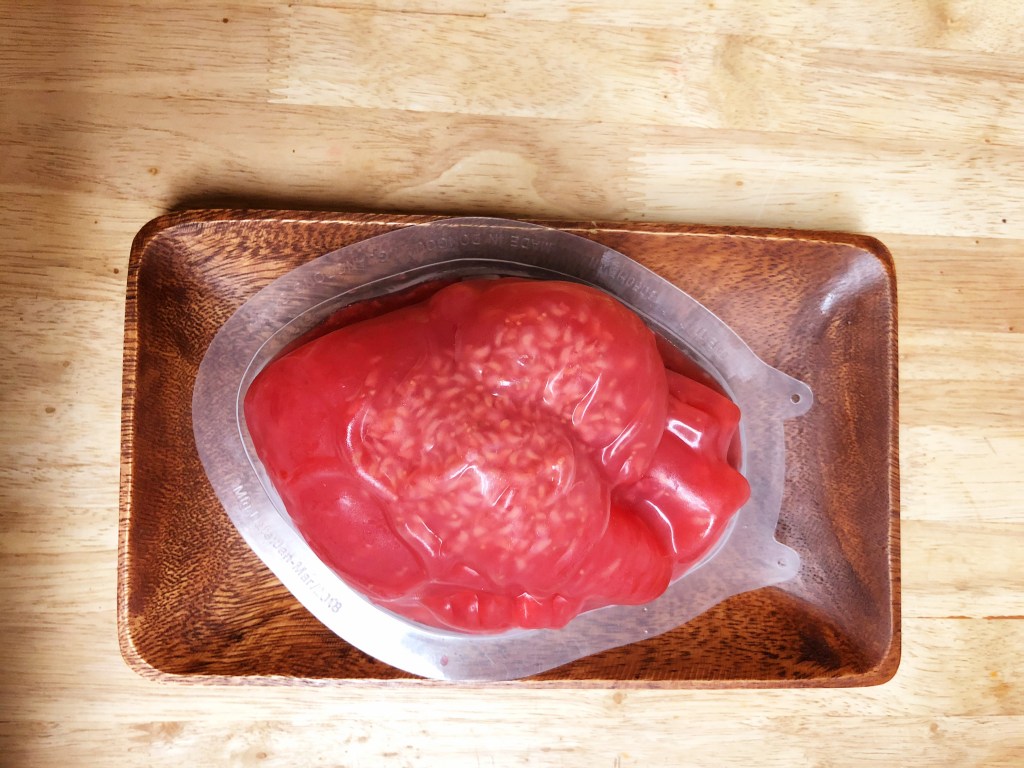
  • Heart Mold: I bought this heart mold from Amazon. While the recipe is certainly no longer a Daedra Heart if you don’t have a heart mold, if you’re interested in the recipe for the recipe’s sake, any 14 fl oz mold or bowl will do. If you do use the heart mold, pick a bowl in advance that will keep it upright in the refrigerator while your jelly sets overnight.

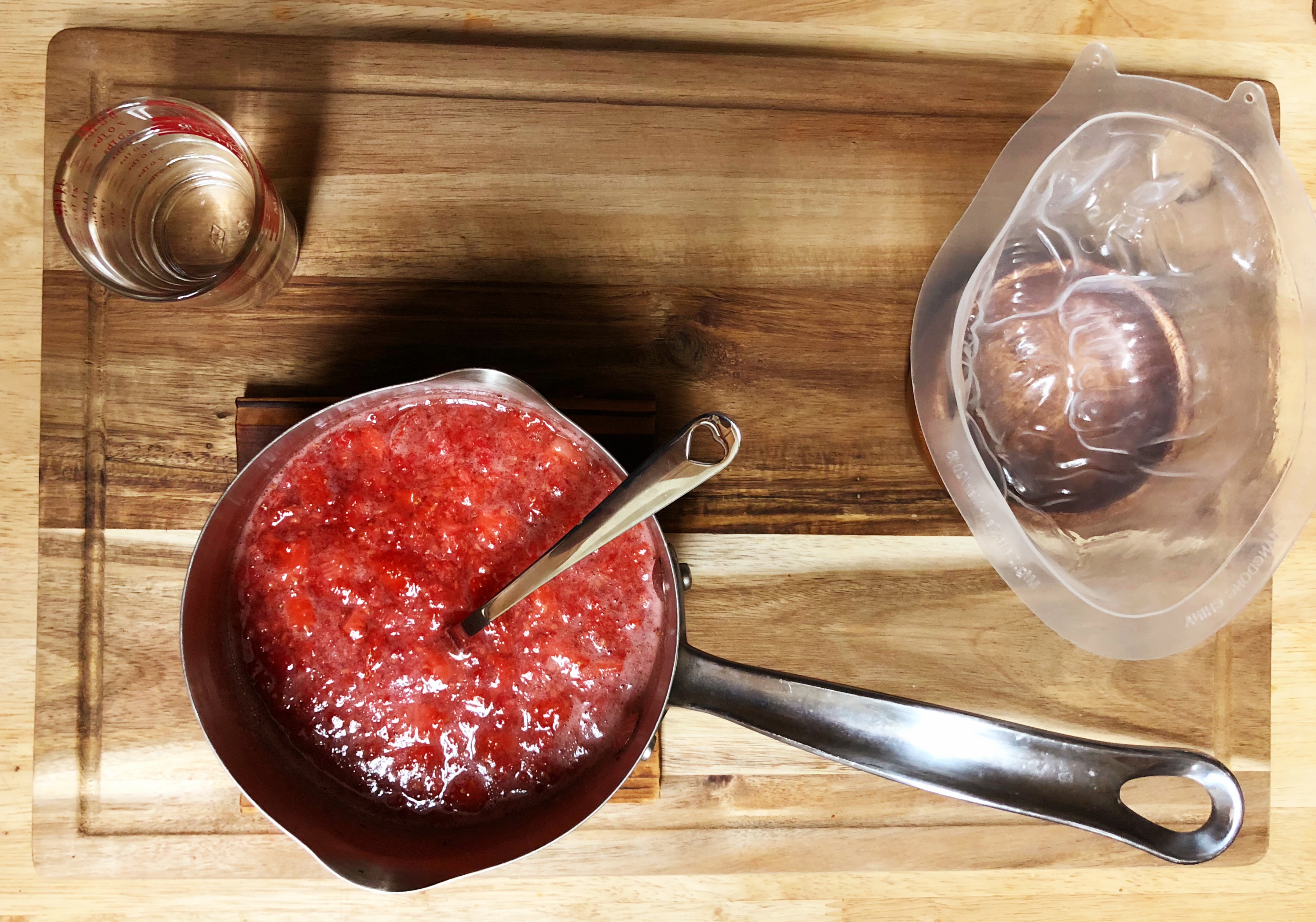
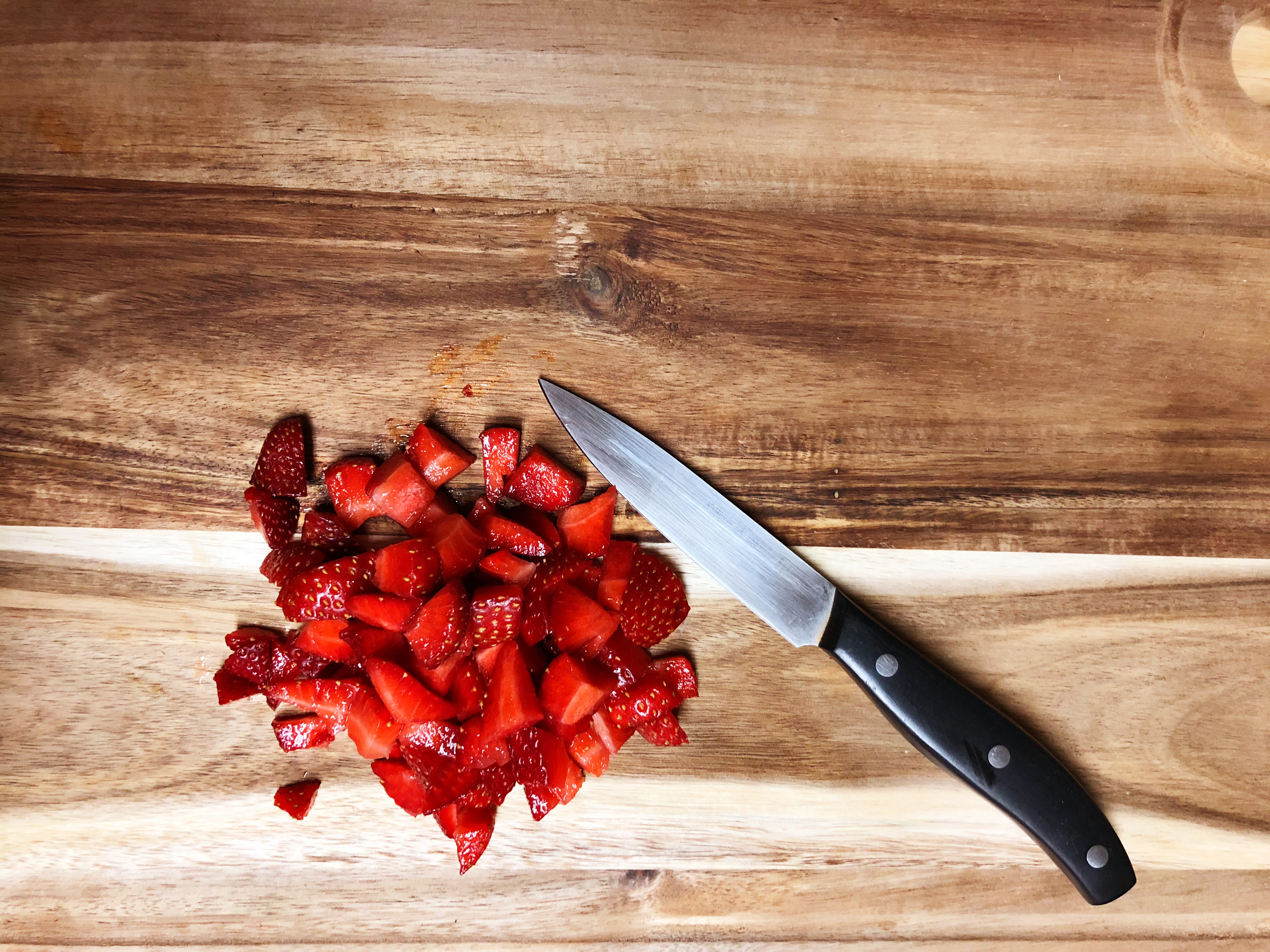
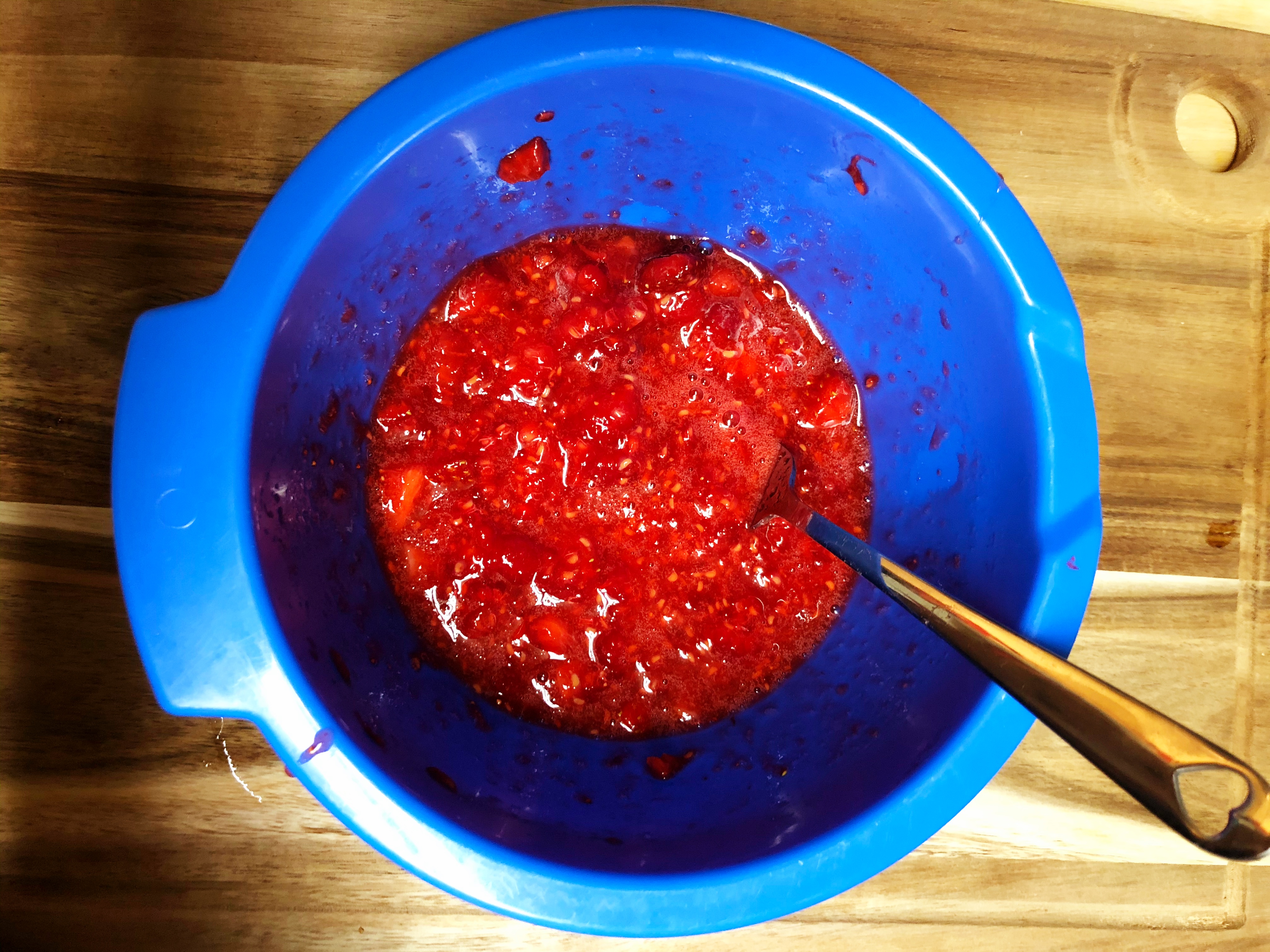
To begin, dice the five strawberries into 1/4 inch pieces. Add the diced strawberries and raspberries to a small mixing bowl and mash together with a fork. The mixture should be a little chunky, not a fine puree. Add three tablespoons of strawberry jelly to the mixture and stir to combine. Reserve 1/2 cup of this sauce in an airtight container and add one teaspoon of sugar, stir and set aside in the refrigerator.

Add one stick of kanten (or agar) to the tonic water and bring to a boil over medium-high heat. Once the mixture has come to a boil, stir in the remaining berry mixture and turn off the heat. Set the pan aside to cool for 2-3 minutes. While the pan is cooling, grease your jelly mold: use either vegetable oil and a paper towel, or non-stick spray. Once the mixture is just warm and no longer hot, stir in the gin and pour into your mold, which should be placed into a bowl or vessel to keep it upright. Put the mold, uncovered, in the refrigerator overnight.

The next morning, overturn your mold onto a plate and allow it to sit at room temperature for five minutes. As the jelly warms slightly, it will likely pop out of the mold on its own. If it does not after five minutes, you can gently go over the edges will a dull butter knife, taking care to not cut into the jelly.

Serve with the berry sauce poured over the top for extra gore factor. This recipe will serve 2-4 Alchemists comfortably, but can easily be doubled or tripled to serve more.

Daedra Heart

  • Servings: 2-4
  • Difficulty: Easy
  • Print

A gin and jam tonic jelly inspired by the Elder Scrolls.


Ingredients

-One 6.8oz bottle of Tonic

-3.5oz Gin

-6oz Fresh Raspberries

-5 Medium Strawberries

-3 Tbs Strawberry Jelly

-1 Stick (or measured 4g) Kanten or Agar

-1 tsp Granulated Sugar


Directions

  1. Gather your ingredients.
  2. Dice strawberries into 1/4 in pieces. Combine with raspberries in a small mixing bowl and mash roughly with a fork. Add strawberry jelly and stir to combine. Reserve 1/2 cup of berry mixture and combine with 1 tsp sugar, store in an airtight container in the refrigerator.
  3. Heat tonic and kanten in a small saucepan over medium-high heat until lightly boiling. Stir in remaining berry mixture and turn off heat. Set aside to cool for five minutes.
  4. Grease jelly mold with vegetable oil or nonstick spray and place inside a bowl for stability.
  5. Once jelly mixture is no longer hot to the touch, add gin and stir. Pour mixture into jelly mold and store in the refrigerator overnight, or at least 6 hours to fully set.
  6. Overturn jelly mold onto a plate and allow to sit for five minutes to reach room temperature. If jelly does not lift out of the mold on its own, gently run a dull butter knife around the edges to loosen it. Serve with reserved berry sauce poured over the top.