Candied Chestnuts

“Ho hurr hurr! Liddle wunner they send oi t’keep watch on ‘ee, you’m a villyen, Maister Gonff. Keepen ‘ee paws outten ‘ee chesknutters, or oi tells Miz Bell offen ‘ee.”

-Billum, from Mossflower by Brian Jacques, p.103

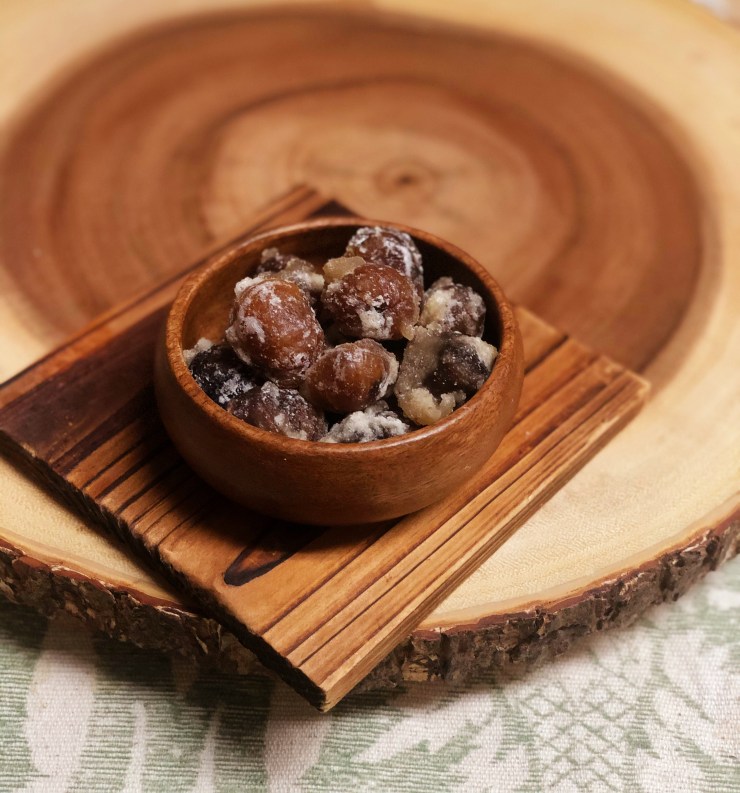
Few foods in the cuisine of Redwall Abbey and the greater Mossflower Wood has captured more readers’ attention and left a more memorable impression than Candied Chestnuts. Making their first appearance early on in Redwall, Candied Chestnuts remain not only a tantalizing described treat, but an important plot device in several books. For me as a child, Candied Chestnuts held an almost holy place: the way Brian Jacques described each morsel, covered in sugar, coveted by birds especially, made me crave them. As such no recipe has ever reached higher on my list of dream recipes than candied chestnuts.

For this recipe I started with a traditional Marrons Glacé recipe but expanded on the recipe to match the descriptions of Candied Chestnuts from the book, namely achieving a crispier outer shell with present sugar crystals. Though the final results takes several days to pay off, you’ll find the crispy shell surrounding a gently chewy center to be well worth the wait.

To begin you will need one and 1/4 cups of water, two cups of granulated sugar, 1/4 teaspoon freshly grated nutmeg, 1/4 teaspoon cardamom, 1 teaspoon vanilla extract, and approximately one pound of roasted chestnuts (I used three 5.2 oz bags of Gefen Roasted Chestnuts, a little over a pound, available on Amazon). If you have trouble finding roasted chestnuts, I recommend checking in with your local Asian Markets. By using prepackaged roasted chestnuts this recipe is easy to create any time of year, regardless of being bound by Chestnut Season.
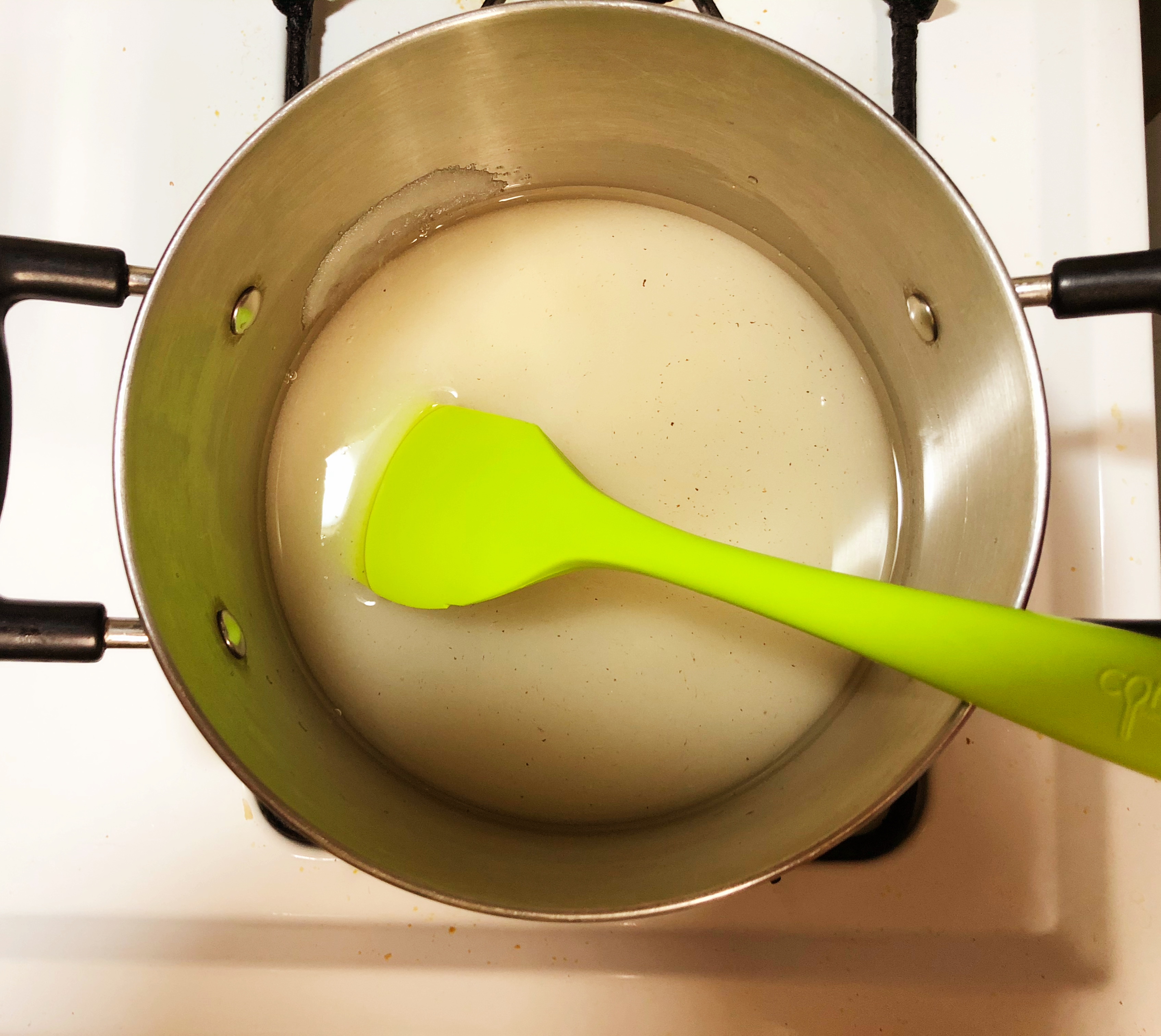
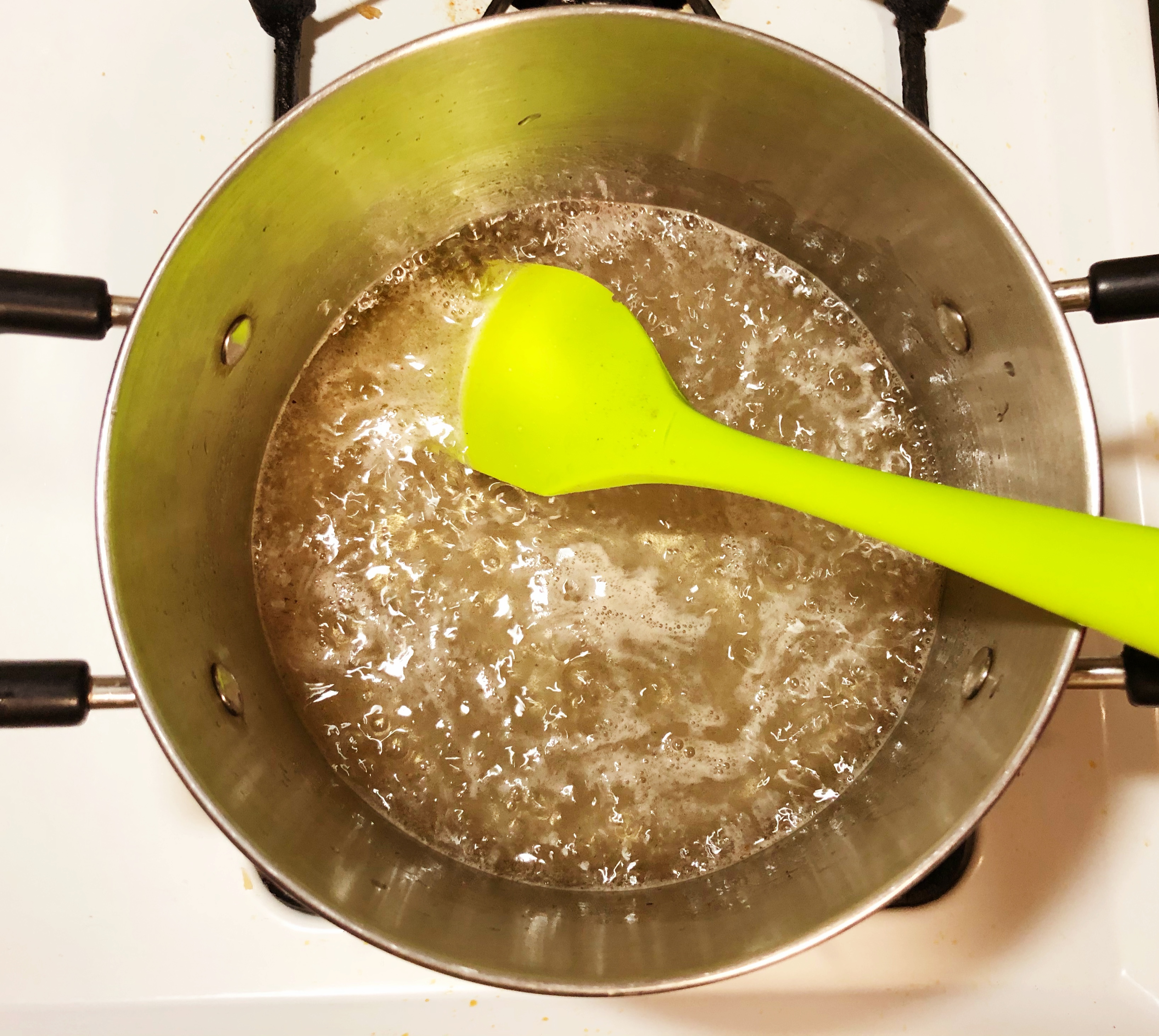
In a medium pan, add water, sugar, cardamom, and vanilla and bring to a boil over medium heat, stirring constantly. Once the mixture reaches a boil, continue cooking it for five minutes, stirring occasionally.

Add the chestnuts to the pot carefully, and bring the mixture back to a boil, stirring constantly. Continue boiling the chestnuts in the syrup, stirring frequently, for ten minutes.

After ten minutes has elapsed, turn off the heat and allow the mixture sit for about sixty seconds, until it stops bubbling. Carefully transfer the mixture to a clean dish or container and cover loosely. Allow the mixture to sit undisturbed for 12-18 hours. After enough time has elapsed, transfer the mixture back to a clean pot and bring to a boil again, stirring until the mixture is boiling. Allow the chestnuts to boil for three minutes, then remove from heat. Transfer back to the same container once it has ceased bubbling, and once again allow the mixture to sit undisturbed for 12-18 hours. Repeat this process 3-5 times (it will required more repetition if the weather is colder, and less in warmer weather) until almost all of the syrup has been absorbed by the nuts.

When you check on the nuts and find that most of the syrup has been absorbed, preheat the oven to 200 degrees, or a warming setting if your oven has one, and transfer them to the pot one last time and bring them to a boil. This time, boil the chestnuts for ten minutes, stirring frequently. The purpose of this final boil is to bring the syrup to a setting temperature, which will allow thick sugar crystals to form on the outside of the chestnuts.

Transfer the chestnuts and remaining syrup back to the cleaned container and set the chestnuts aside to cool slightly (about 3-5 minutes, until you can pick them up safely with your fingers) and prepare a baking sheet with parchment paper. When the sugar mixture has begun to set around the chestnuts and then can be touched, use a spoon or your fingertips to transfer each chestnut to the lined baking sheet. Allow some of the sugar crystals to remain on the chestnuts, these will help to form the harder outer shell. Bake the chestnuts at 200 degrees for 45 minutes to an hour, until they have firmed up and the surfaces of the nuts are dry and crispy.

Allow the chestnuts to cool completely, and then transfer to an airtight container. They will keep at room temperature for 1-2 weeks, but it’s unlikely they will last all that long! Serve as a snack by themselves, or alongside holiday treats. Or use them as garnishes on baked goods, or chopped in cookies.

Candied Chestnuts

  • Servings: 4-8
  • Difficulty: Medium
  • Print

Among the most iconic of Redwall foods, a treat to sweeten any day.


Ingredients

-1 Pound Roasted Chestnuts

-2 Cups Granulated Sugar

-1 and 1/4 Cups Water

-1 tsp Vanilla Extract

-1/4 tsp Freshly Grated Nutmeg

-1/4 tsp Cardamom


Directions

  1. Gather your ingredients.
  2. Bring Water, Sugar, Vanilla, Cardamom, and Nutmeg to a boil over medium heat, stirring constantly.
  3. Add chestnuts and boil for ten minutes, stirring occasionally.
  4. All to cool until mixture stops bubbling and transfer to a clean container. Cover loosely. Allow to sit for 12-18 hours undisturbed.
  5. Transfer the mixture to a medium pot and bring back to boil over medium heat, stirring occasionally. Allow to boil for three minutes. Allow to cool and transfer back to container, cover loosely, and allow to sit undisturbed for 12-18 hours.
  6. Repeat step 5 3-5 times, until almost all of the syrup has been absorbed by the chestnuts.
  7. Once almost all of the syrup has been absorbed, preheat oven to 200 degrees and bring chestnuts to a boil, stirring frequently. Boil over medium heat for ten minutes. Transfer back to the container and allow them to cool until syrup starts to set.
  8. Using a spoon or your fingertips, transfer chestnuts one by one to a parchment lined baking sheet, taking care to make sure each chestnuts has some sugar crystals attached.
  9. Bake at 200 degrees for 45-60 minutes, until the nuts have firmed up and are dry and crispy to the touch.
  10. Allow to cool completely and store in an airtight container for 1-2 weeks.
No comments to show.

Oat and Honey Scones

“You’ll like Goody Stickle. If I did have a mother one times, then she couldn’t be any nicer than Goody. Wait till you taste her spring vegetable soup, or her oat and honey scones, piping hot and oozing butter, or her apple and blackberry pudding with spices and fresh cream, or just her new yellow cheese with hot oven bread and a stick of fresh celery, aye, and a bowl of milk with nutmeg grated on top of it…”

-Gonff the Mousethief, Mossflower by Brian Jacques, p. 50

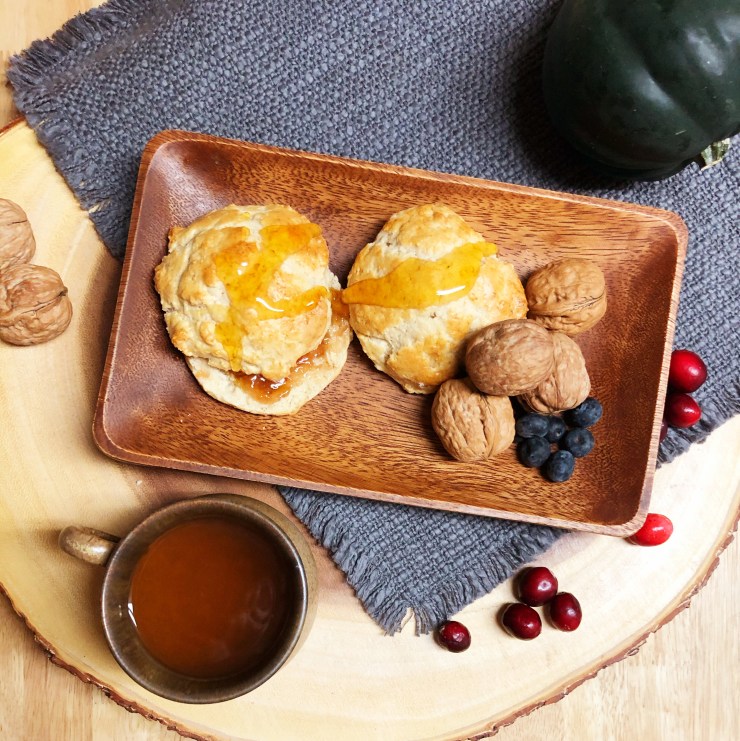
Few things in the world are quite as comforting as warm fresh scones from the oven, drizzled with honey and jam, and cup of hot herbal tea. If you’re looking for a good breakfast scone, a vessel for hot butter and honey, or just something to munch on before bed, then look no further than this recipe. A tad sweeter than Goody Stickle’s Oatfarls, and fluffier from their time in the oven, these scones prove that by tweaking a few ingredients a recipe can have a completely different outcome.

Begin, as always, by assembling your ingredients. For these scones you’ll need 1 cup all purpose flour, 1 cup oat flour, 1/4 cup old fashioned oats, 1 tbsp honey, 4 tsp baking powder, 1/2 tsp coarse kosher salt, 1/4 cup sugar, 6 tbsp unsalted butter at room temperature, 2/3 cup whole milk, and 1 large egg. Preheat the oven to 425 degrees Fahrenheit, and line a baking sheet with parchment paper.

Cube the butter and add it to a food processor along with the flour, oat flour, baking powder, sugar, and salt. Pulse a few times until everything is well blended and has developed a sandy texture. Pour the mixture into a medium-sized mixing bowl.

Add the egg to your pre-measured milk and whisk with a fork until it is well combined. Reserve 2 tablespoons of this mixture for later, and add the rest to the mixing bowl with the butter mixture, followed by the old fashioned oats, and honey. Stir with a rubber spatula or wooden spoon until it becomes too difficult to stir, at which point knead the dough against the sides of the bowl with your hand until it is thoroughly combined. It will be a wet dough, but avoid the temptation to add too much flour to the dough, or else the scones will come out tough and brittle.

Lightly flour your workspace and transfer the dough, kneading it until a soft ball forms. It will still be sticky, but continue to avoid adding too much flour or overkneading. Roll the dough out to one inch thickness, and use a scone or biscuit cutter to cut circles out of the dough. Do not twist as you cut, push down straight or the scones will not rise as high. You should be able to cut about 6-7 scones from the dough, and you can push together the scraps and get another scone or two out of them.

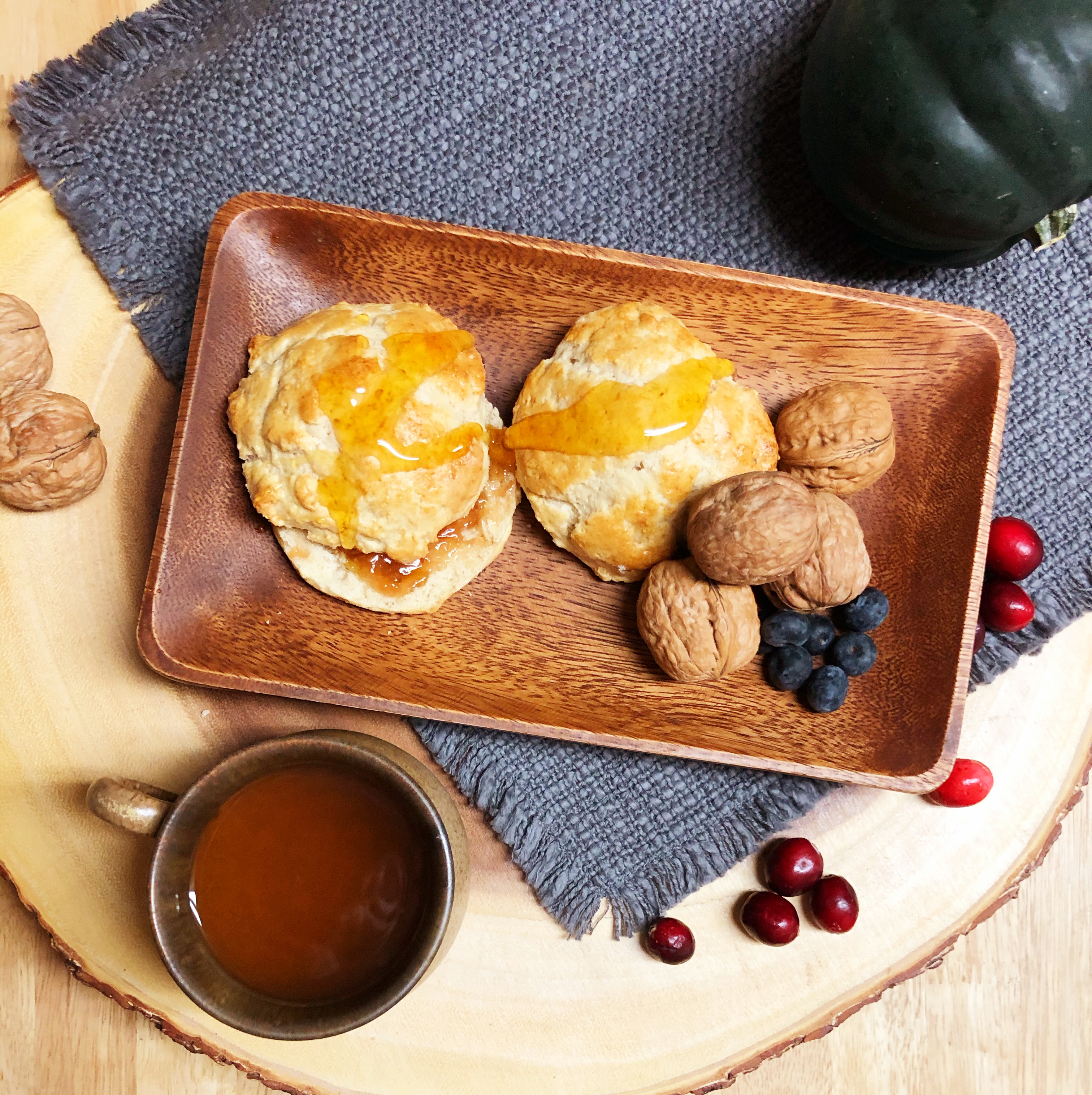
Arrange the scones on your parchment-lined baking sheet about two inches apart, and brush the tops with the reserved milk and egg mixture. Bake the scones for 15 minutes, until both the tops and bottoms are golden brown. Cool on a wire rack for 2-3 minutes, and serve warm with tea and honey or jam.

Oat and Honey Scones

  • Servings: 5-7
  • Difficulty: Easy
  • Print

Sweet and hearty scones to warm even the darkest hearts.


Ingredients

-1 Cup All Purpose Flour

-1 Cup Oat Flour

-1/4 Cup Old Fashioned Oats

-1 Tbsp Honey

-4 tsp Baking Powder

-1/2 tsp Coarse Kosher Salt

-1/4 Cup Sugar

-6 Tbsp Unsalted Butter at Room Temperature

-2/3 Cup Whole Milk

-1 Large Egg


Directions

  1. Gather your ingredients. Preheat oven to 425 Degrees Fahrenheit and line a baking sheet with parchment paper.
  2. Add Oat Flour, All Purpose Flour, Sugar, Baking Powder, Salt, and Cubed Butter to food processor and pulse several times until the mixture has a sandy consistency and is thoroughly combined.
  3. Add egg to pre-measured milk and whisk to combine with a fork. Reserve 2 tbsp of milk and egg mixture in a small bowl, and add the remainder to the butter mixture, along with the honey and old fashioned oats.
  4. Stir to combine first with a spatula, and then with your hands, kneading the dough against the sides of the bowl until all of the ingredients are thoroughly combined.
  5. Lightly flour your workstation and turn out dough onto the lightly floured surface. Knead until a soft ball forms, do not add excess flour.
  6. Roll out the dough to one inch thickness and use a biscuit or scone cutter to cut circles out of the dough. Combine the dough scraps to get one or two more scones.
  7. Arrange the scones on the prepared baking sheet about two inches apart, and brush the tops with the reserved milk and egg mixture.
  8. Bake at 425 Degrees for fifteen minutes, or until both the tops and bottoms are golden brown.
  9. Cool on a wire rack for 2-3 minutes, and serve warm with honey and jam.

No comments to show.

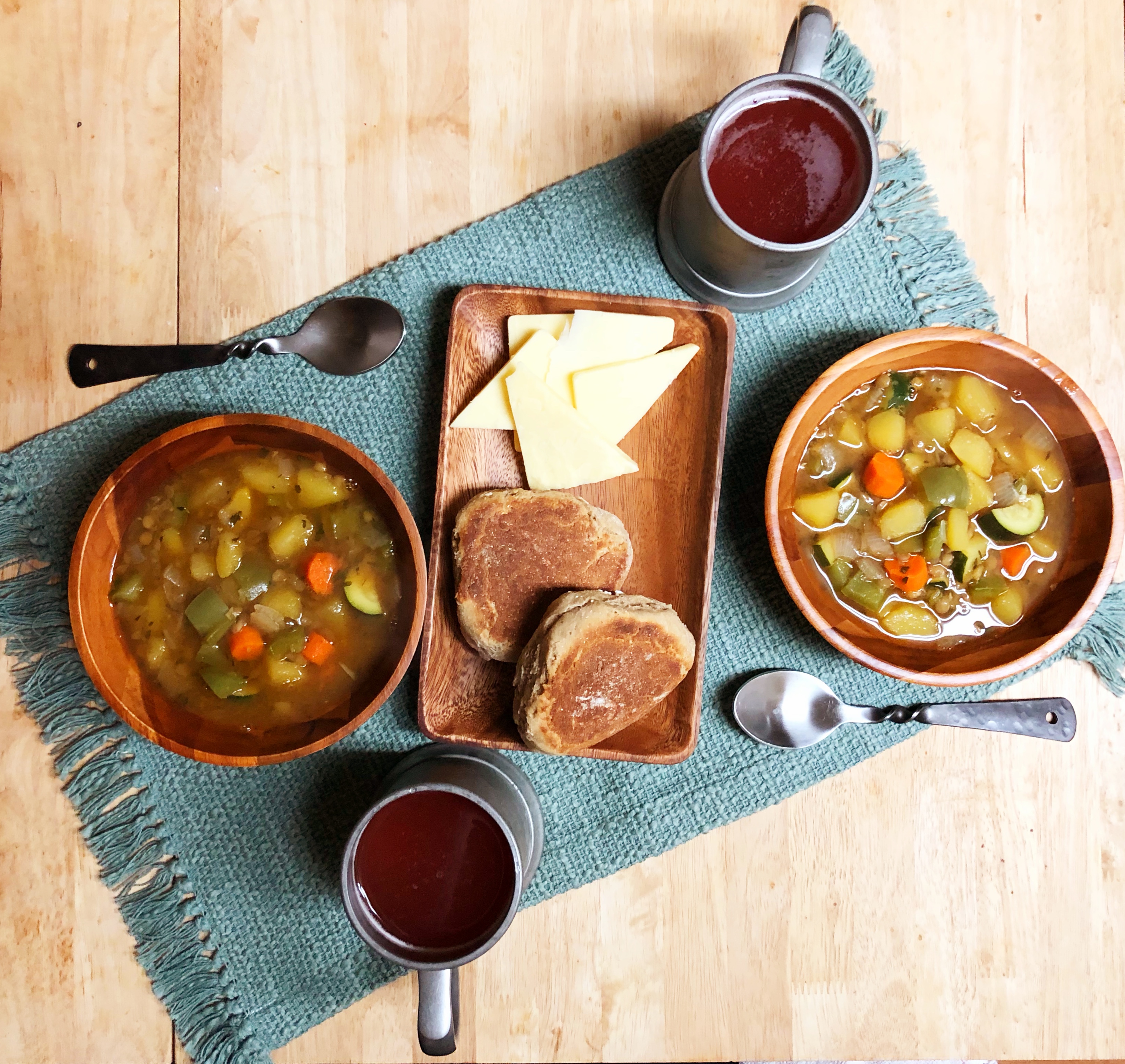
Goody Stickle’s Oatfarls

The hedgehog gnawed her lip. “Well, they ain’t slept in their beds last night. Asides that, there’s two oatfarls, a good wedge o’ cheese and some of my best blackcurrant cordial missin’ from the larder.”

Martin could not help smiling at the thought of the two little would-be warriors. “All that for breakfast! They’ll go bang one of these days. I wouldn’t worry too much, Mrs. Stickle. Knowing those two rascals, they’ll be back by lunchtime for more food.”

-Brian Jacques, Mossflower p. 117

What, exactly, is an oatfarl? Put simply, it’s a small quadrant shaped cake fitting somewhere on a Venn diagram where scones, soda bread, and bakestones (picau ar y maen, in Welsh) meet. The word “Farl” comes from a word once used in Lowland Scotland, “Fardel,” to describe a three cornered cake, usually oatcake. The word farl is most commonly used in Northern Ireland in the present, to describe what is often called “North Irish Soda Bread,” a key component of the Ulster Fry. Based on these explanations of a farl, an Oatfarl is more closely related to the Scottish Fardel than the Ulster Farl. A small dense oatcake, perfect for eating with cheese or alongside a hearty vegetable soup, and easy to prepare on the stove without ever flipping your oven on. My oatfarl recipe is perfect for anyone trying to add a simple bread to their evening meal without a great deal of effort, or anyone blessed with a tiny oven-less apartment.

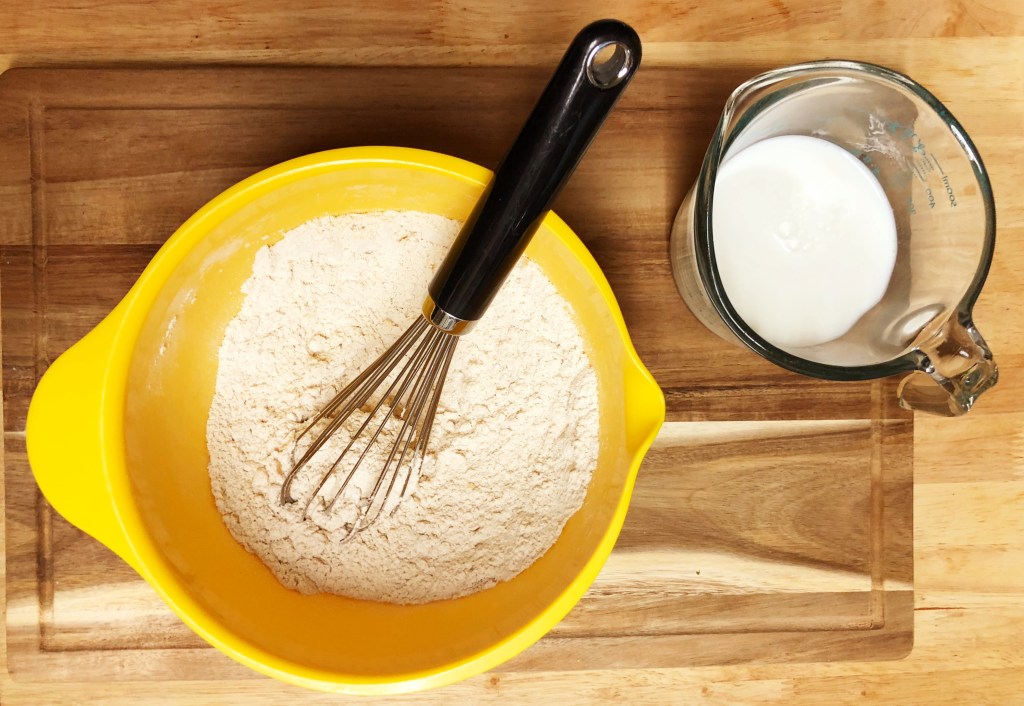
Begin by gathering your ingredients. You’ll need 1 cup of all purpose flour, 1 cup of oat flour, 1/4 cup of old fashioned oats, 1 cup of buttermilk, 1 teaspoon of baking soda, and 1/2 teaspoon coarse kosher salt. If you don’t have kosher salt, use 1/4 teaspoon of table salt. If you don’t have buttermilk, you can 1 tablespoon of white vinegar to a measuring cup and fill the rest of the way to the one cup line with whole milk. Allow it to sit for about ten minutes and it will add the same flavors as buttermilk to the recipe.

If you’re using a cast iron skillet, you can set it to preheat on the stove over medium-low heat. If you’re using a non-stick or aluminum skillet it won’t need to preheat. Whisk the dry ingredients together thoroughly.

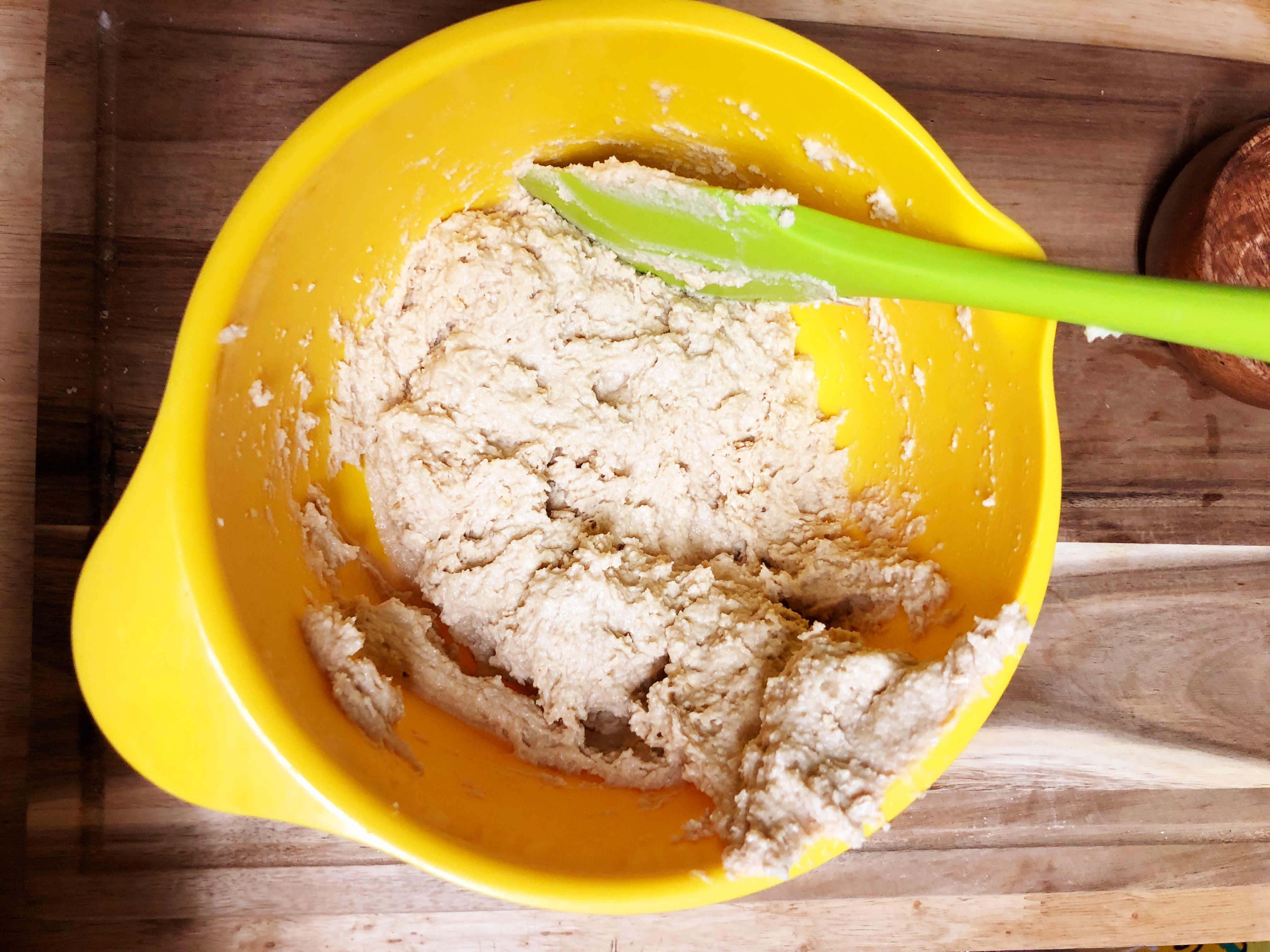
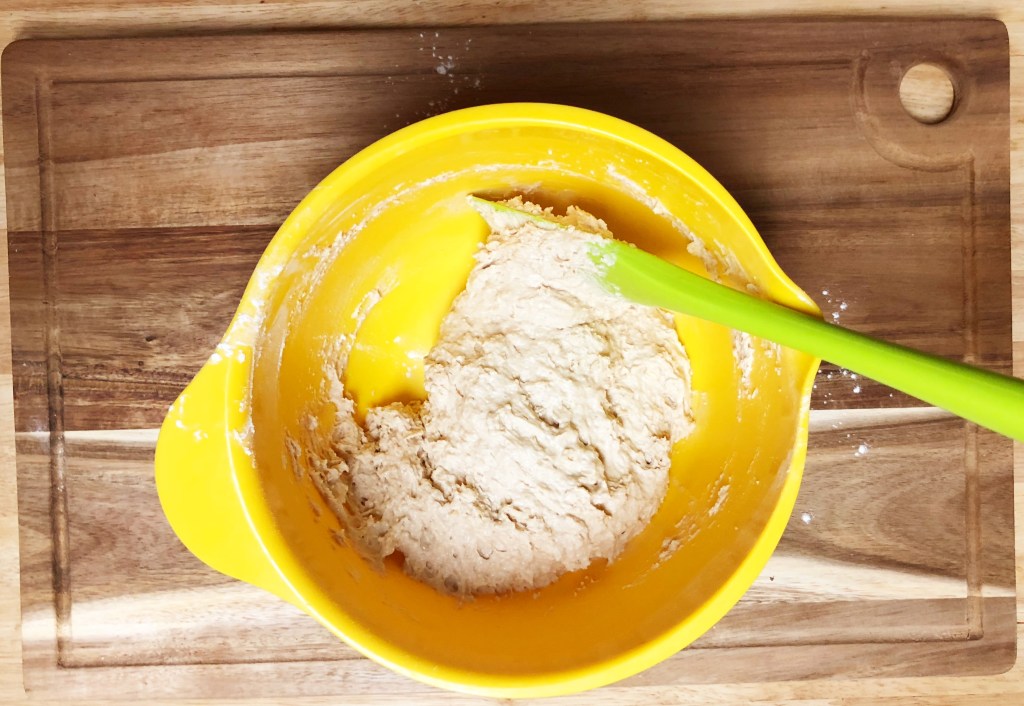
Add the buttermilk and mix with a rubber spatula or wooden spoon until a thick and sticky dough forms.

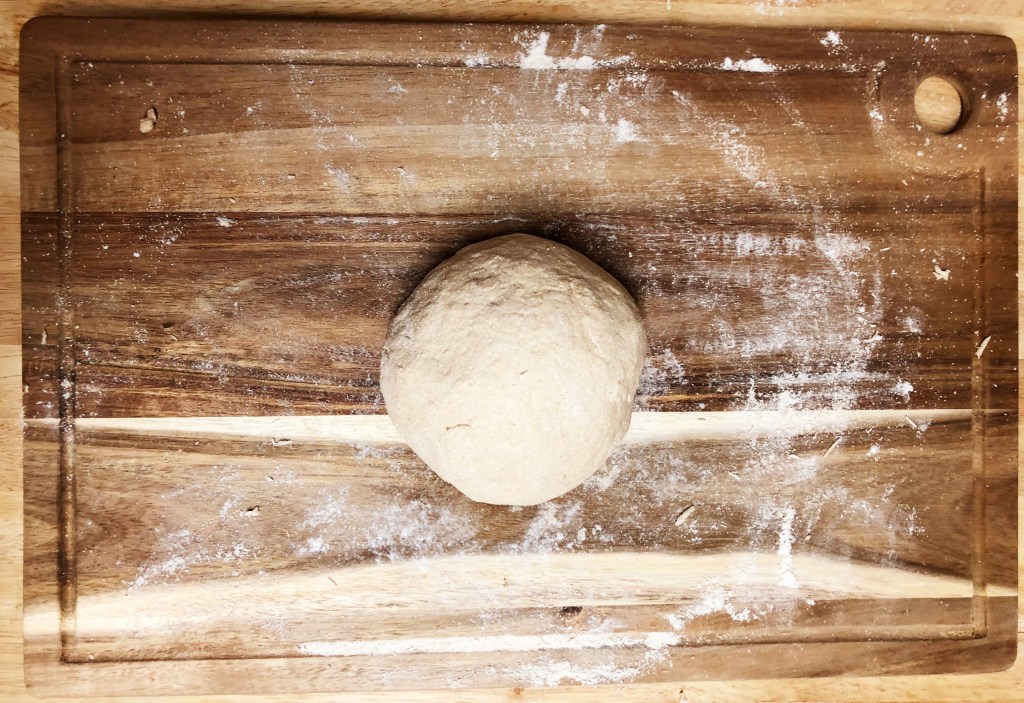
Generously flour your countertop or working space with oat flour and tip out your dough onto the counter. Dust the top of the dough with oat flour and then knead the dough until it comes together in a soft ball. It will still be sticky, but not nearly as sticky as it was before. You can continue to add additional oat flour a dusting at a time until you are able to achieve this ball.

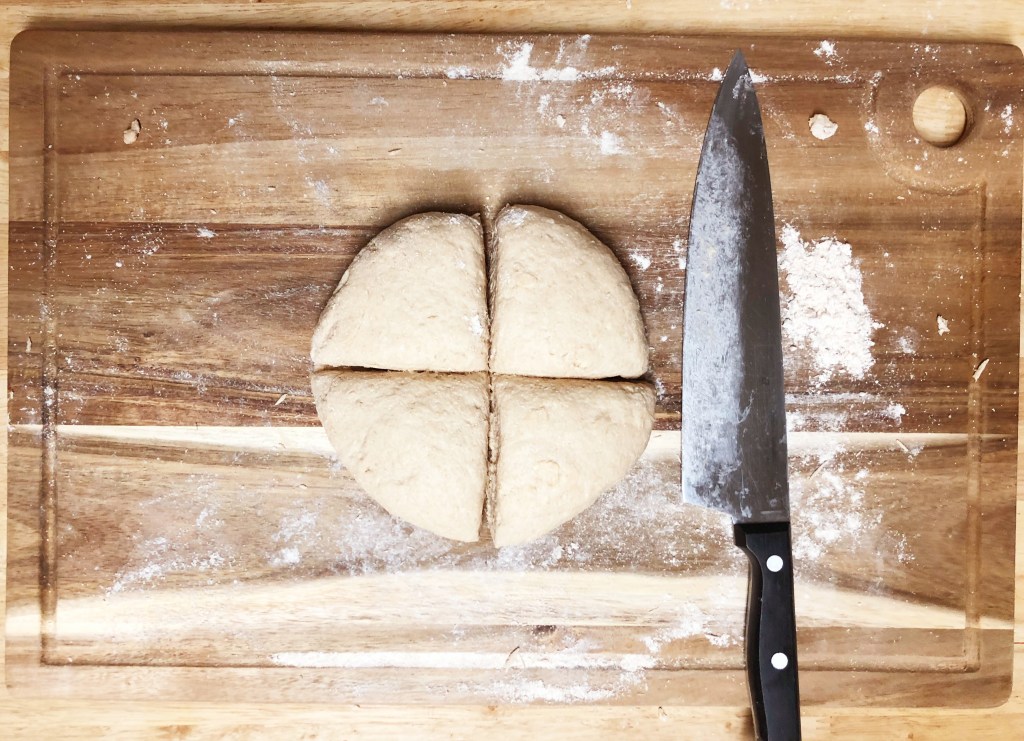
Flatten the ball with your hands until it is about one or one and a half inches thick. No need to use a rolling pin. Use a sharp knife to cut the round into four equal quadrants. Flatten each quarter separately into half inch thick wedges and set aside.

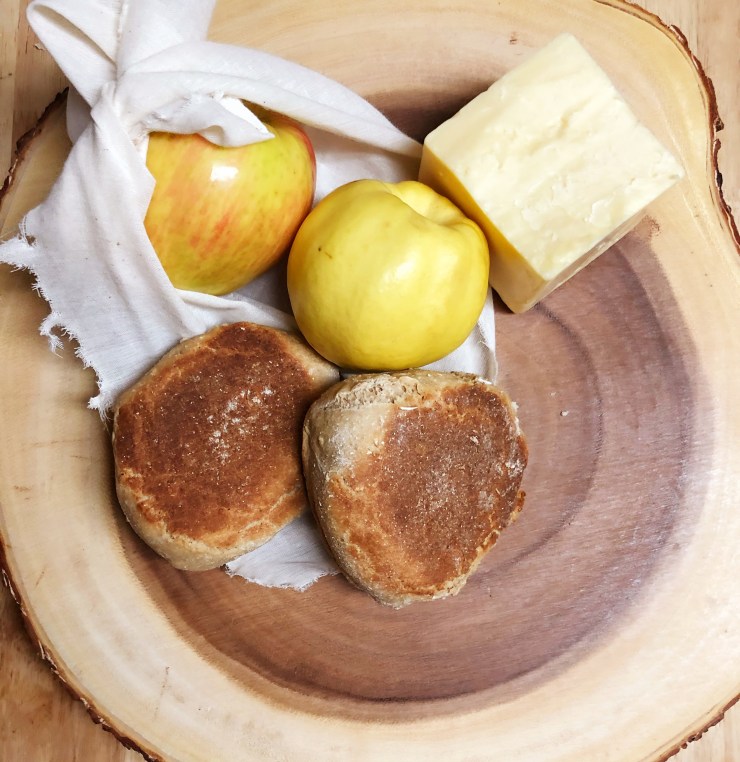
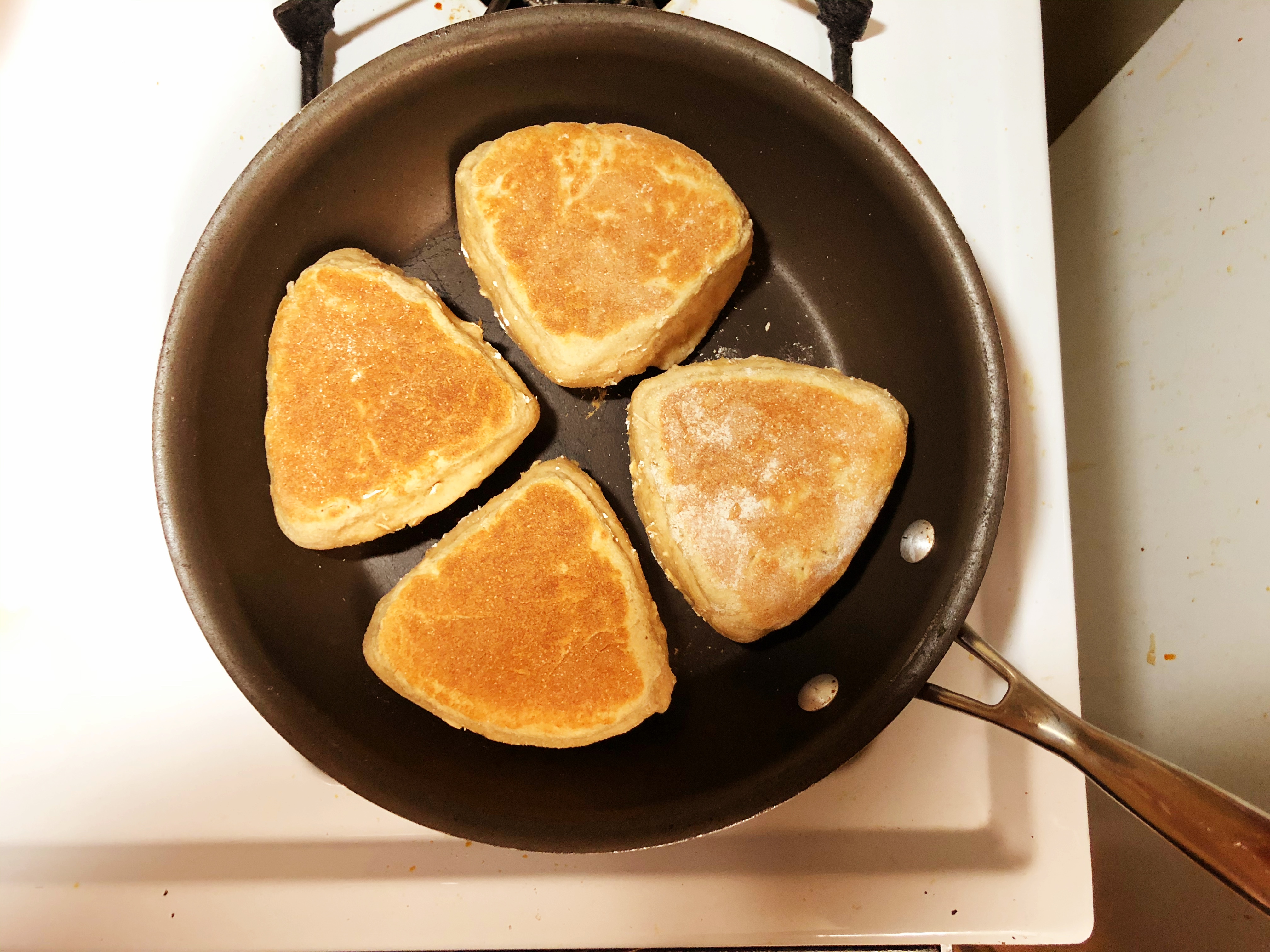
If you have not preheated your skillet, heat it now over medium-low heat. When the skillet is hot, place the farls in the skillet with a little space in between each one. Make sure your skillet is not too hot, or else the bottoms will brown before the inside has had time to cook. Cook for about 15 minutes until the bottoms are a deep golden brown, and then flip the farls, cooking on the opposite side for an additional 15 minutes. Check the bottoms of the farls halfway through each cooking period, turning down the heat a little if they are browning too quickly. Cool the oatfarls on a wire rack and serve with wedges of cheese, jam, honey, or alongside vegetable soup.

Goody Stickle's Oatfarls

  • Servings: 4
  • Difficulty: Easy
  • Print

Warm, hearty Oatfarls perfect for wee little warriors on an adventure.


Ingredients

-1 Cup All Purpose Flour

-1 Cup Oat Flour

-1/4 Cup Old Fashioned Oats

-1 Cup Buttermilk

-1 tsp Baking Soda

-1/2 tsp Coarse Kosher Salt


Directions

  1. Gather your ingredients. Preheat skillet on medium-low if using cast iron.
  2. Whisk dry ingredients to combine.
  3. Add buttermilk to dry ingredients and mix with a spatula until a rough sticky dough forms.
  4. Generously flour your workspace with oat flour and turn out dough onto the flour. Dust the top of the dough with more oat flour and knead until a soft ball forms.
  5. Flatten the ball with your hands and cut into four quadrants with a sharp knife. Flatten each quadrant to about half an inch thick.
  6. Place farls in hot skillet and cook over medium low heat for 15 minutes on each side, checking halfway through and turning down heat if they seem to be browning too quickly.
  7. Cool on a wire rack and serve warm.

No comments to show.