Moon-Sugar

“This one brings you good news, my cats and kittens, tigers and tigresses—especially for everyone who loves moon-sugar! And that’s all of us, isn’t it, my lion-hearts, because admit it: nothing makes our tails twitch like a moon-sugar-glazed sweet roll!”

-“Moon-Sugar for Glossy Fur? Yes!” by Rathuni-la Dawnwhisker, The Elder Scrolls Online

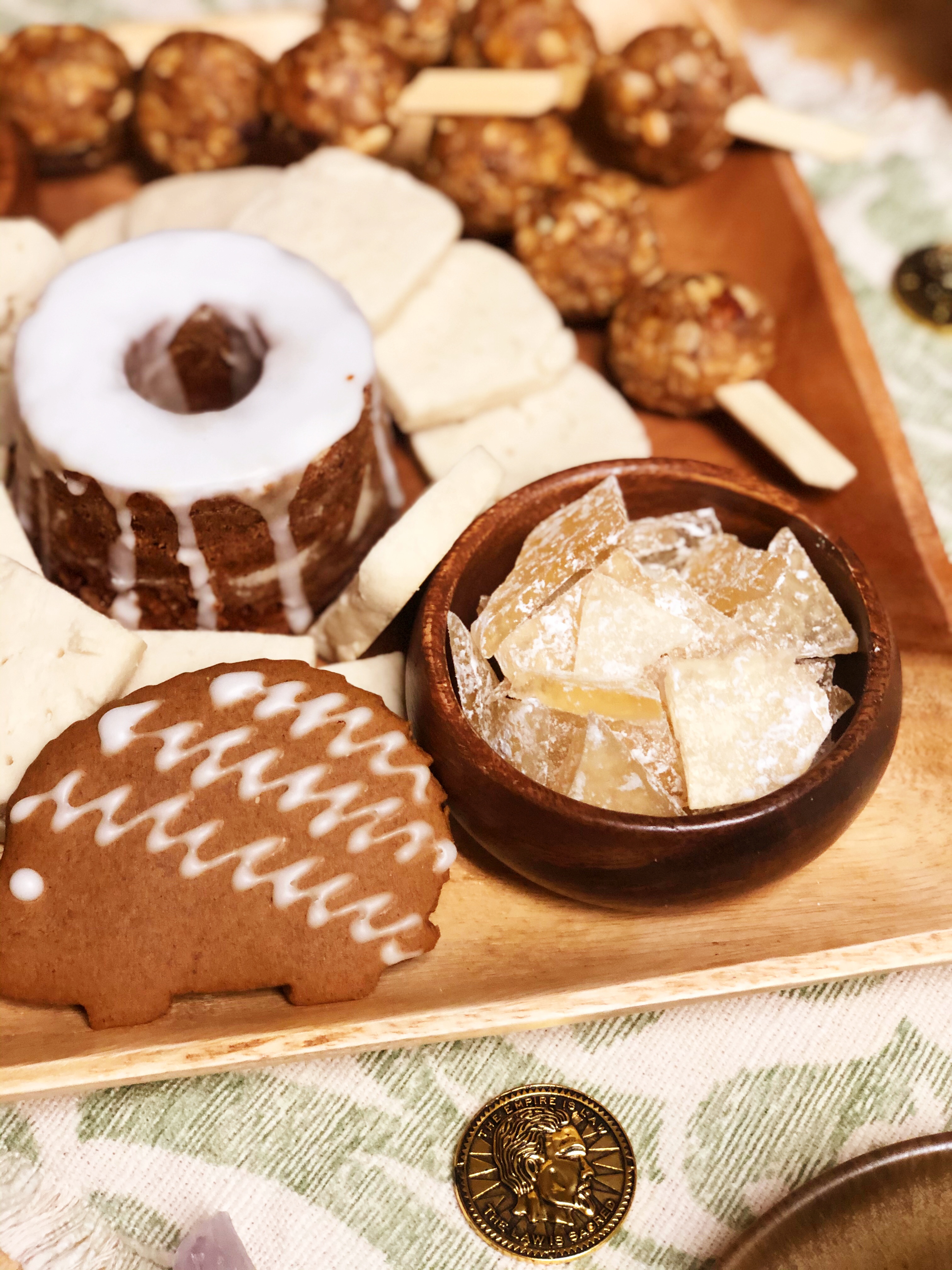
Creating edible alchemical ingredients is a special passion of mine, and there is none as iconic as Moon-Sugar. As a longtime fan of Khajiit, bringing this sugary treat to my holiday sweets smorgasbord was a must! When bringing fictional food to life, however, a Provisioner occasionally has to decide between two sometimes conflicting traits: should it taste as described, or look as shown? In the case of Moon-Sugar, creating a sweet treat that resembles a bowl of the ingredient was my primary purpose, with a secondary goal of creating a flavor that would suit an Elder Scrolls theme, while not behaving in the real world the way Moon-Sugar behaves in the video games. The candy we will be making is a hard candy often called “Shattered Glass Candy,” but with the slight change of using a herbal tea for flavoring and coloring.

To start, gather your ingredients. You will need 2 cups of granulated sugar, 3/4 cup of light corn syrup, 1/4 tsp Vanilla extract, and 1/2 cup strongly brewed herbal tea. I used a Citrus Lavender tea by Teavana, but you can really branch out and pick whichever tea sounds good to you! This tea created a soft yellow color that resembled the images of Moon-Sugar in Skyrim, which was one of the reasons why I picked it. If the color is not important to you, you could even substitute strongly brewed coffee! When steeping my tea I used two tea bags in a little over 1/2 cup of hot water and steeped it until the water had cooled. If you’re using herbal tea you can use this method, but if you decide to use any tea with actual tea leaves, I recommend using an extra tea bag and not steeping for more than five minutes, to avoid excess tannins causing bitter and astringent flavors in the tea.

As you prepare to make the Moon-Sugar, I also recommend wearing shoes and making sure no pets or small children can wander freely in the kitchen. You will be working with molten sugar!
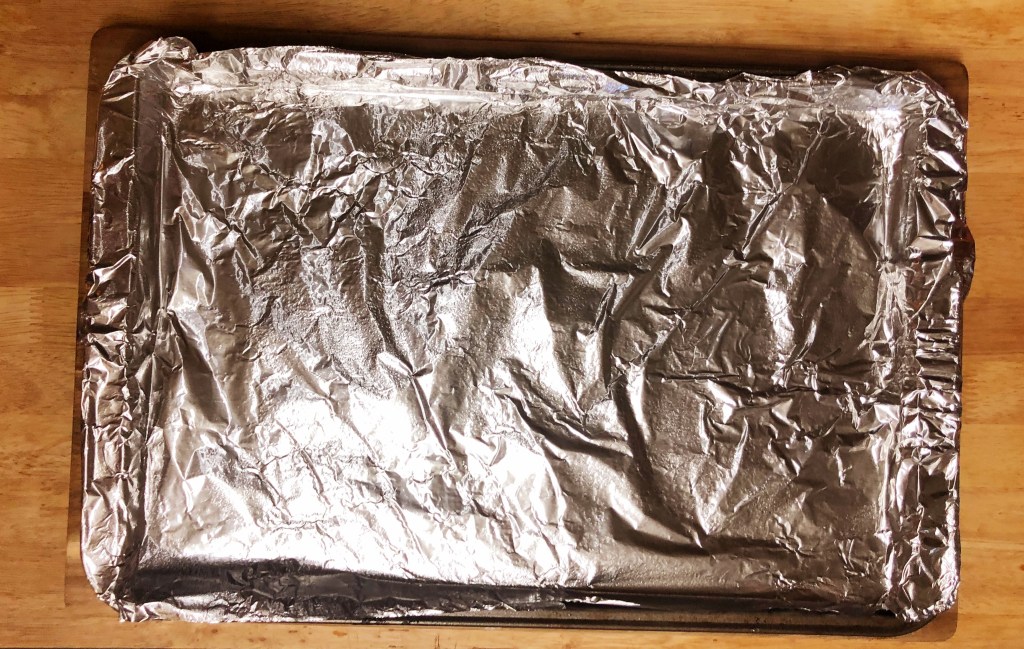
Before beginning with the sugar, line a medium-sized cookie sheet with tinfoil and spray with non-stick spray. If you would like, you could substitute a cookie sheet with a silicone mat instead.
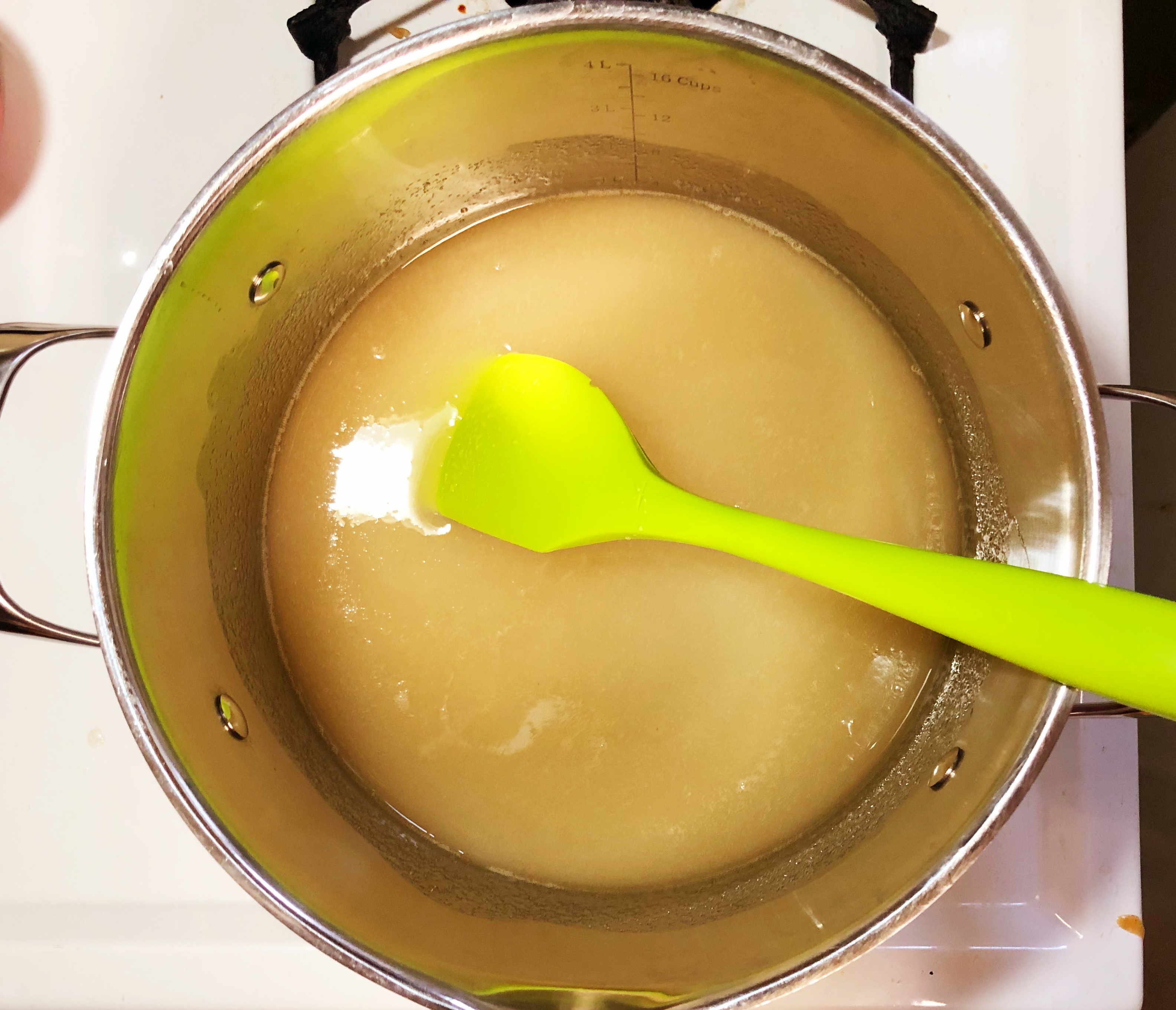
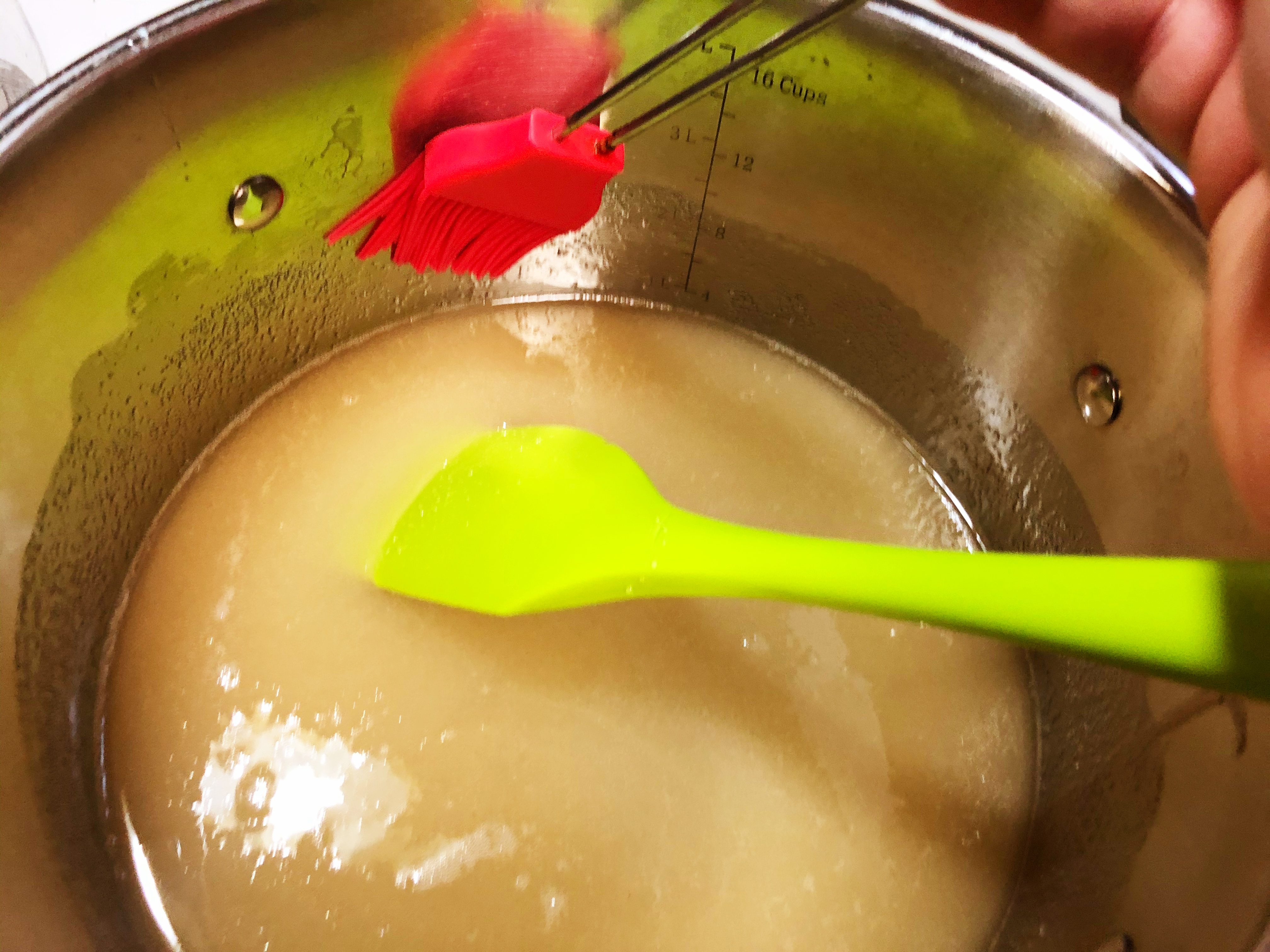
Begin by bringing the sugar, corn syrup, and tea to a boil in a high-walled pot, stirring frequently until the sugar is fully dissolved. Brush down the sides of the pot with warm water to help prevent sugar crystals from forming up the sides.
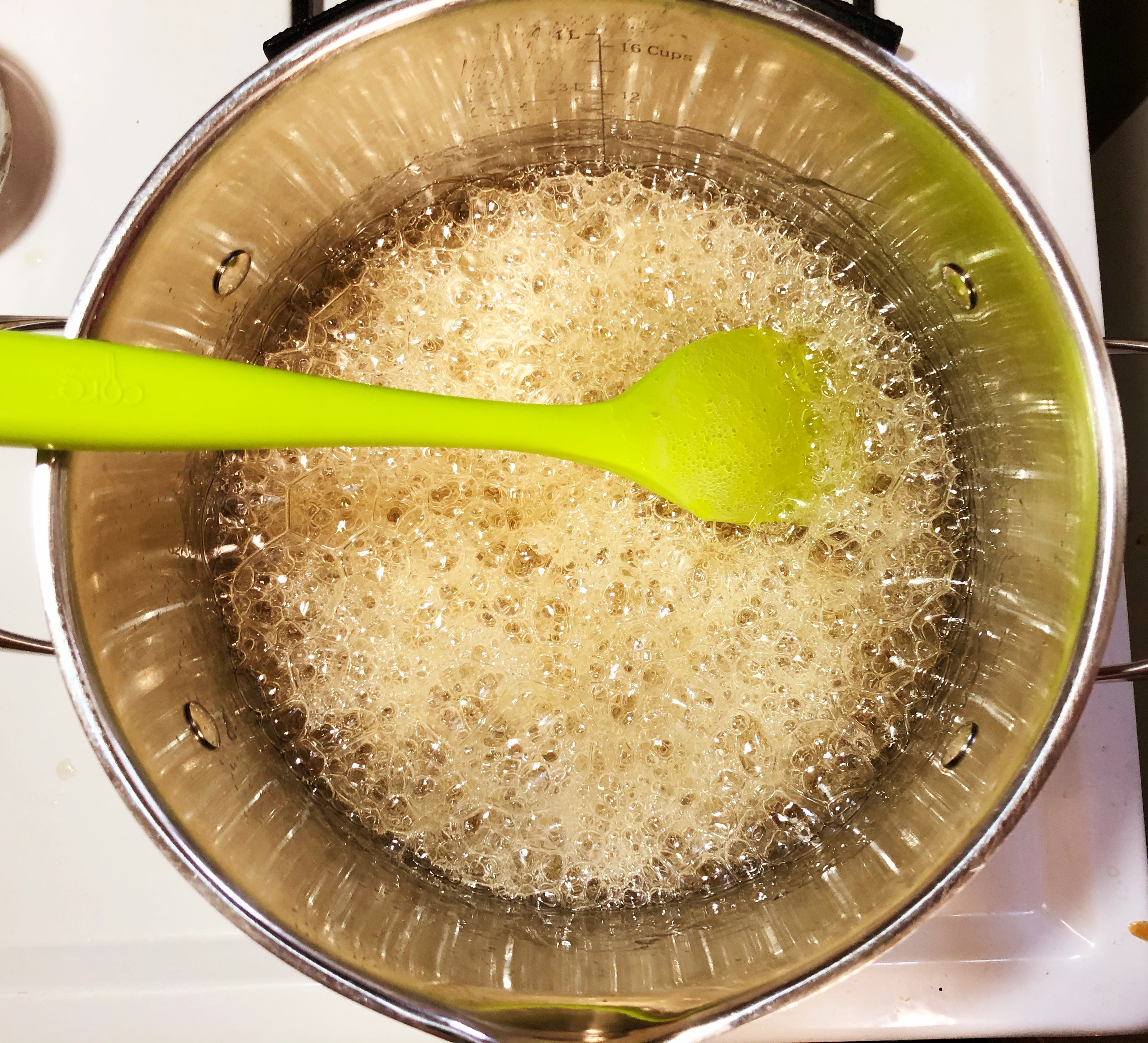
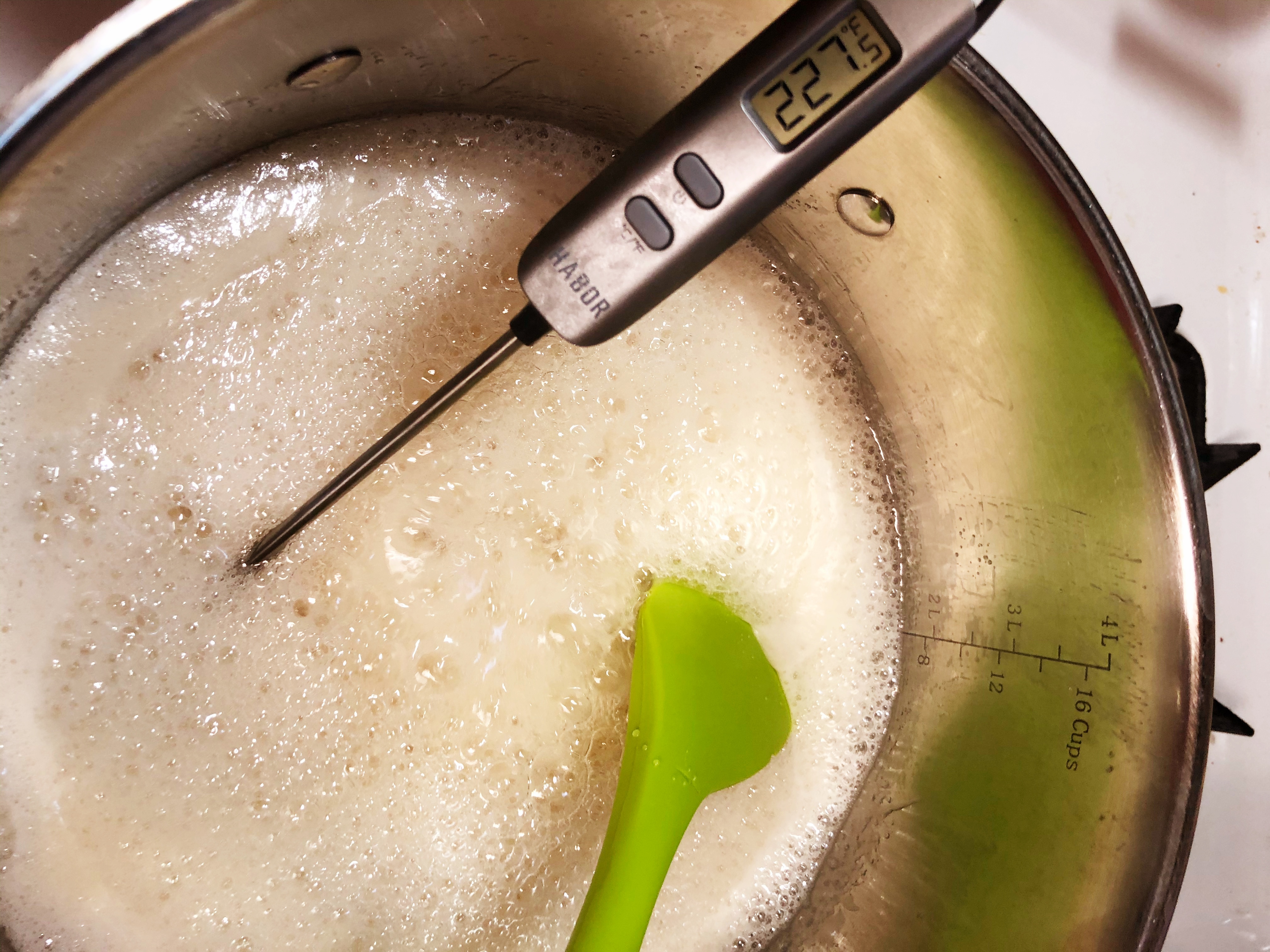
When the sugar mixture has come to a boil, continue stirring occasionally and insert a high-temperature thermometer. Continue boiling and stirring occasionally until the temperature reaches 300 degrees Fahrenheit. Turn off the heat and allow the pot to sit for a moment until the sugar stops bubbling (there will still be bubbles, but no new ones forming). Stir in the vanilla extract.

Pour the sugar syrup carefully into the prepared pan and allow it to cool completely and harden, about an hour.
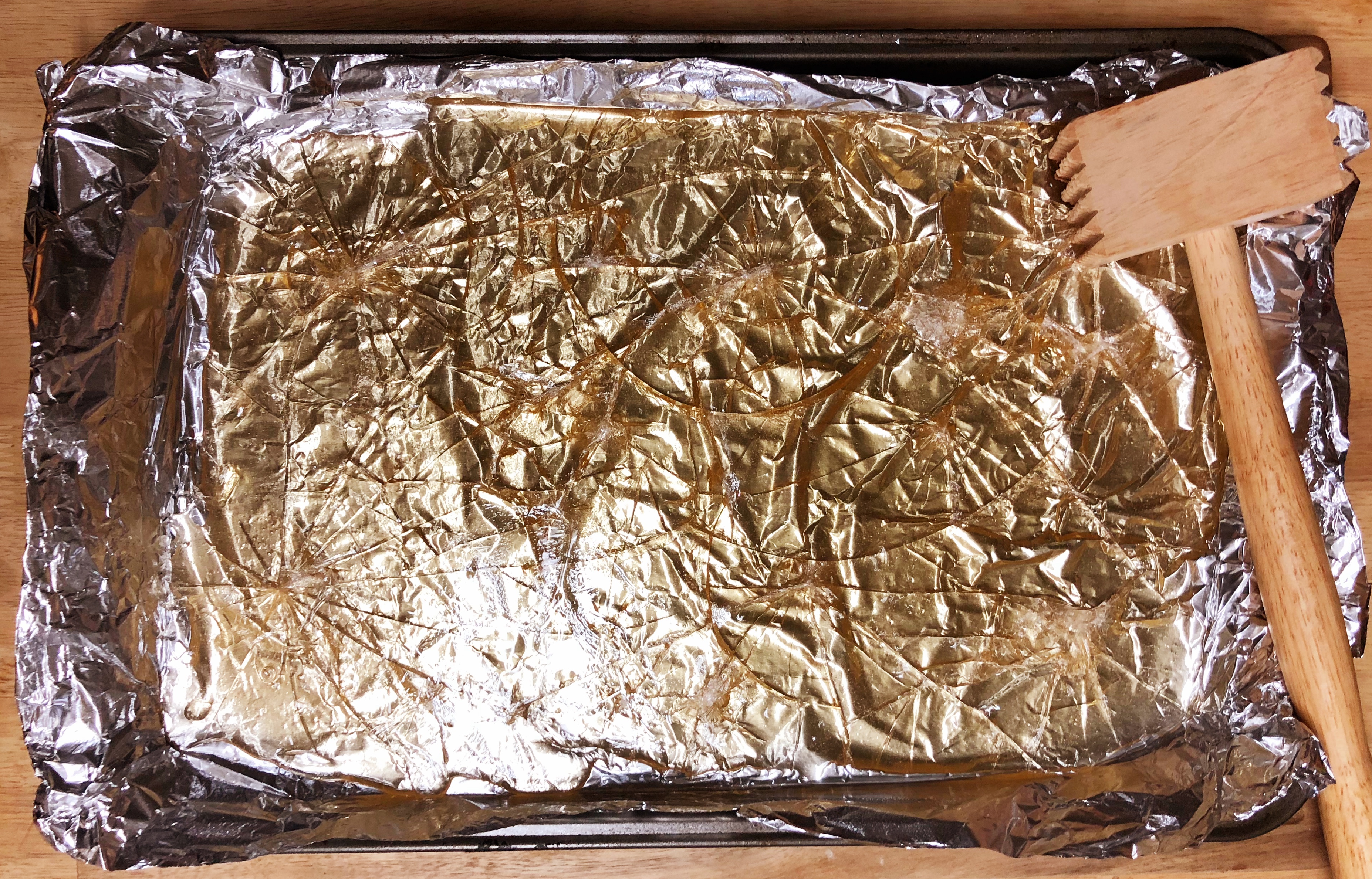
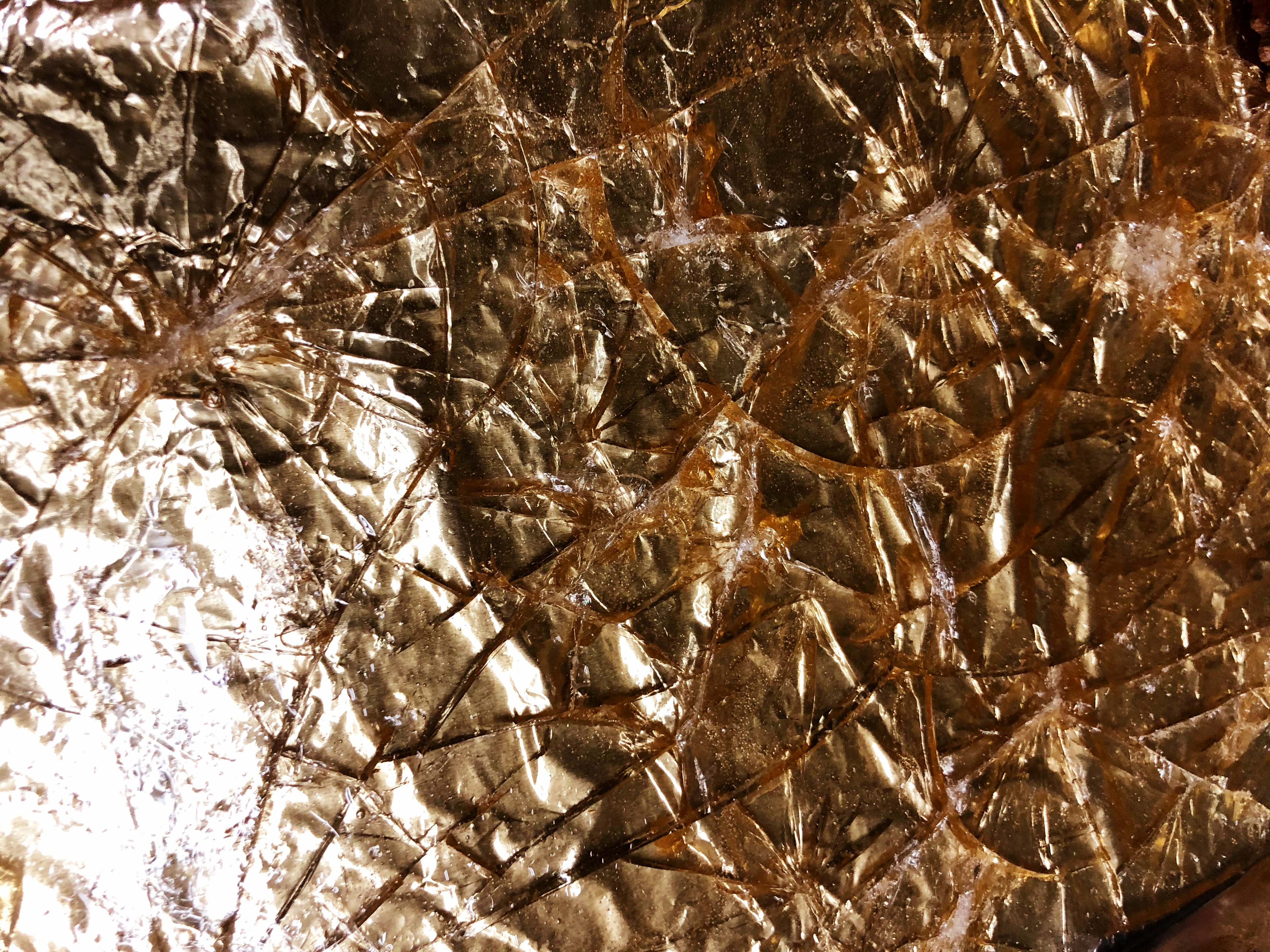
Using a kitchen mallet or meat tenderizer (or a heavy bottomed pot) shatter the hard candy. I recommend striking it in several places until the pieces are your desired size.
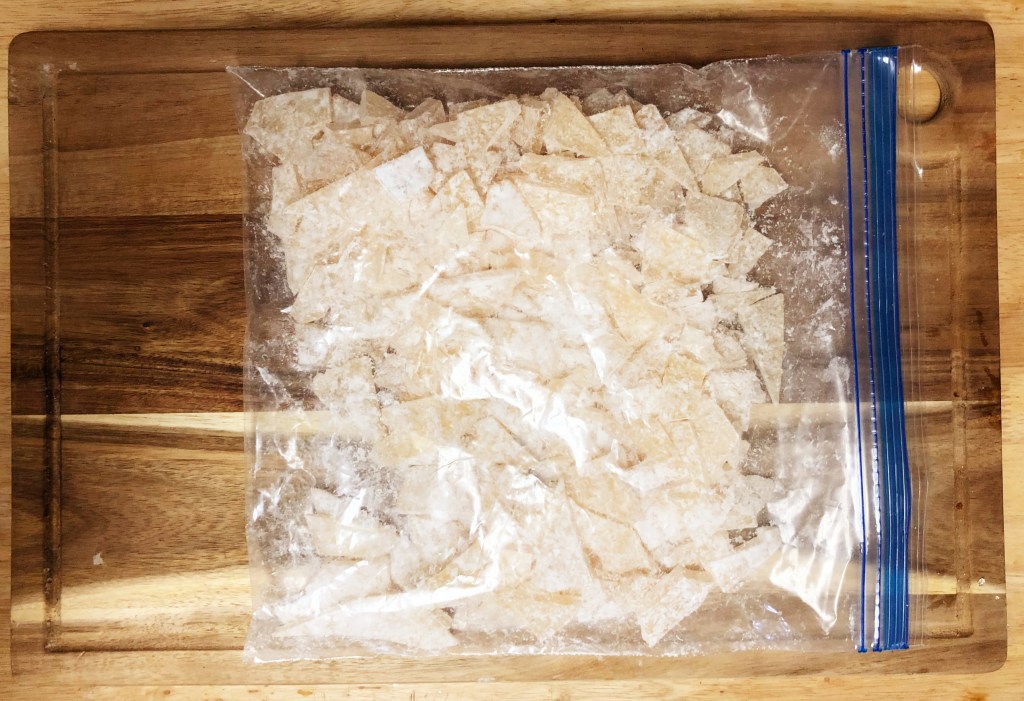
Add all of the candy shards as well as 1/4 cup powdered sugar, and shake until the candies are evenly covered. Store in an airtight container (or the aforementioned baggie). It will keep for several weeks, if it lasts that long!

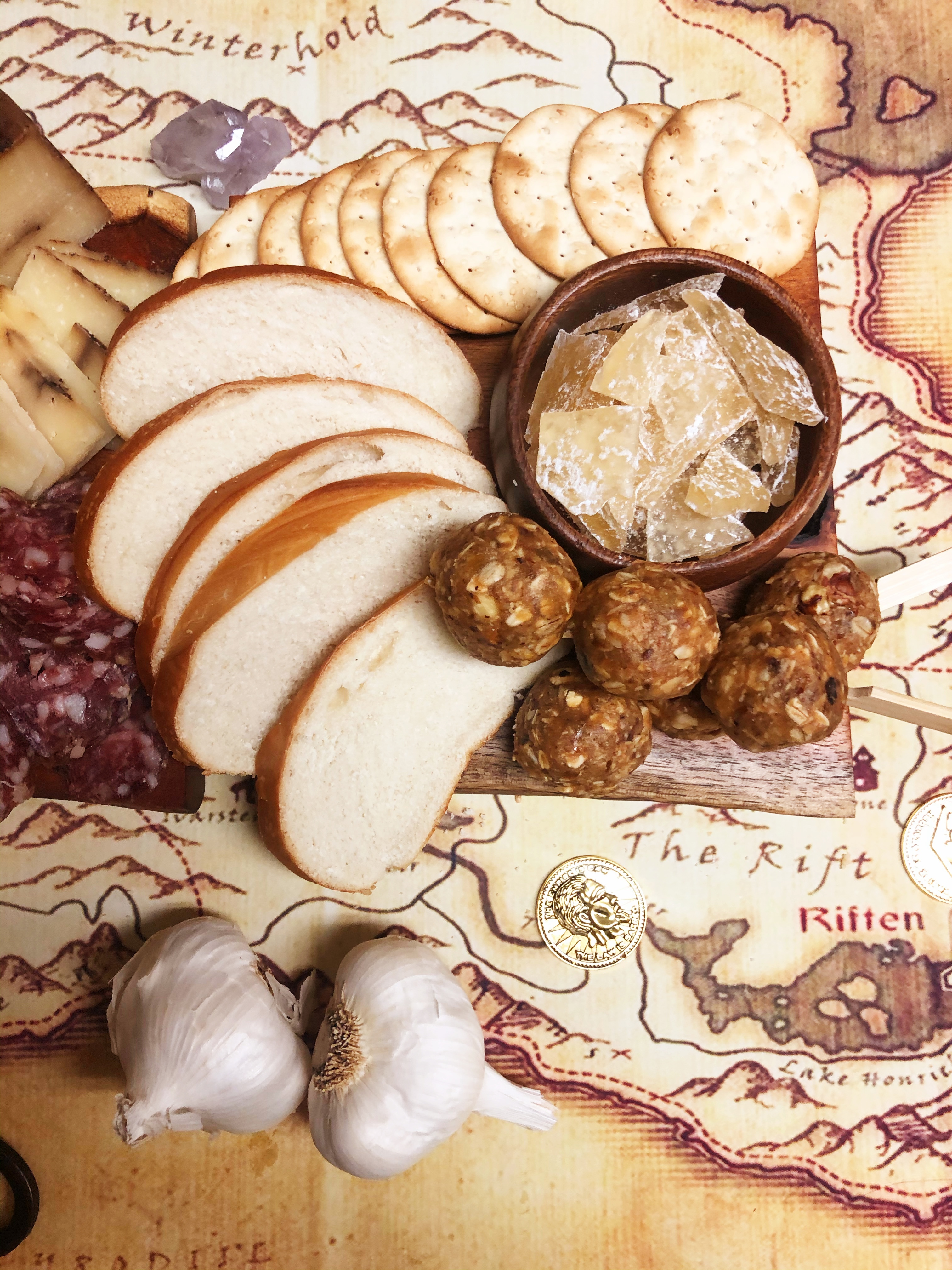
Moon-Sugar

  • Servings: 10-12
  • Difficulty: Medium
  • Print

The holiest of treats in the Khajiiti culture.


Ingredients

-2 Cups Sugar

-3/4 Cups Light Corn Syrup

-1/2 Cup Strongly Brewed Herbal Tea

-1/4 tsp Vanilla Extract

-1/4 Cup Powdered Sugar


Directions

  1. Gather your ingredients. Line a cookie sheet with tinfoil and spray with nonstick cooking spray.
  2. Bring sugar, corn syrup, and tea to a boil over medium heat, stirring frequently. Wipe down the sides of the pot with warm water to avoid sugar crystals forming.
  3. When sugar mixture reaches a boil, insert a high temperature thermometer. Stir occasionally until the temperature reaches 300 degrees Fahrenheit.
  4. Turn off the heat and allow the sugar mixture to sit until bubbles stop forming. Stir in the vanilla extract.
  5. Pour the sugar mixture carefully and evenly into the prepared cookie sheet. Allow to full cool and set (about one hour).
  6. Using a kitchen mallet or meat tenderizer, shatter the candy into small pieces.
  7. Add the candy pieces and powdered sugar to a large baggie and shake until the candy is evenly coated. Candy will keep for about two weeks and can be served immediately.

No comments to show.

Goatsmilk Cheese with Hazelnuts

“Oh excellent! Absolutely top hole! D’you know, I’d forgotten how good the old tiffin at Redwall could be. I say, m’dear, would you mind refreshing an old bachelor hare’s memory? Another tankard of that fine October ale, and perhaps one more portion of your very good summer salad. Ah, and I think I could manage another few slices of Friar Hugo’s quince pie. Superb! Ahem, don’t forget the goatsmilk cheese with hazelnuts. I’m very partial to that. Cut along now, you little charmer.”

-Basil Stag Hare, Redwall by Brian Jacques p.140-141

The food described in the first Redwall book sometimes sets itself apart from the later books in the series, especially with the occasional use of goatsmilk as an ingredient. But, calling myself a Cellarhog would just about be a bold faced lie if I didn’t dip my toes into cheesemaking now and again. This recipe is a simple one for any beginning cheesemaker, with minimal additional tools to clutter your kitchen. The end result is a slightly tart and creamy but crumbly cheese, perfect for spreading on thick slices of toast, slicing on crackers, or crumbling over salad.

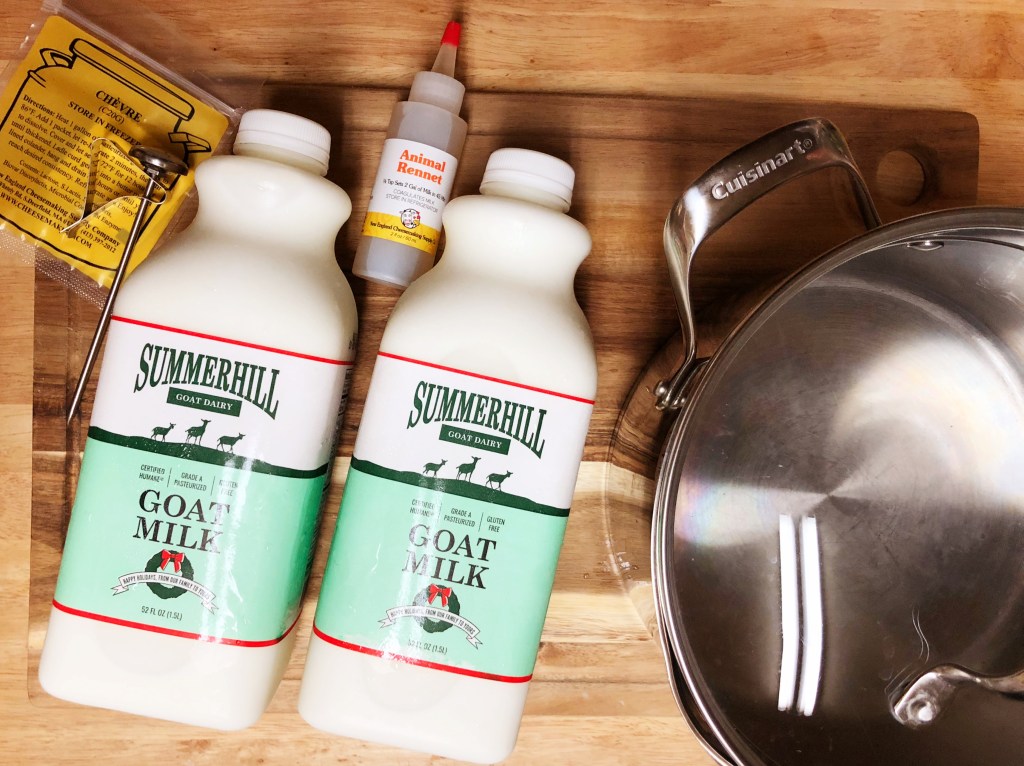
To begin with, you will need some tools and ingredients that you may or may not have on hand. Many of these items are available on Amazon, I’ve linked to the exact products I used when available:

  • A Sturdy Stainless Steel Pot with a Lid
  • A large metal Colander (ideally one with feet or a stand)
  • A Thermometer with a Clip (it doesn’t need to be a candy thermometer as you only need to be able to read 72-86 degrees Fahrenheit. I used a milk steaming/espresso thermometer.)
  • Butter Muslin or Cheesecloth
  • Cheese Molds
  • Chevre C20G Starter Culture (This packet comes with 5 packets, good for 5 batches of Goat Cheese, just make sure to store in your freezer promptly when it arrives!)
  • Rennet
  • A Cheese Drying Mat (Sushi mats make inexpensive options)
  • Vacuum Seal Bags (You don’t need an expensive vacuum sealer, the linked bags work great for me).
  • 1 Gallon Goat Milk (Raw or Pasteurized, but not Ultra Pasteurized, read the label carefully!)
  • Coarse Kosher Salt
  • 1 1/2 Cup Whole Raw Hazelnuts

Beginning with day one, I recommend starting this recipe in the evening just before bed if you have a little free time the following morning. To start the recipe you will need the goat milk, starter culture, and rennet, as well as the pot and thermometer. Ensure that all of your tools are thoroughly cleaned prior to beginning the recipe.

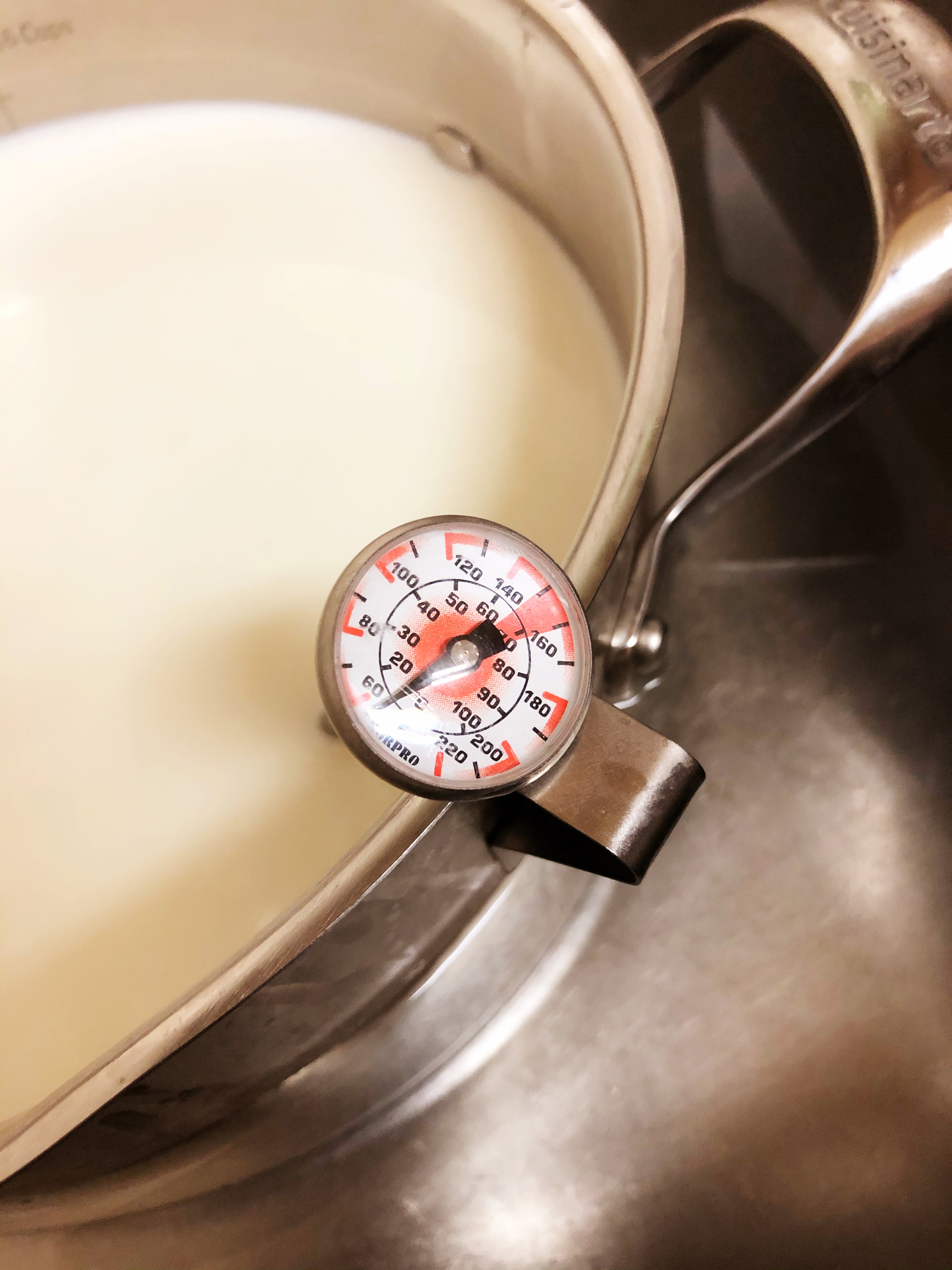
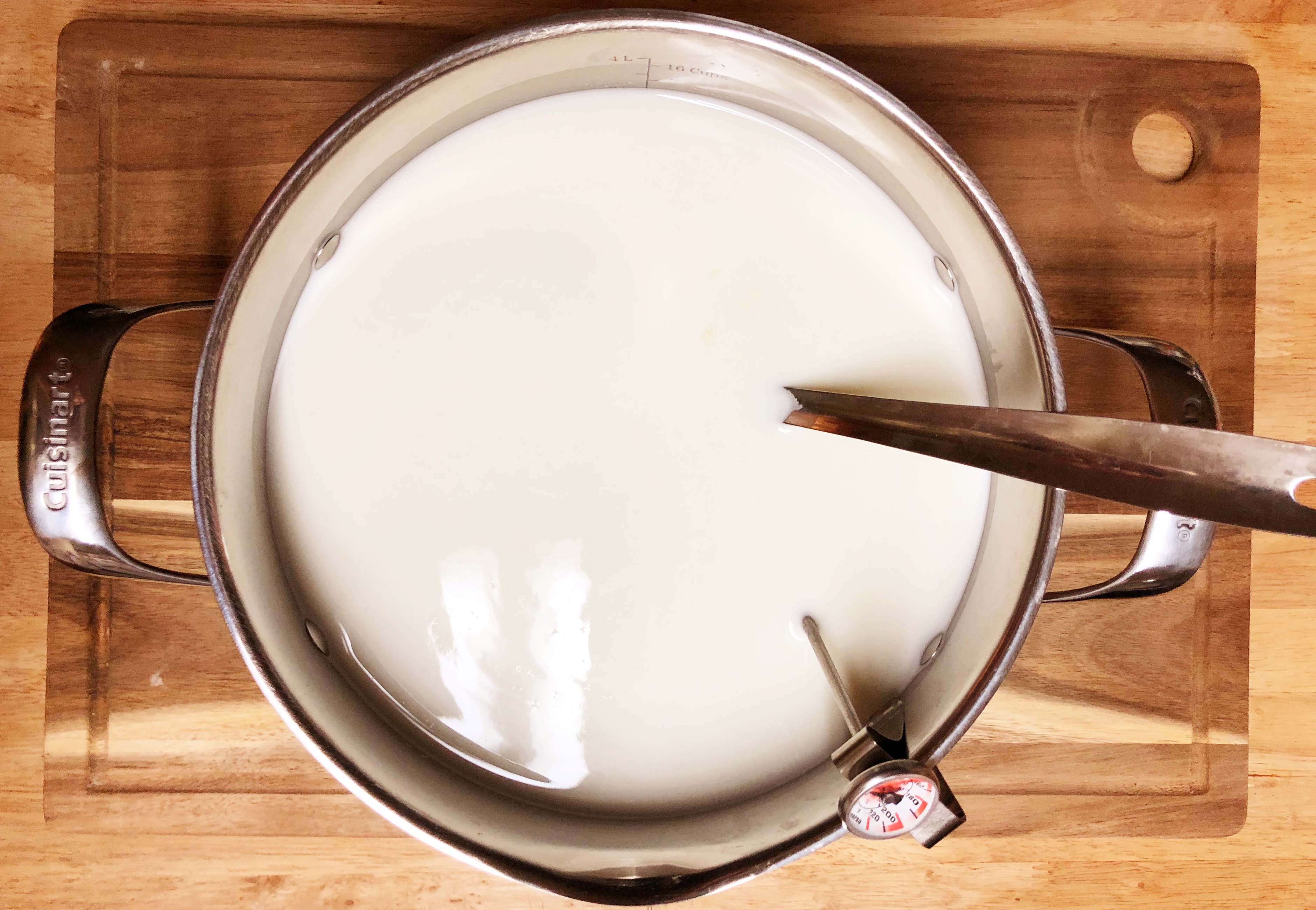
The first step is to acidify and heat the milk. Pour the goat milk in the pot and clip on your thermometer. Fill your sink with hot water and gently place the pot in the hot water, you will want it to reach at least the same level as the milk, but not so high that you risk spilling water into the pot. Allow the temperature to reach 68-86 degrees Fahrenheit. In the winter months I go all the way to 86 because my home holds a chill, but if it is warmer weather 68-72 degrees will be sufficient. Stir the pot a couple of times to ensure that the milk heats evenly.

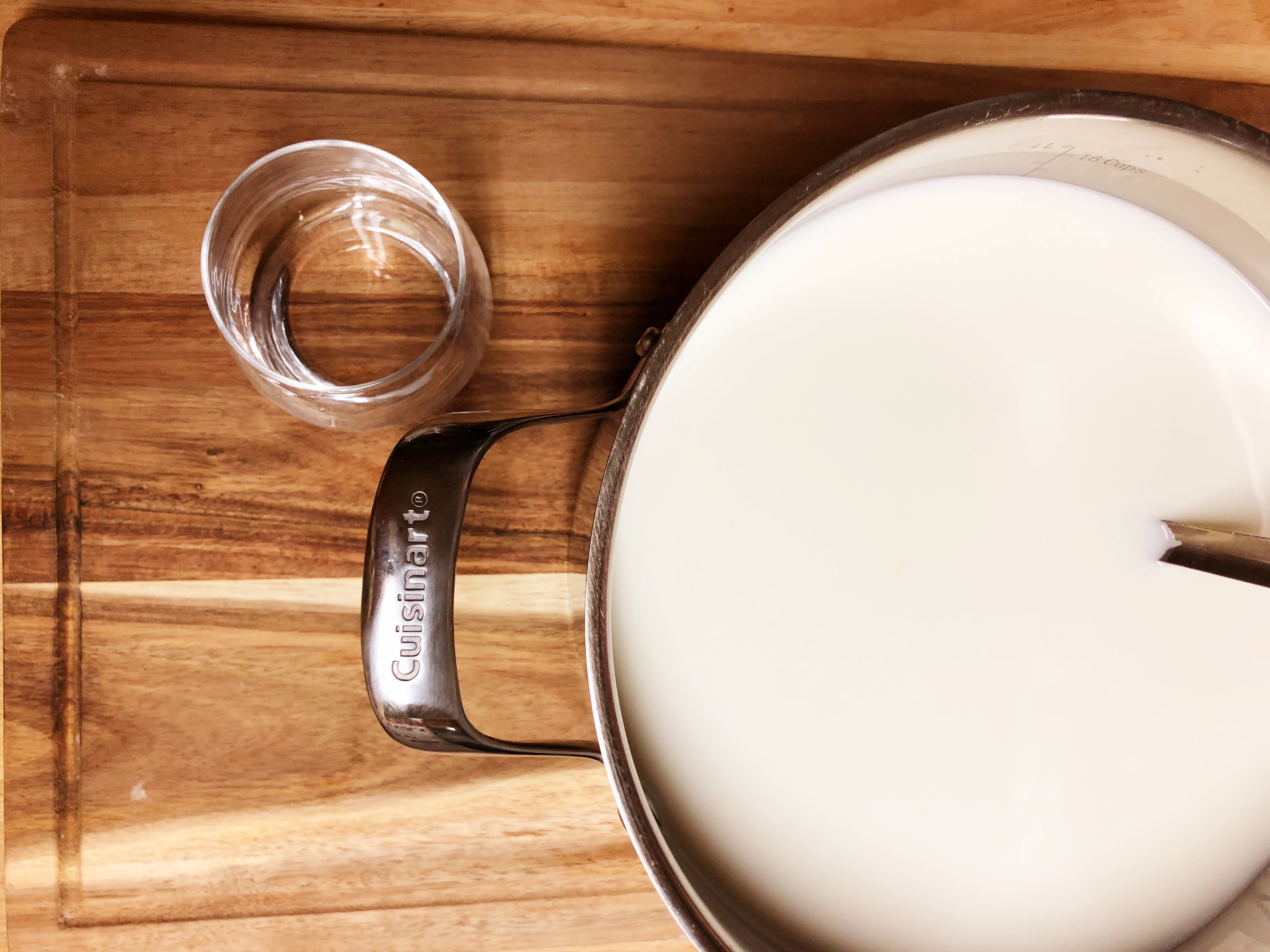
Once the milk reaches the correct temperature, remove the pot from the sink and it’s time to add the culture and rennet. Dilute 6-8 drops of rennet in about 1 tablespoon unchlorinated water. Sprinkle one packet of culture over the top of the milk and allow it to sit for two minutes to rehydrate, then stir the milk. Add the diluted rennet and stir again.

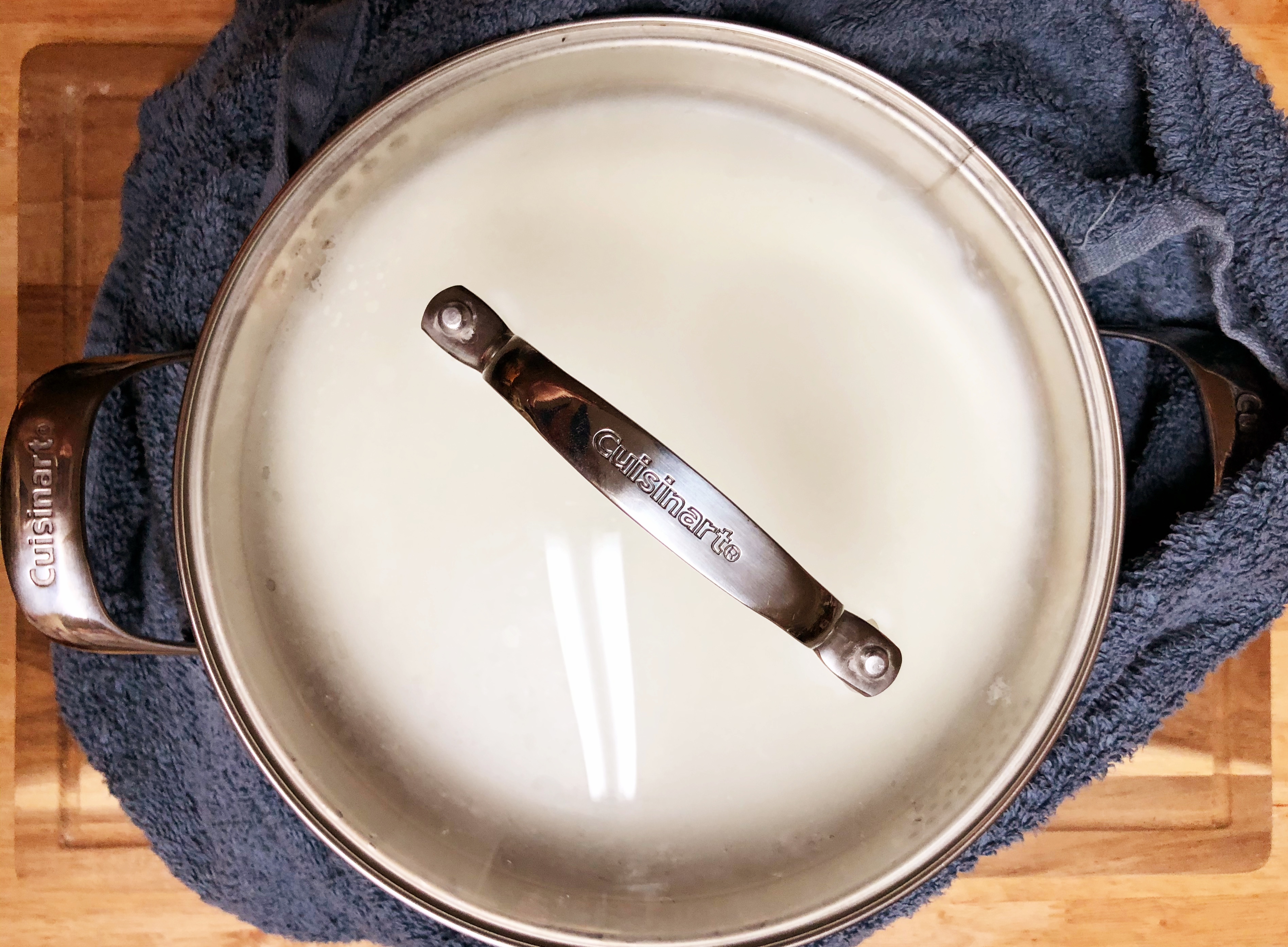
Place the lid on the pot and allow it to sit undisturbed for 6-12 hours while the culture and rennet allow the curd to coagulate. The milk should stay warm enough, but if your home is particularly chilly (I made this batch in December) you can insulate the pot with a clean bath towel. In colder months you will need to wait the full 12 hours, but in warmer weather your curds are likely to coagulate a little faster.

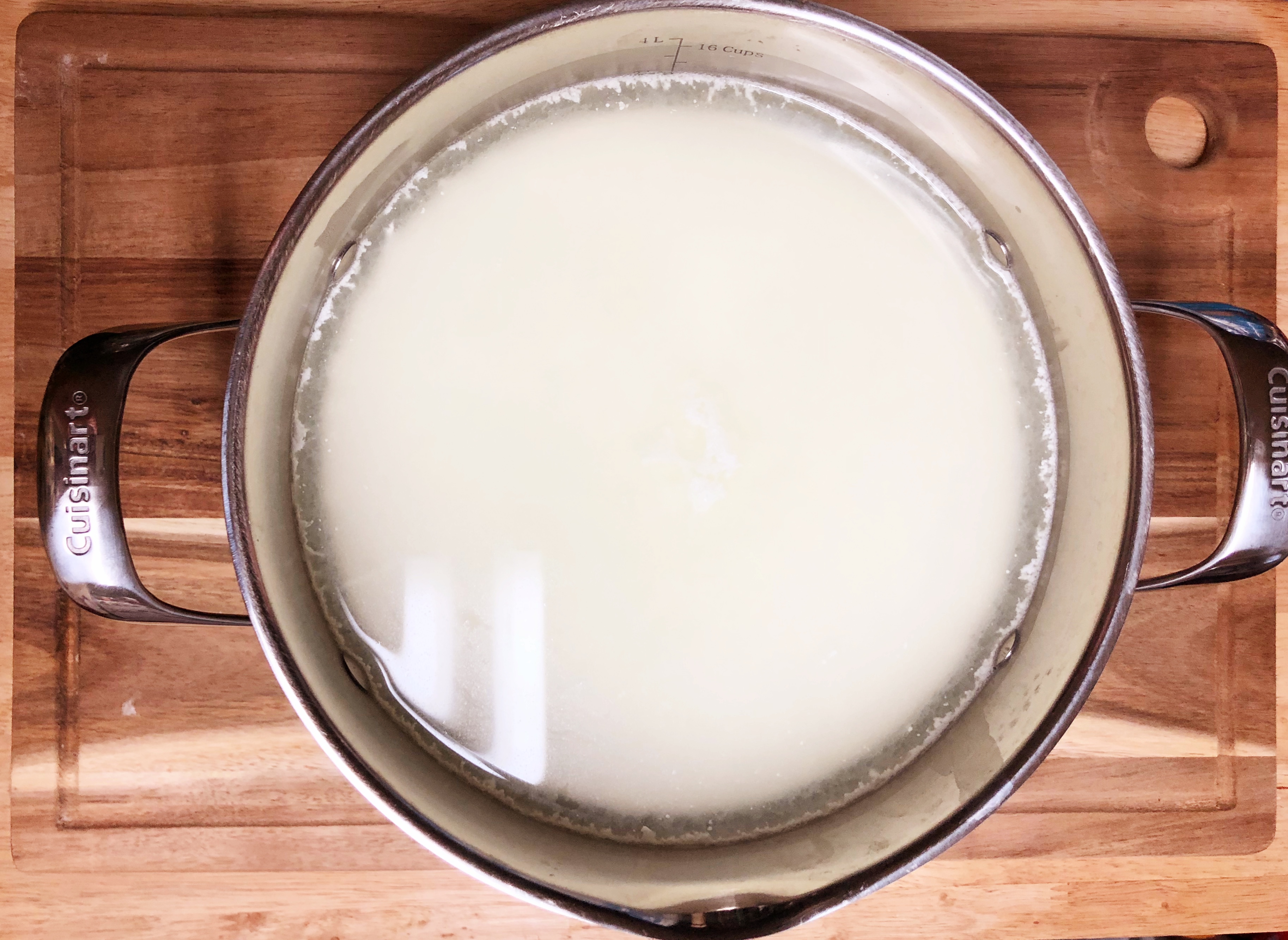
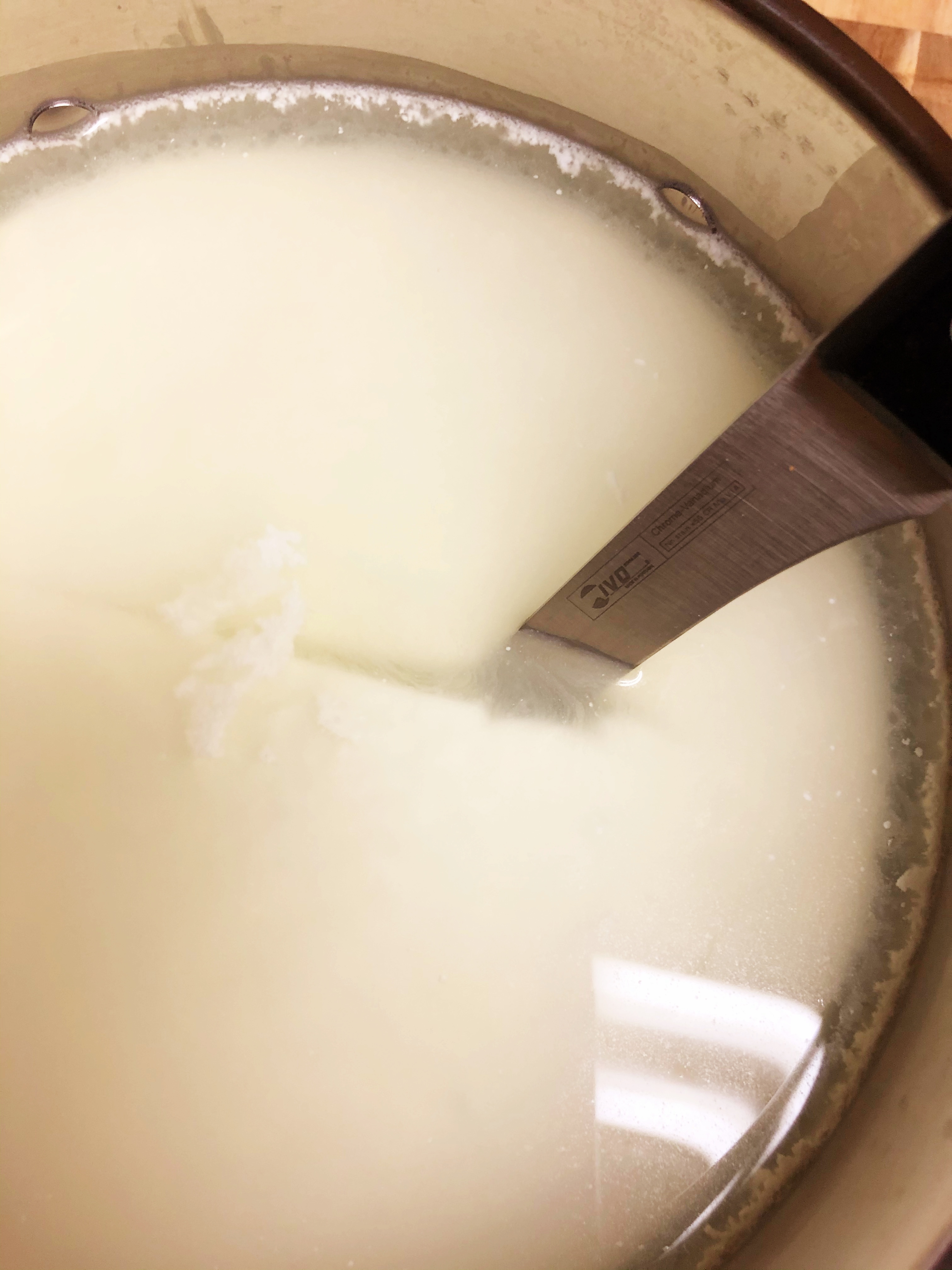
When your curd has formed sufficiently, you will see a clear separation between the whey and and the curd, and the curd will likely have separate from the sides of your pot. Testing the curd with a knife will show a clean break.

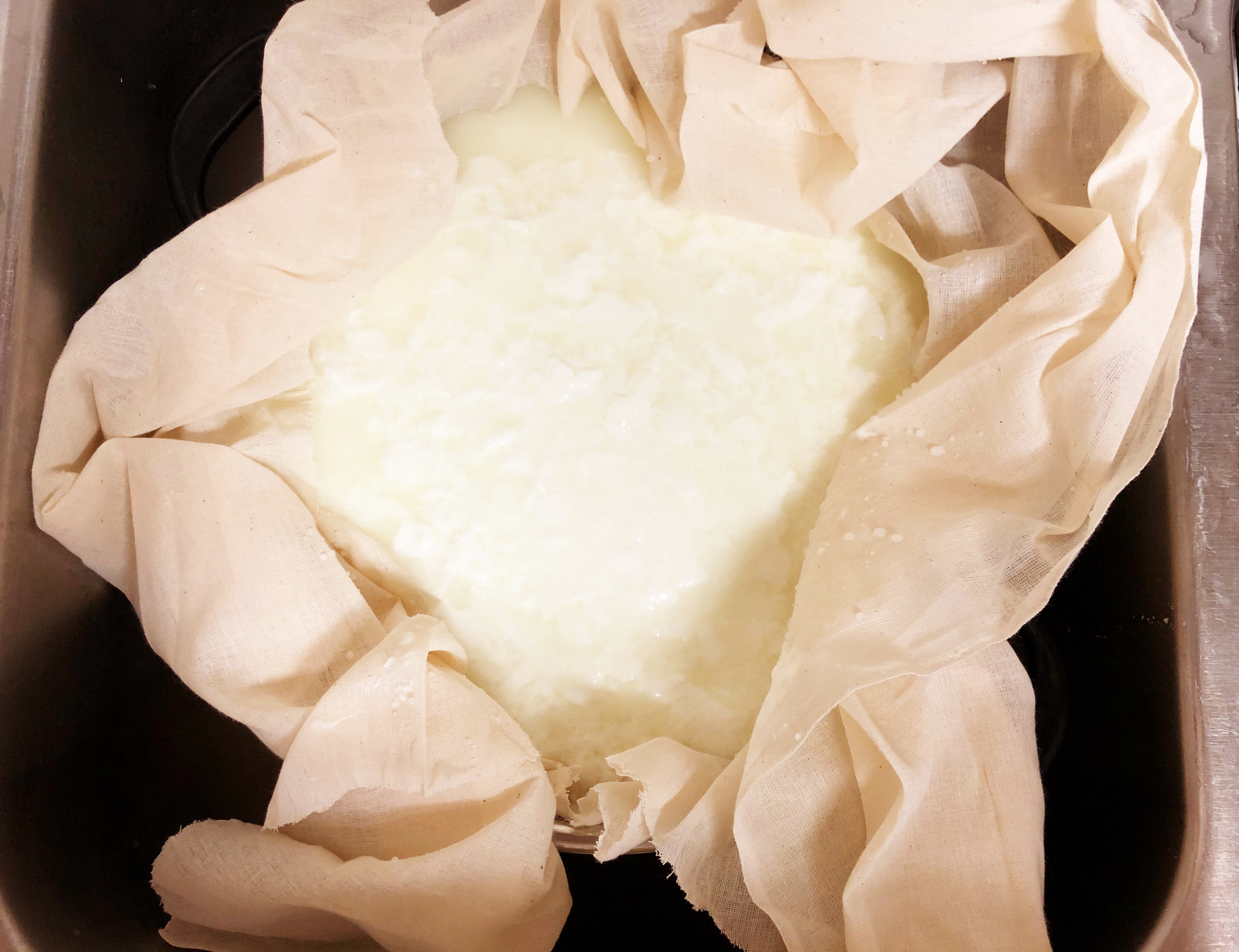
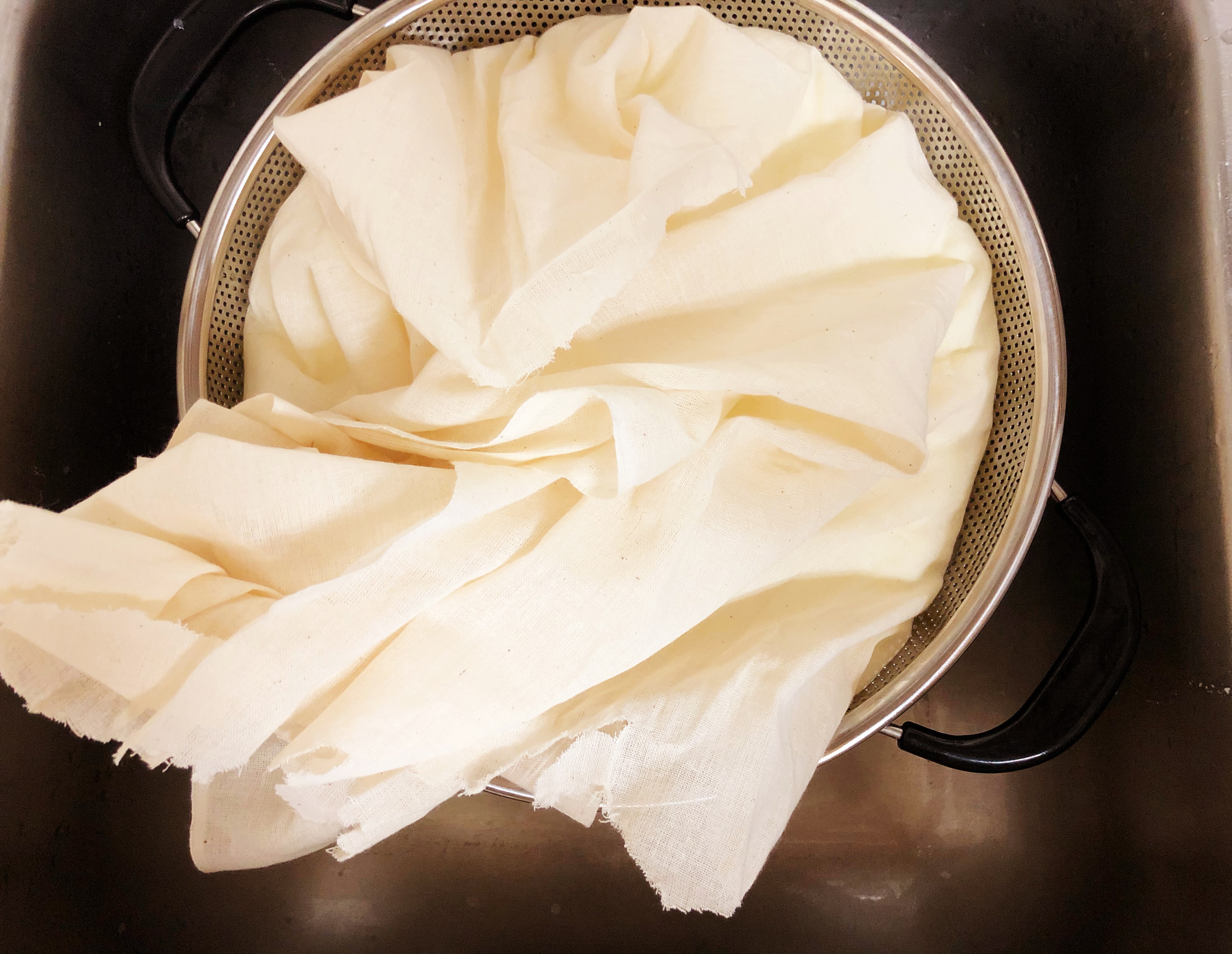
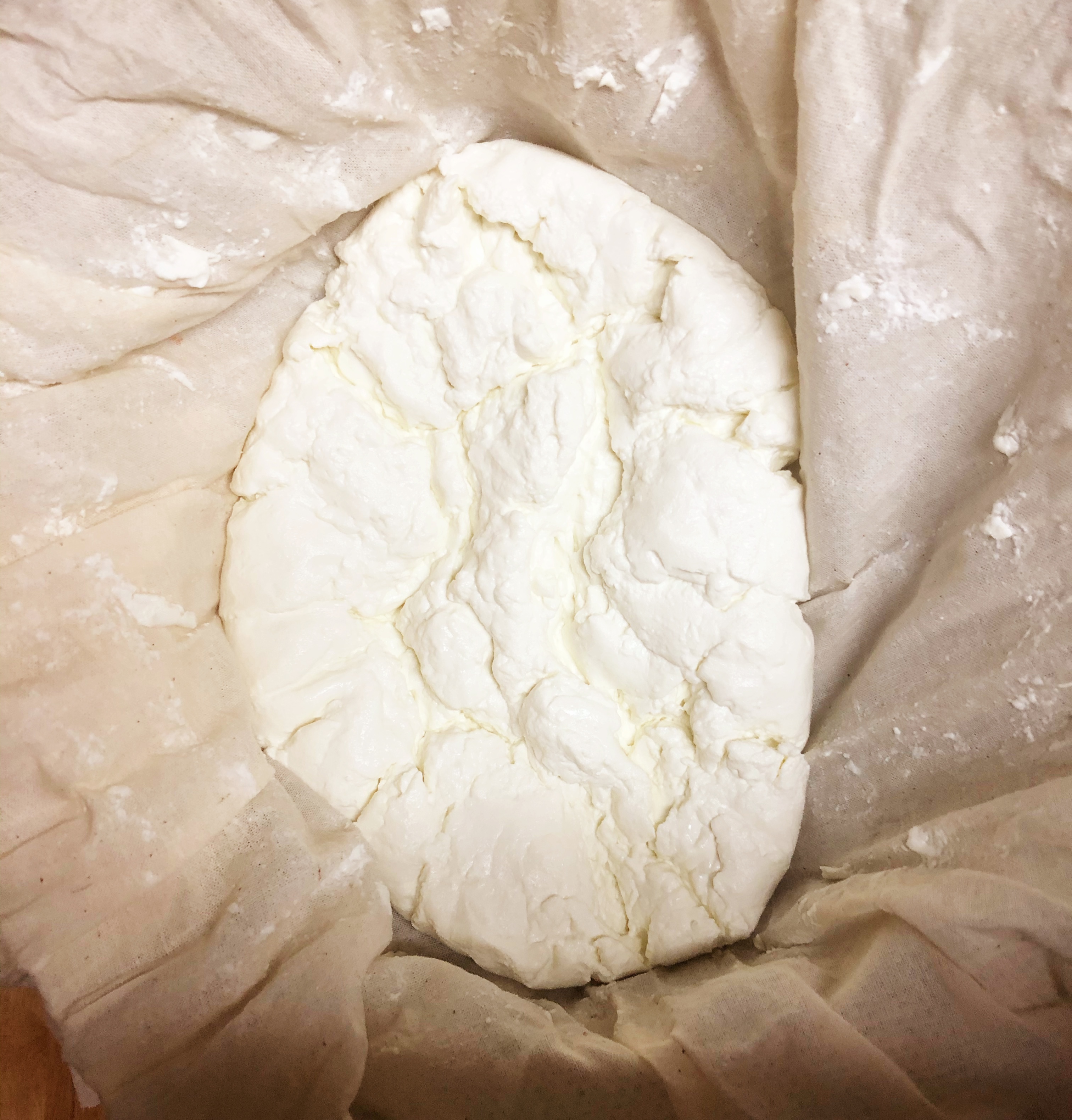
Line a large colander with butter muslin or cheesecloth and gently ladle the curds in. Fold the muslin over the top of the cheese to ensure no dust or flies find their way in, and let it sit. The overall draining period of this cheese for me was about 14 hours during winter, if it is warmer weather you can cut the draining short at 10 hours. Since we are going to be molding the cheese, we want a slightly drier cheese. The longer you allow the cheese to drain the tangier it will be. I usually allow it to drain about 2-3 hours in the sink, which is when the largest amount of liquid will drain off, and then I will place my colander in a large mixing bowl so that I can continue using my kitchen. It’s important to keep an eye on the amount of liquid draining off of your cheese if you keep your colander in a bowl, and make sure to empty the bowl frequently so that the level doesn’t rise high enough to leave the cheese sitting in liquid.

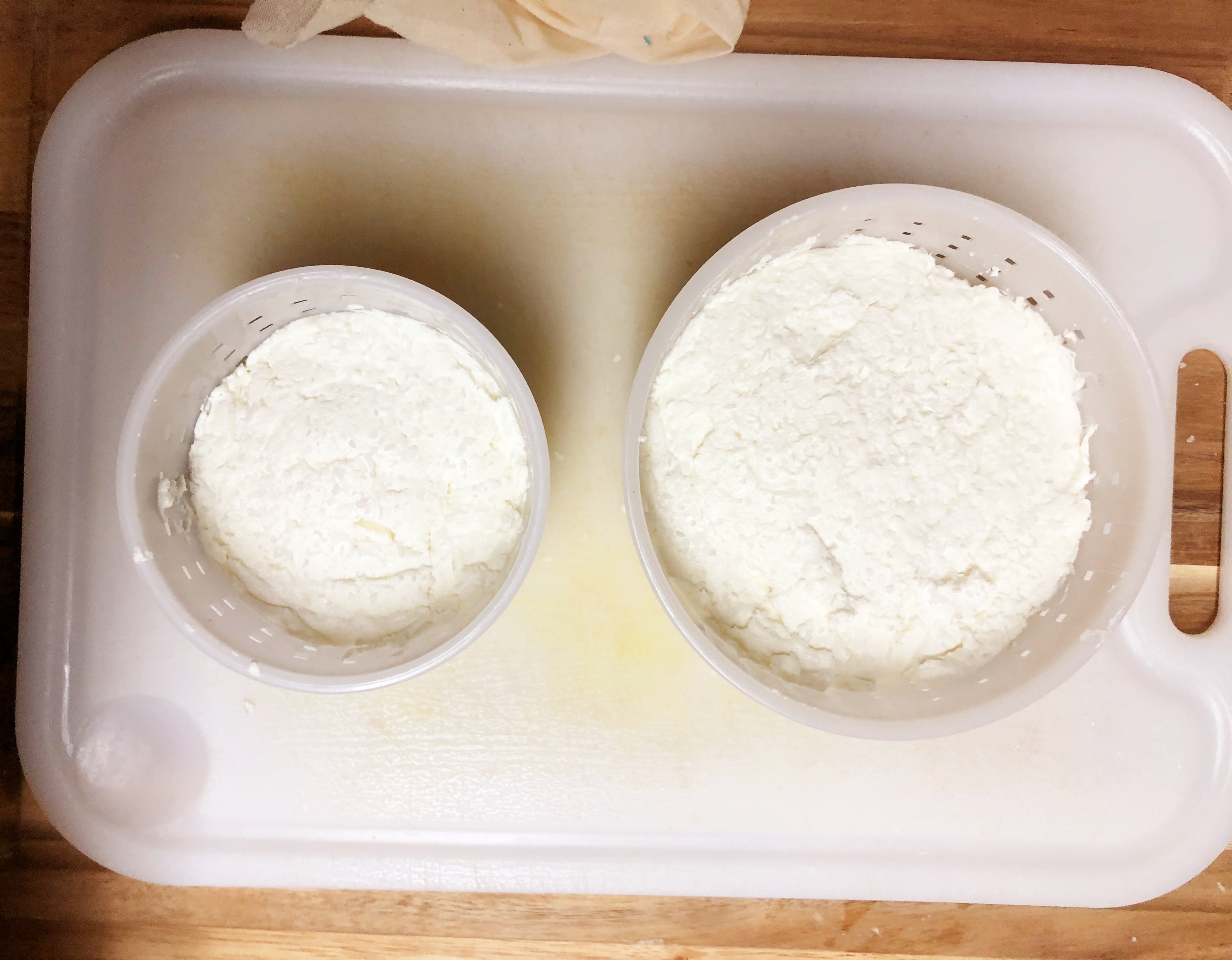
After the draining time it is time to mold and salt the cheese. Carefully spoon the curds into your molds (I recommend using two smaller molds, this will enable your cheese to form faster than one large mold) pushing down gently with each additional spoonful to ensure the mold is filled with minimal pockets of air. I alternated filling between each mold and was able to fill to about 1-1 1/2 inches high. After the molds are filled, smooth over the tops of the cheeses gently with the back of a spoon, and sprinkle about 1/4 teaspoon of coarse kosher salt over each. Allow the cheese to sit in the molds for 8-10 hours.

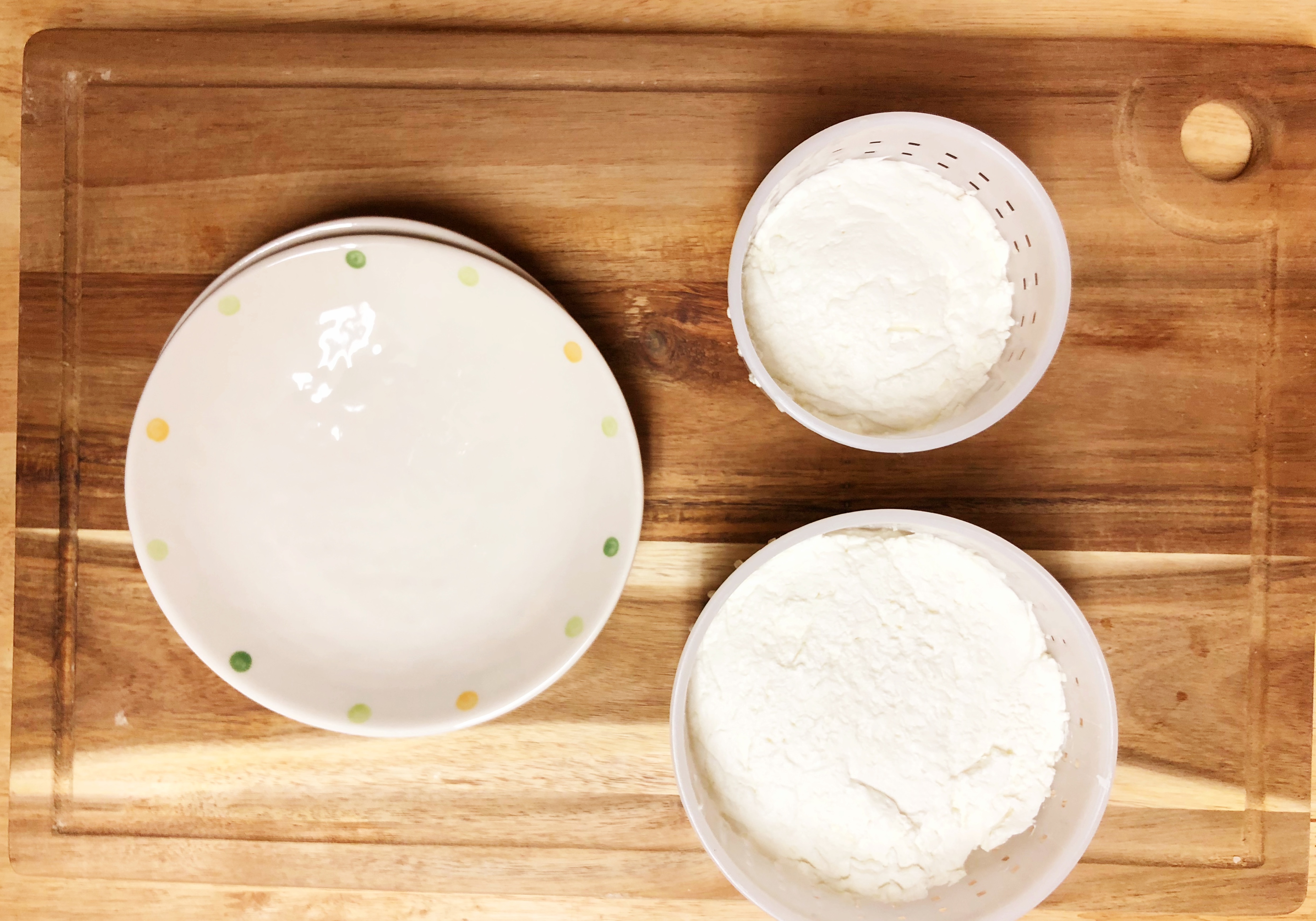
After 8-10 hours it will be time to turn and remold the cheese. I like to use two plates for ease of flipping. Turn out the wheel of cheese onto one plate, and place the other plate on top of the wheel. Flip the plates around so that you have flipped your cheese wheel, and then gently place the mold back over the cheese wheel, so that now it has been flipped upside down in the mold. I’ve found that this method enables me to turn the cheese in the molds without accidentally crumbling any bits off. Once again salt the tops of the cheese with about 1/4 tsp coarse kosher salt and leave them for another 8-10 hours.

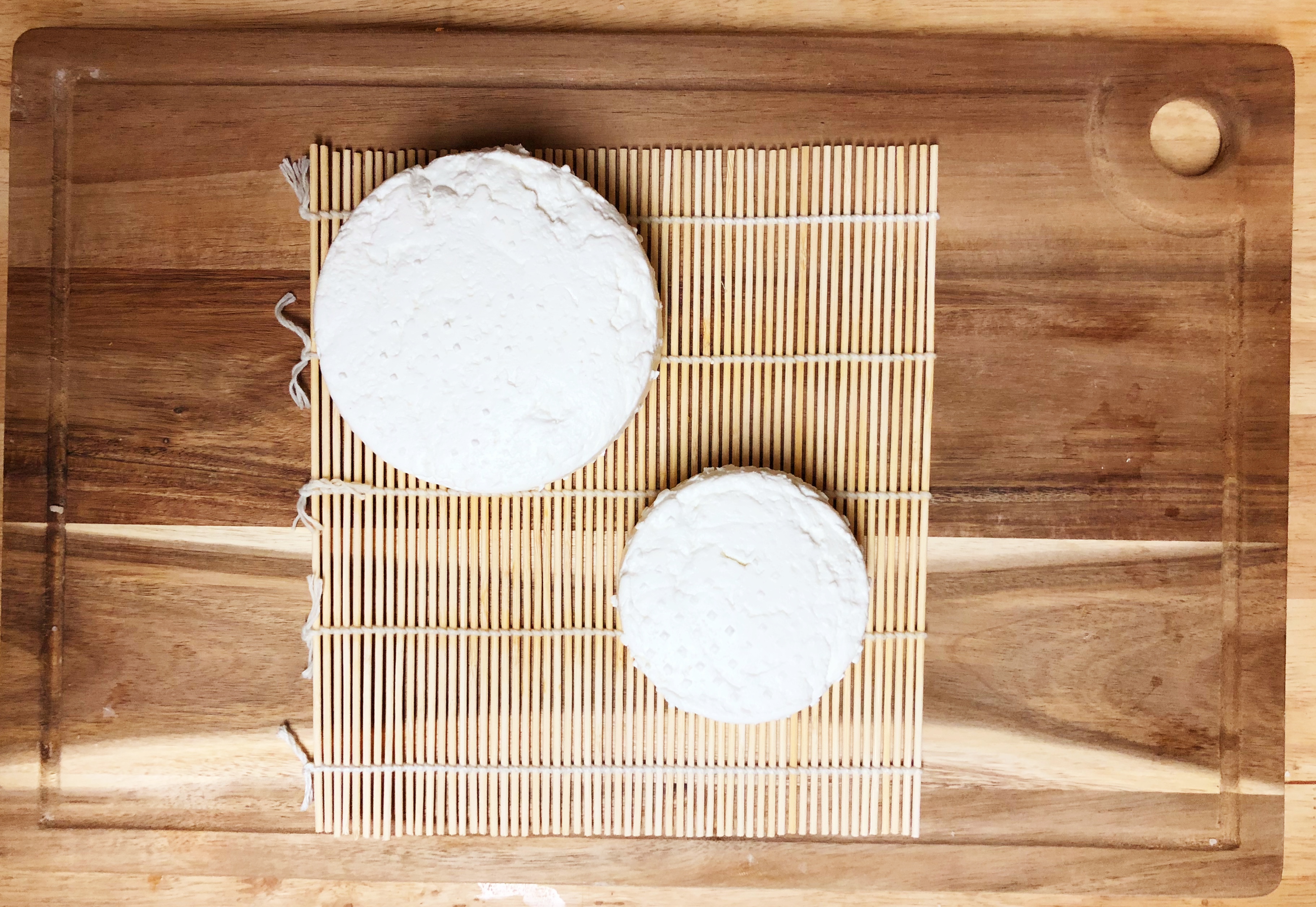
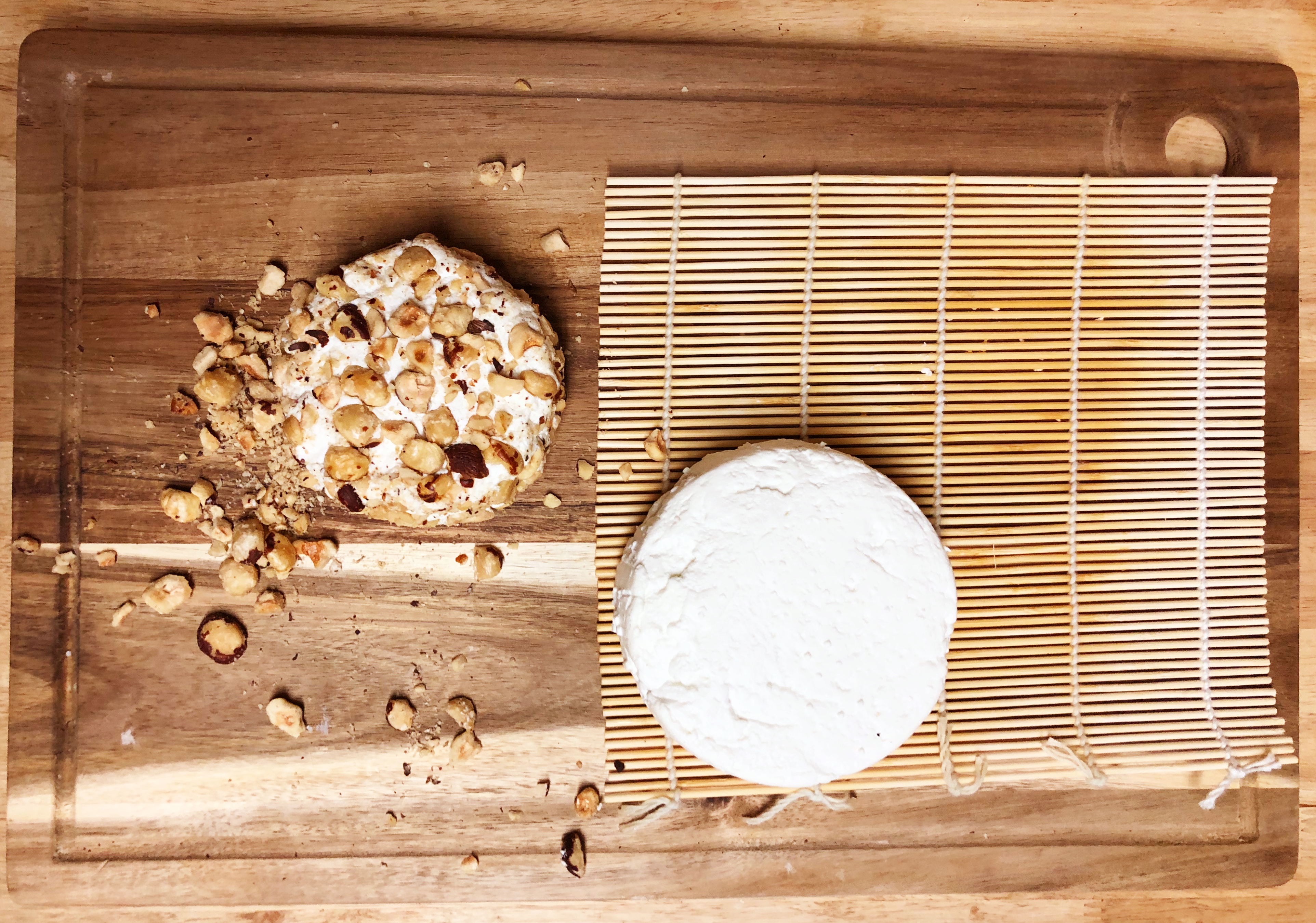
After the second 8-10 hours has elapsed, turn your cheese out onto a cheese drying mat. I bought a cheap sushi mat at Daiso (a Japanese Dollar Store) and found that it works excellently for the purpose. Allow the cheese to sit for another 8-10 hours to firm up. During this time I usually gently cover the cheese with a piece of cheesecloth, which allows the air to reach the cheese but not any wandering fruit flies or bits of dust.

While the cheese is airing out for the last time, it is a good time to roast the hazelnuts.

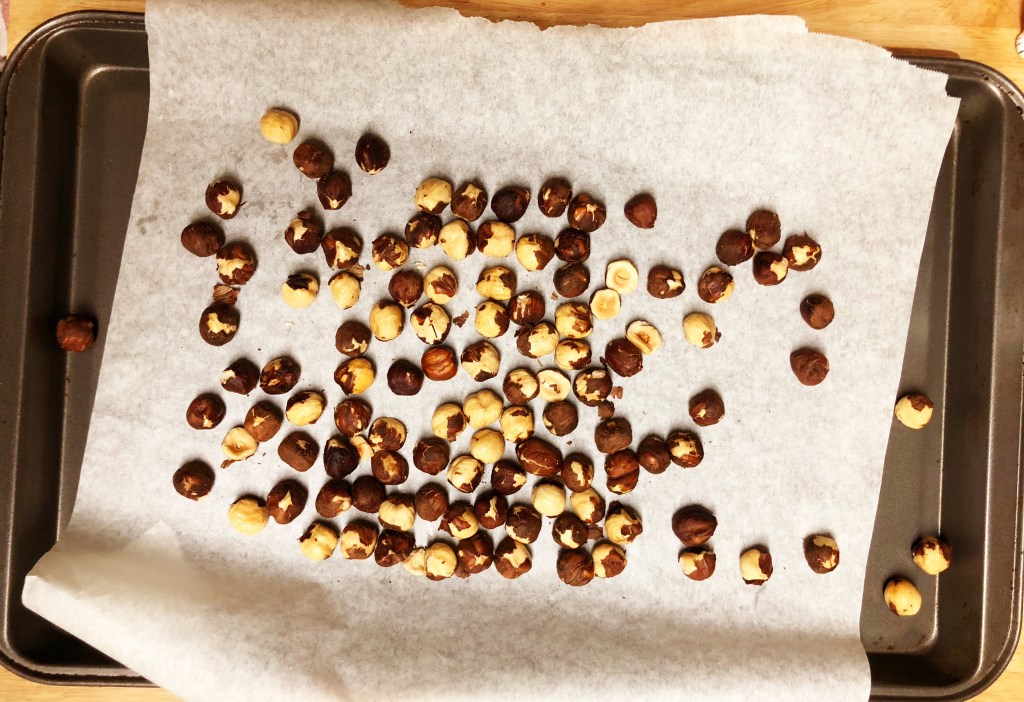
Preheat the oven to 350 degrees. Line a baking sheet with parchment paper and lay the hazelnuts out in a single layer. I doubled the amount of hazelnuts called for because I knew that I would be wanting to munch on them when I smelled them coming out of the oven! Bake the hazelnuts for about fifteen minutes, until they become fragrant, stirring occasionally.

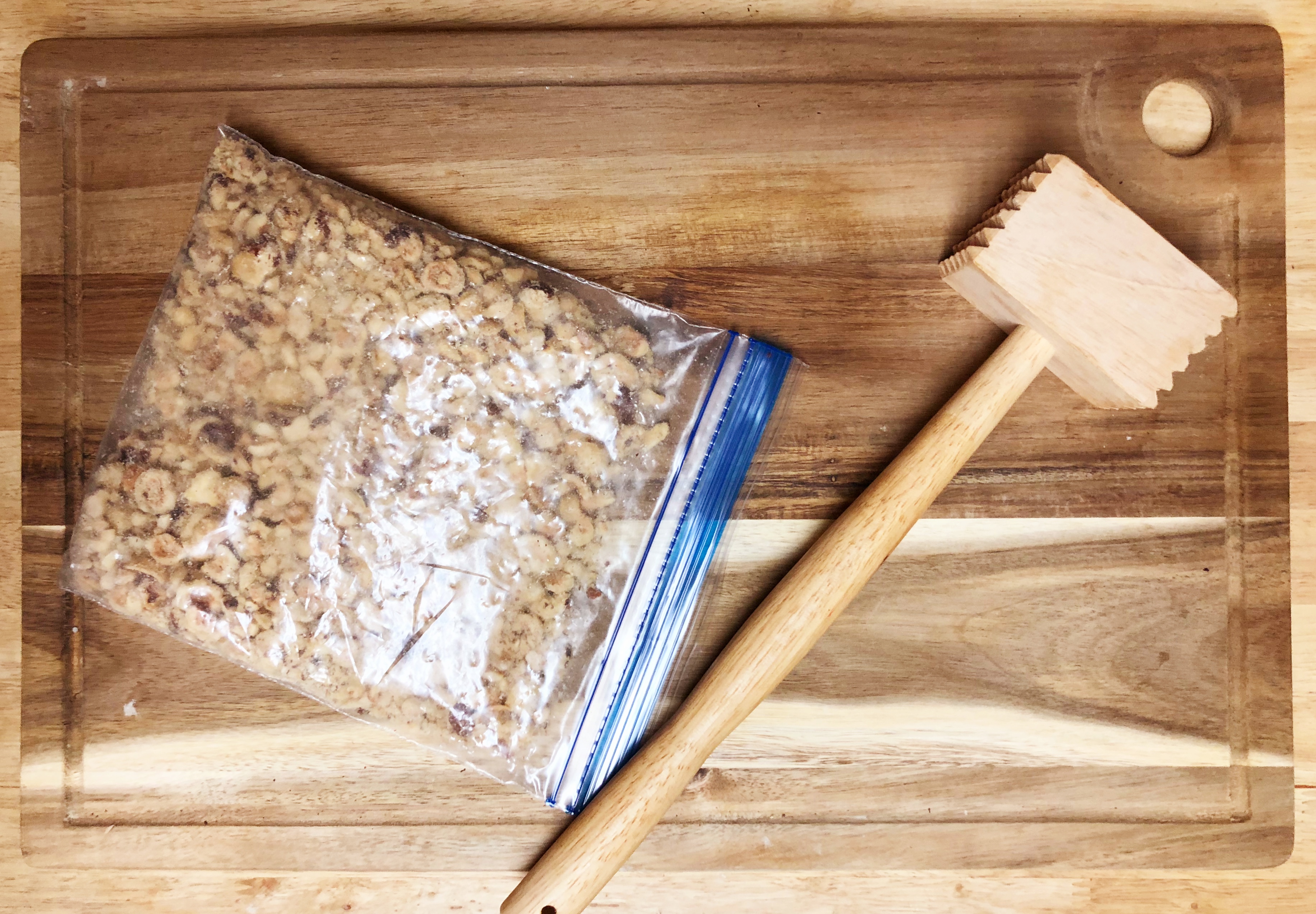
Pour the hazelnuts into a clean dishtowel and fold it over, allowing them to steam for two minutes. Using the towel, rub the nuts back and forth to release as much of the skins as possible. Allow the hazelnuts to cool completely and place them in a sealed baggie. Using a meat tenderizer, kitchen mallet, or even heavy bottomed pot, crush the fully cooled hazelnuts until they are broken into small 1/4 pieces.

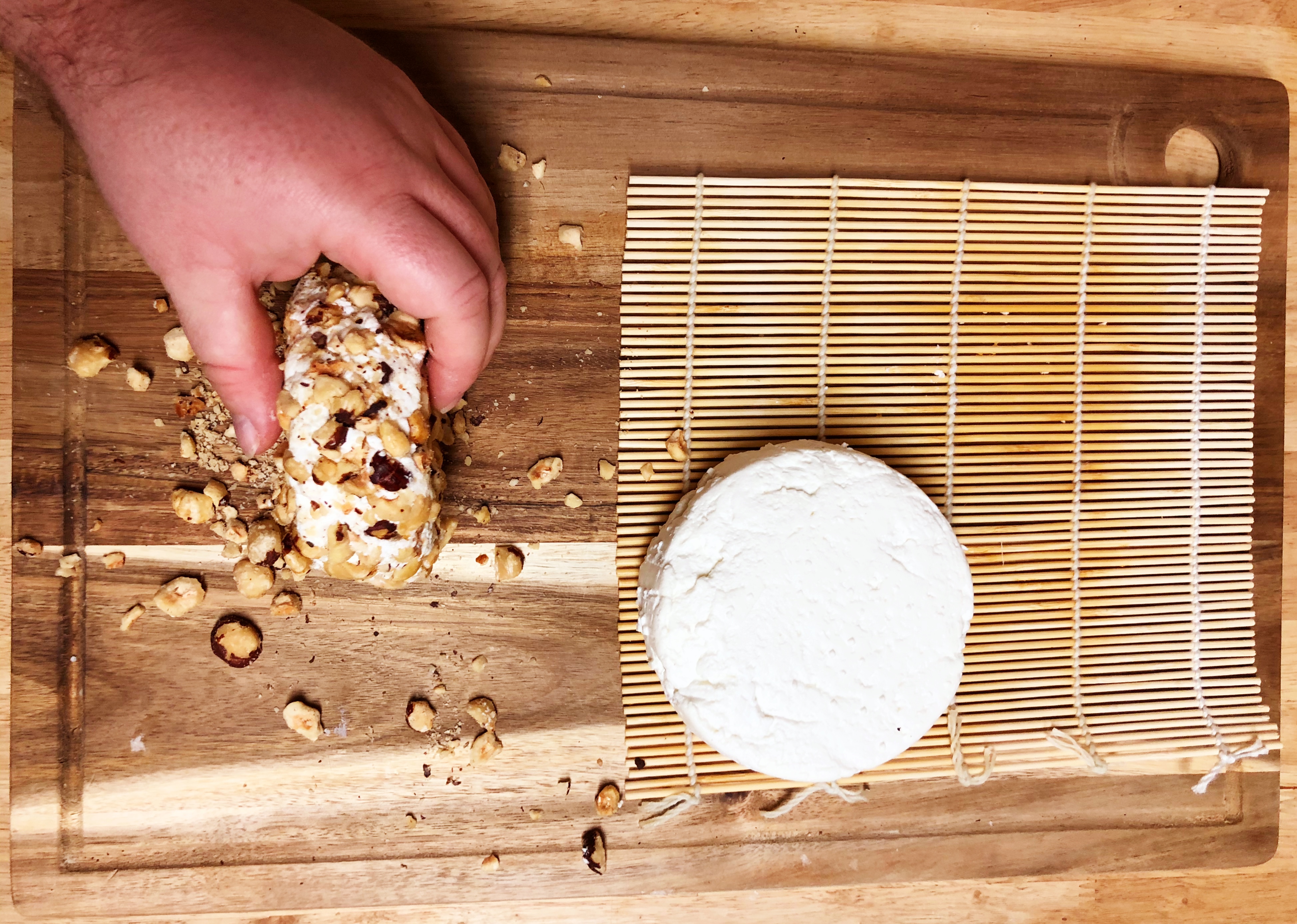
When the cheese has finished its drying period, roll each wheel in the crushed hazelnuts on all sides, gently pressing the larger pieces into the cheese.

Store the cheese in a vacuum-sealed bag for 12-24 hours to allow the flavors to meld, and then serve! The cheese will keep for 1-2 weeks in the refrigerator, on the longer end if you revacuum seal any unused portion.

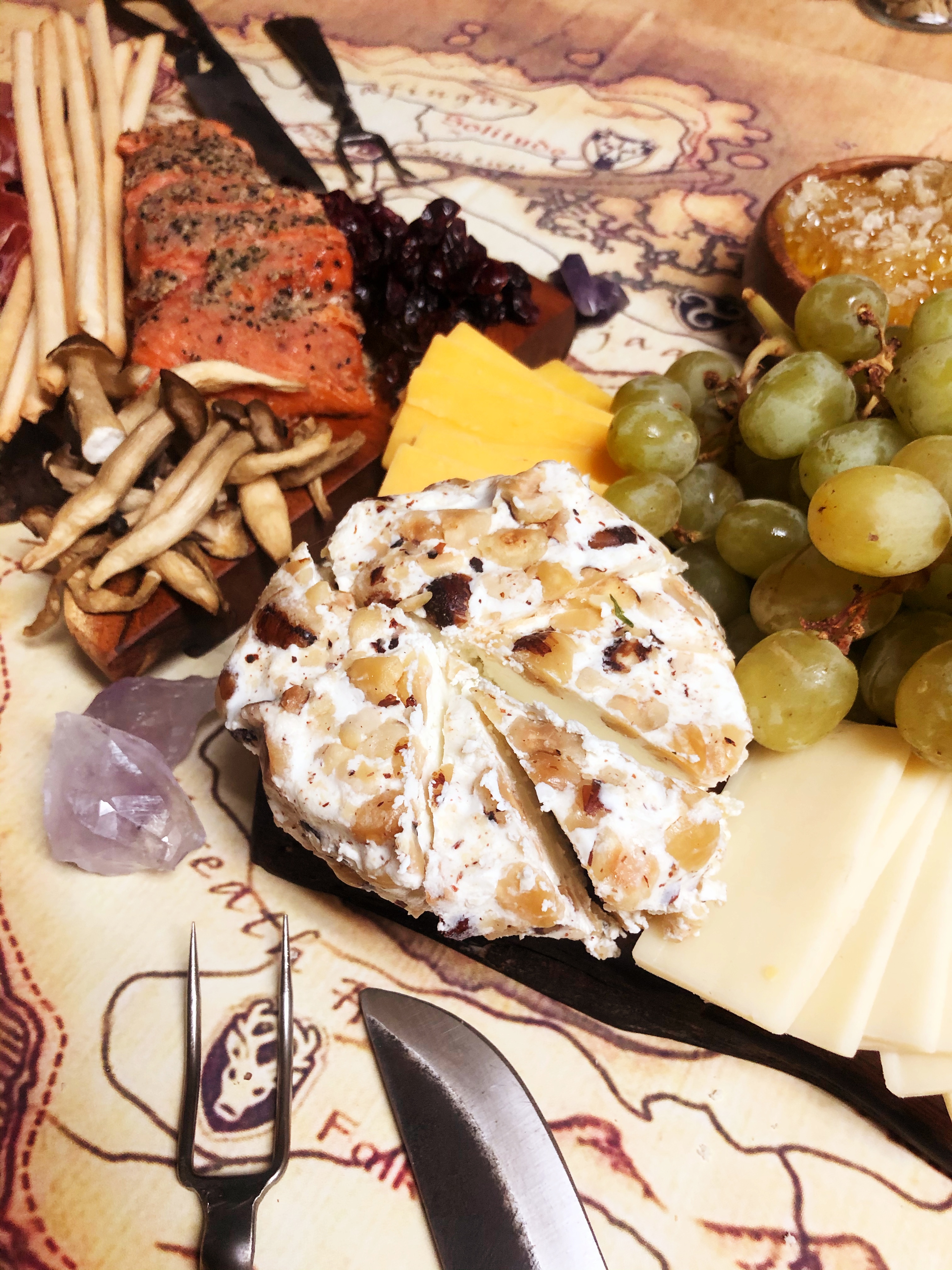
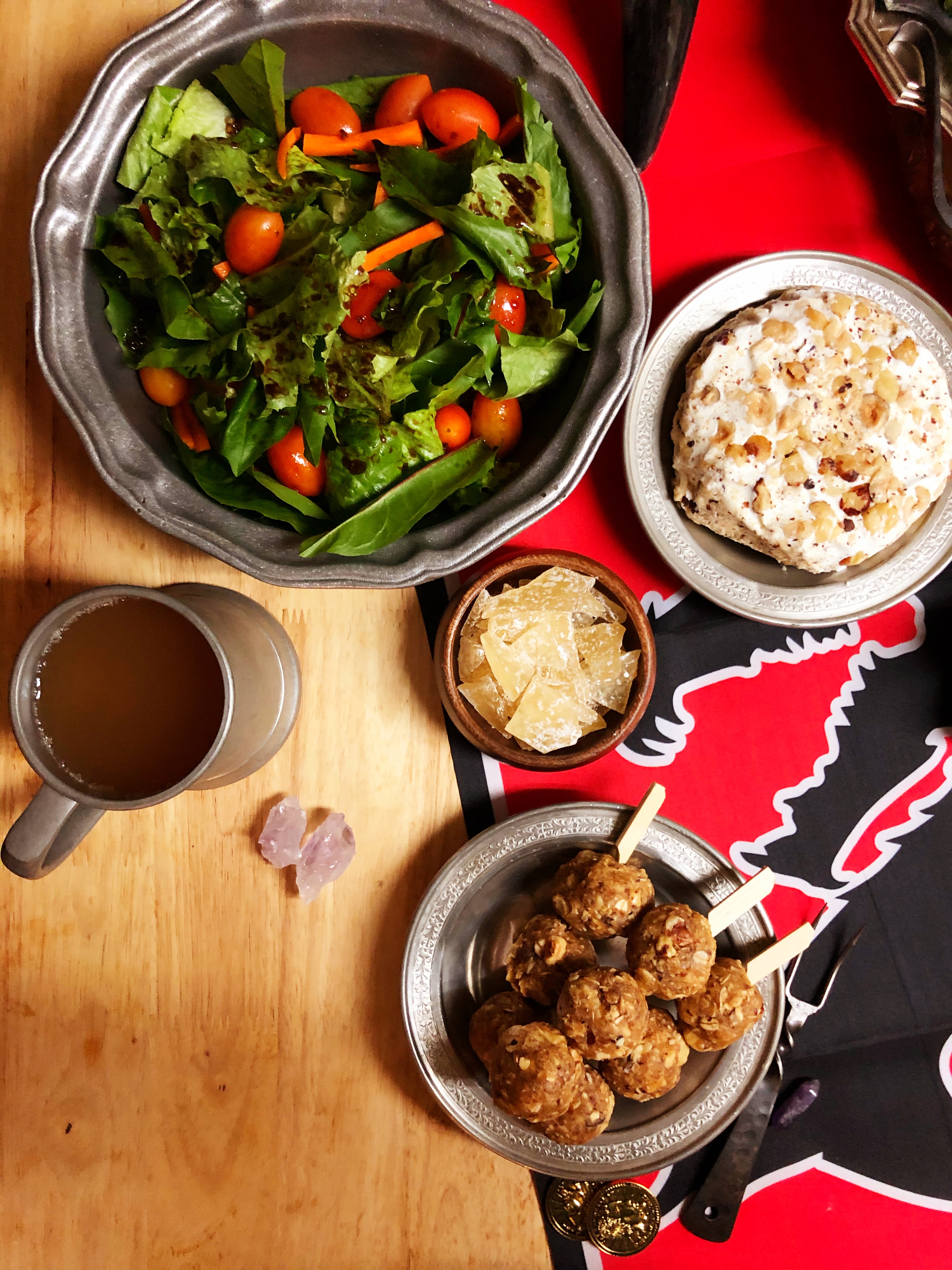
Serve with crackers, bread, or crumbled over salad. This cheese is delicious on roast beef sandwiches, with fruit, be like Basil Stag Hare and let your stomach be the guide!

Goatsmilk Cheese with Hazelnuts

  • Servings: Approx 1 lb of Cheese
  • Difficulty: Medium
  • Print

A good beginner's cheesemaking recipe, with many delicious applications.


Ingredients

-1 Gallon Goat Milk (Pasteurized or Raw, never Ultra-Pasteurized)

-1 Tbs Unchlorinated Water

-8 Drops Rennet

-1 Packet Chevre C20G Starter Culture

-1/2 tsp Coarse Kosher Salt, Divided

-1 1/2 cups Raw Hazelnuts


Directions

  1. Gather your ingredients and tools for the cheese (goat milk, starter culture, rennet, unchlorinated water).
  2. Pour the goat milk in a large pot and attach a thermometer with a clip. Place the pot in a sink or basin filled with warm water and allow the temperature of the milk to raise to 68-86 degrees Fahrenheit, stir a couple of times to ensure the milk is evenly heated.
  3. Remove the pot from the sink and sprinkle one packet of Chevre Starter Culture over the top of the milk, allow it to sit for two minutes before stirring in.
  4. Add 8 drops of Rennet to 1 Tbsp of Unchlorinated Water. After two minutes has elapsed since the starter culture was added to the milk, add the rennet and stir the milk gently to ensure it is evenly mixed. Cover the pot and allow it to sit for 6-12 hours.
  5. When the curds have separated from the way, and testing the curd mass with a knife yields an even break, line a large colander with butter muslin or cheese cloth and place in the sink. Ladle the curds into the colander and cover gently. Allow them to drain for 10-14 hours.
  6. Gently scoop the curds into two small cheese molds, gently pressing down with the back of a spoon after each addition scoop to ensure there are no hidden pockets of air. Sprinkle 1/4 tsp Coarse Kosher Salt and allow the cheese to sit in the molds, loosely covered with cheesecloth, for 8-10 hours.
  7. Using two plates, unmold the cheese and flip it, so that it can be re-inserted into the mold upside down. Sprinkle 1/4 tsp Coarse Kosher Salt on the top and allow it to sit again, loosely covered with cheesecloth, for 8-10 hours.
  8. Unmold the cheese wheels onto a cheese drying mat (or sushi mat) and allow to sit, loosely covered with cheesecloth, for 8-10 hours.
  9. Preheat oven to 350 degrees and line a baking sheet with parchment paper.
  10. Spread hazelnuts in an even layer on the baking sheet and bake for fifteen minutes, stirring occasionally, until the nuts become fragrant.
  11. Transfer the still warm hazelnuts to a clean kitchen towel and fold it over, allowing them to steam in the towel for two minutes.
  12. After two minutes has elapsed, rub the towel back and forth to loosen the skins from the nuts. Allow the hazelnuts to cool completely before placing in a plastic baggie.
  13. Using a kitchen mallet or meat tenderizer, shatter the hazelnuts into small pieces. Set aside.
  14. After 8-10 hours has elapsed, pour out the shattered hazelnuts onto a cutting board and roll the goat cheese in the nuts, covering every surface and gently pressing the nuts into the cheese.
  15. Vacuum seal the cheese wheels into plastic bags and allow to age for 12-24 hours in the refrigerator before serving.

No comments to show.

Roast Corn

“Come, come and eat! If your belly is empty, fill it!”

-Masarha, the Sundry Swills Inn in Alten Corimont, the Elder Scrolls Online

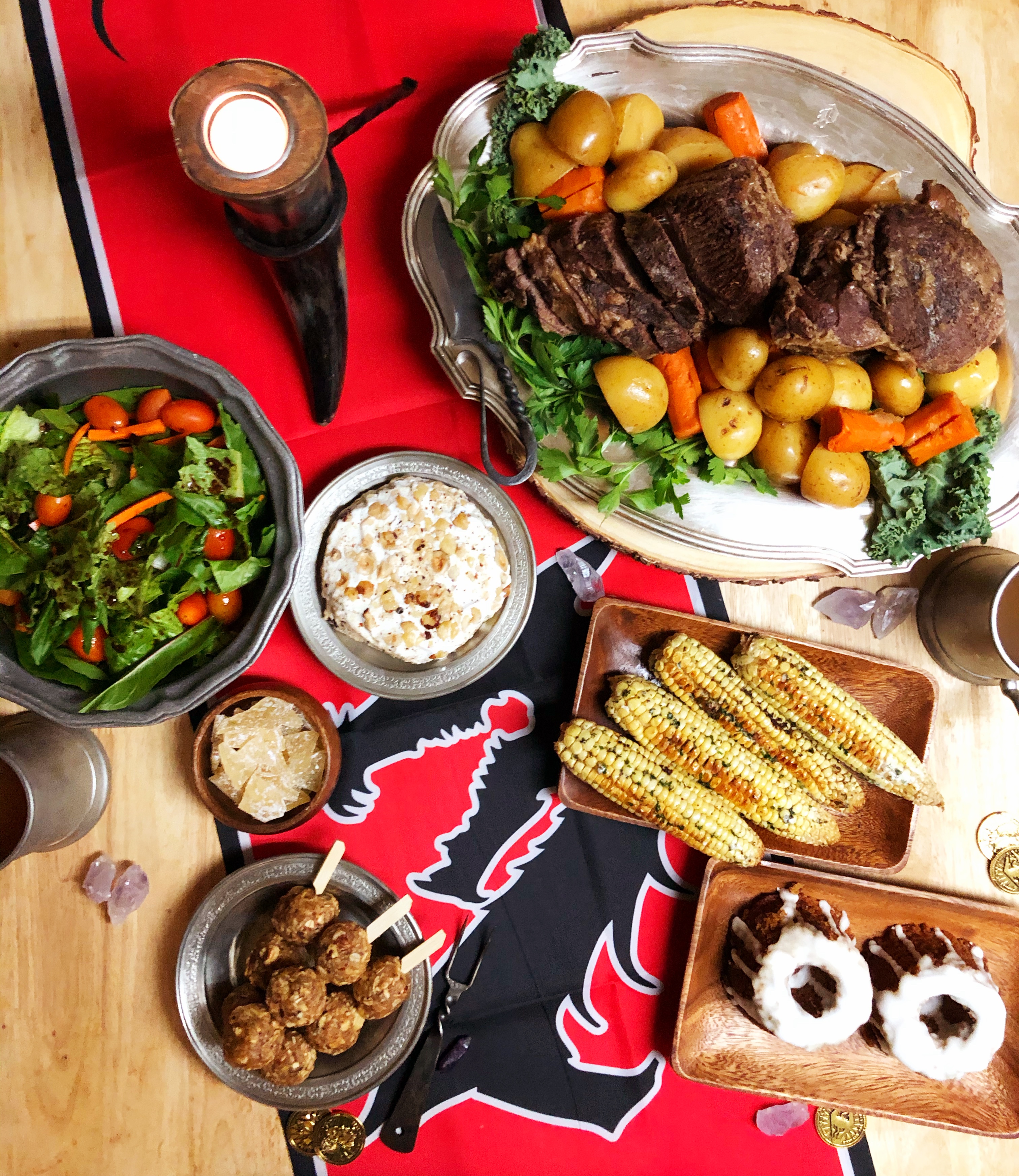
As fun as creating big showy recipes like Colovian Roast Turkey is, sometimes it’s nice to add an easy side dish to the old repertoire. This Roast Corn recipe, based on the Provisioning Recipe from Elder Scrolls Online, is easy to adapt to match the flavors of any meal, and easy to assemble and throw in the oven for a delicious and unique side with minimal extra labor. And once you’ve had roast corn, you’ll never boil your corn on the cob ever again!

Preheat the oven to 400 degrees and assemble your ingredients. You’ll need 4-6 ears of corn (any more and you can adjust the recipe to add a little more butter and herbs), 1/2 cup of softened room temperature butter, about 2 teaspoons each of finely minced fresh parsley and thyme, and coarse kosher salt and pepper to taste.

Add butter, parsley, thyme, salt, and pepper to small bowl and mix thoroughly with a fork.

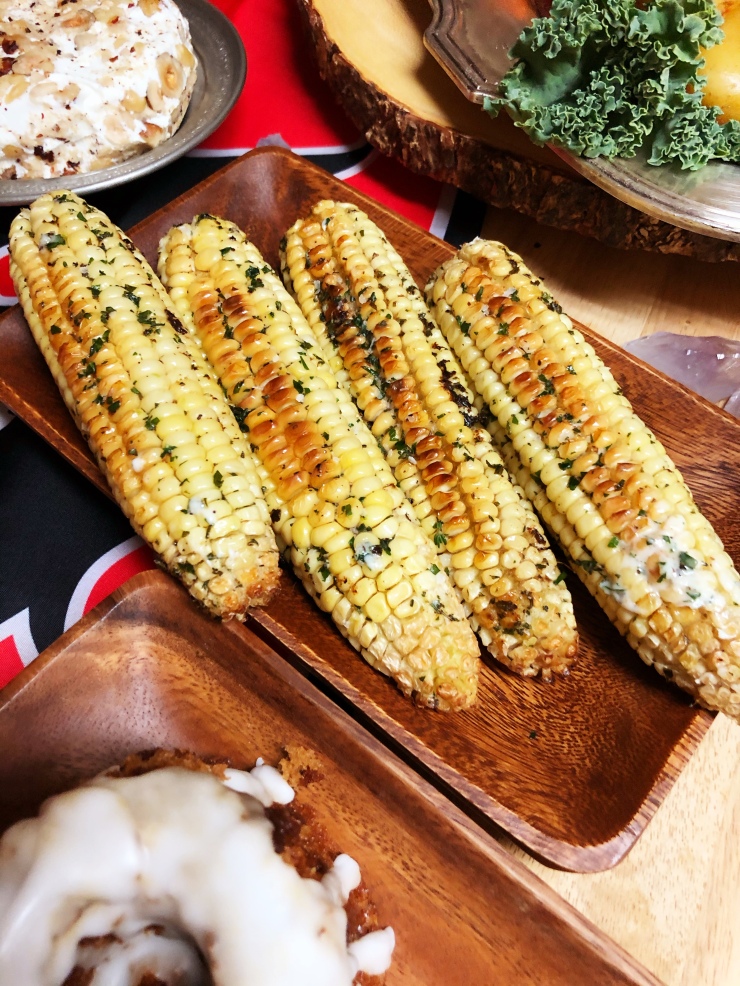
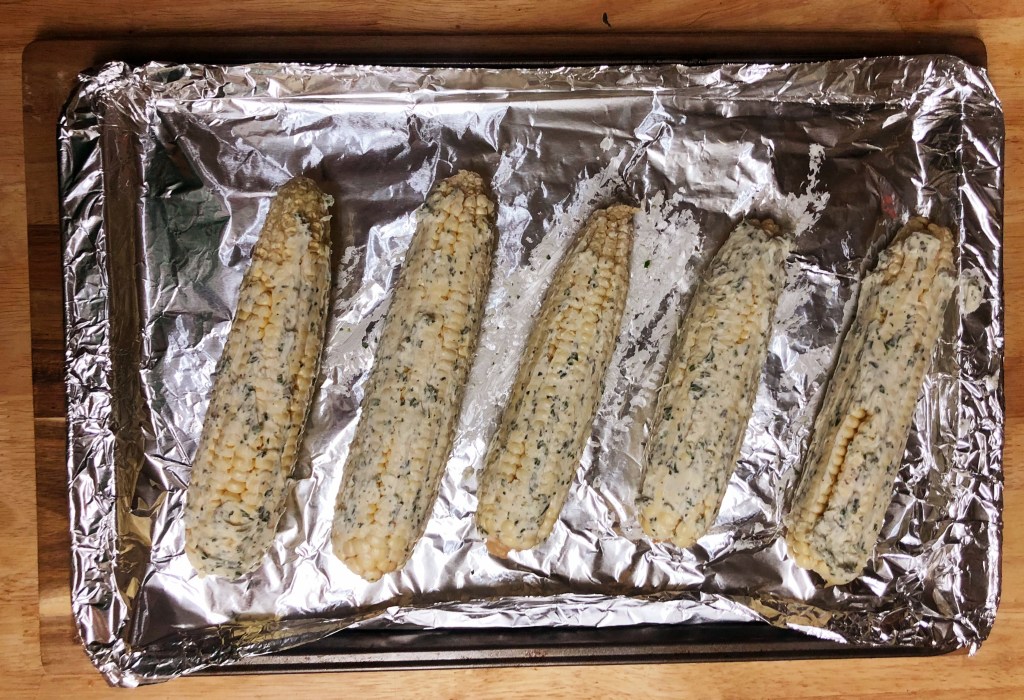
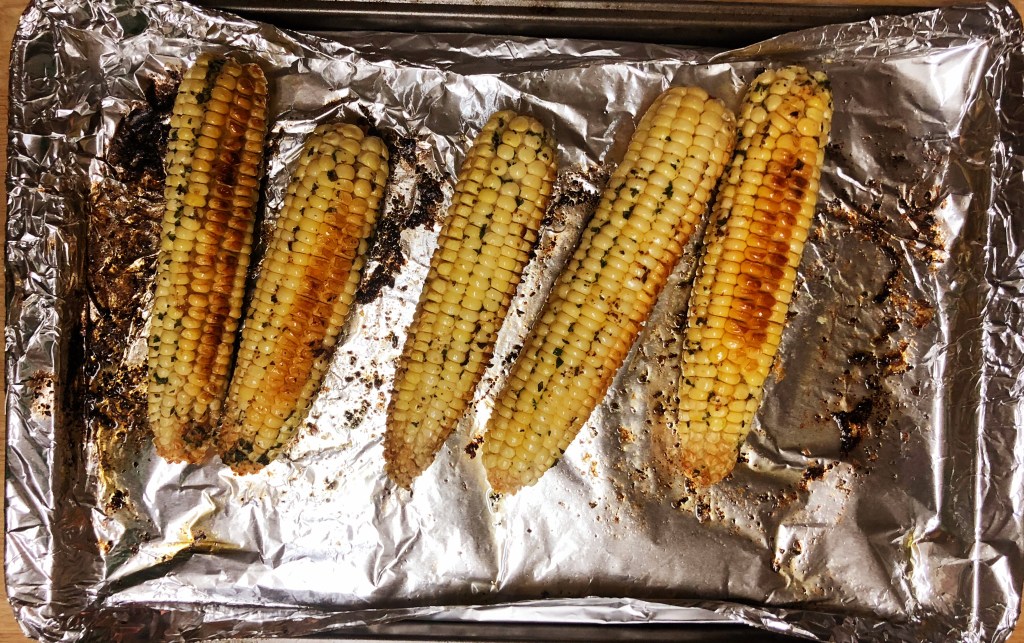
Arrange the ears of corn on a baking sheet lined with tinfoil and thoroughly slather each ear in the herbed butter, reserving about 1/4 of the butter. Bake at 400 degrees for 40 minutes, flipping each ear of corn once at the twenty minute mark.

Remove from oven and allow to cool slightly before plating. After plating, slather each ear in the remaining herbed butter and serve warm.

Roast Corn

  • Servings: 4-6
  • Difficulty: Easy
  • Print

Flavorful roasted corn with herbed butter, the perfect no-mess accompaniment to any meal.


Ingredients

-4-6 Ears of Shucked Corn

-1/2 Cup Butter, Softened at Room Temperature

-2 tsp Finely Minced Fresh Parsley

-2 tsp Finely Minced Fresh Thyme

-Coarse Kosher Salt and Pepper to taste


Directions

  1. Gather your ingredients and preheat oven to 400 degrees.
  2. Combine parsley, thyme, salt, pepper, and butter in a small bowl and mix thoroughly with fork.
  3. Reserve 1/4 of the herbed butter. Slather the remaining butter over each ear of corn and arrange on a tinfoil lined baking sheet.
  4. Roast at 400 degrees for 40 minutes, flipping each ear of corn once halfway through.
  5. Allow to cool slightly before plating.
  6. After plating slather the remaining herbed butter over the ears of corn and serve warm.

No comments to show.

Candied Chestnuts

“Ho hurr hurr! Liddle wunner they send oi t’keep watch on ‘ee, you’m a villyen, Maister Gonff. Keepen ‘ee paws outten ‘ee chesknutters, or oi tells Miz Bell offen ‘ee.”

-Billum, from Mossflower by Brian Jacques, p.103

Few foods in the cuisine of Redwall Abbey and the greater Mossflower Wood has captured more readers’ attention and left a more memorable impression than Candied Chestnuts. Making their first appearance early on in Redwall, Candied Chestnuts remain not only a tantalizing described treat, but an important plot device in several books. For me as a child, Candied Chestnuts held an almost holy place: the way Brian Jacques described each morsel, covered in sugar, coveted by birds especially, made me crave them. As such no recipe has ever reached higher on my list of dream recipes than candied chestnuts.

For this recipe I started with a traditional Marrons Glacé recipe but expanded on the recipe to match the descriptions of Candied Chestnuts from the book, namely achieving a crispier outer shell with present sugar crystals. Though the final results takes several days to pay off, you’ll find the crispy shell surrounding a gently chewy center to be well worth the wait.

To begin you will need one and 1/4 cups of water, two cups of granulated sugar, 1/4 teaspoon freshly grated nutmeg, 1/4 teaspoon cardamom, 1 teaspoon vanilla extract, and approximately one pound of roasted chestnuts (I used three 5.2 oz bags of Gefen Roasted Chestnuts, a little over a pound, available on Amazon). If you have trouble finding roasted chestnuts, I recommend checking in with your local Asian Markets. By using prepackaged roasted chestnuts this recipe is easy to create any time of year, regardless of being bound by Chestnut Season.

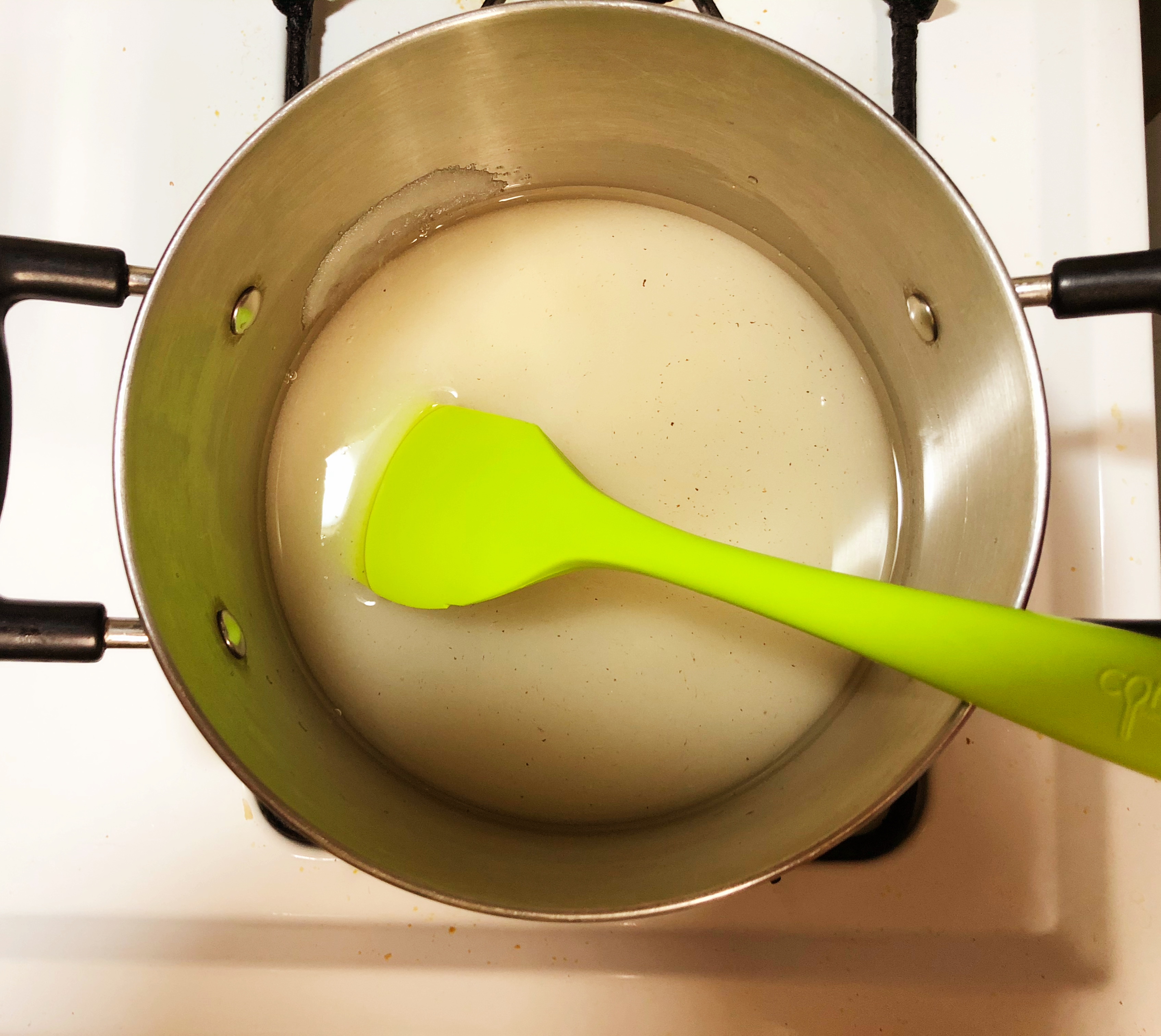
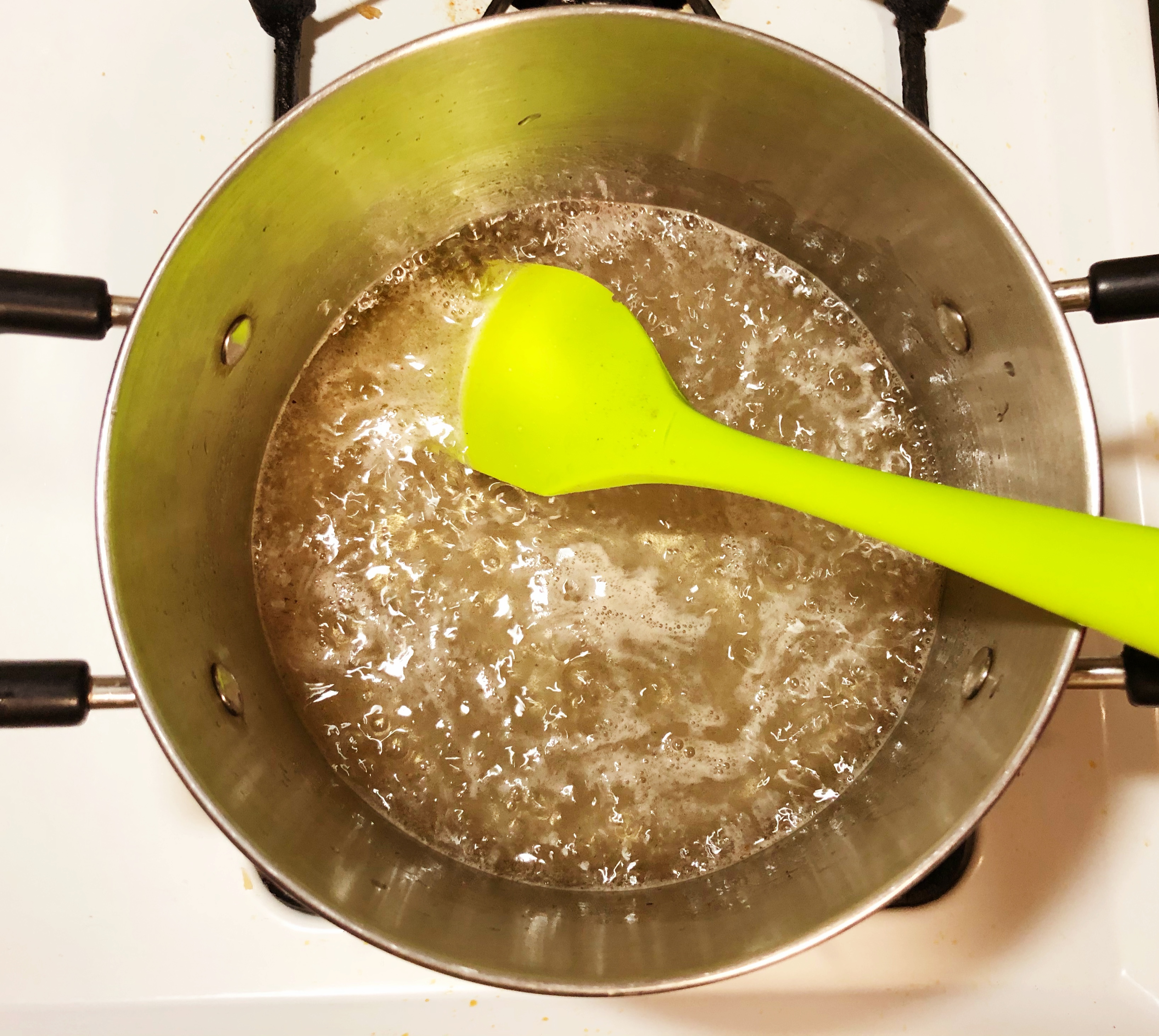
In a medium pan, add water, sugar, cardamom, and vanilla and bring to a boil over medium heat, stirring constantly. Once the mixture reaches a boil, continue cooking it for five minutes, stirring occasionally.

Add the chestnuts to the pot carefully, and bring the mixture back to a boil, stirring constantly. Continue boiling the chestnuts in the syrup, stirring frequently, for ten minutes.

After ten minutes has elapsed, turn off the heat and allow the mixture sit for about sixty seconds, until it stops bubbling. Carefully transfer the mixture to a clean dish or container and cover loosely. Allow the mixture to sit undisturbed for 12-18 hours. After enough time has elapsed, transfer the mixture back to a clean pot and bring to a boil again, stirring until the mixture is boiling. Allow the chestnuts to boil for three minutes, then remove from heat. Transfer back to the same container once it has ceased bubbling, and once again allow the mixture to sit undisturbed for 12-18 hours. Repeat this process 3-5 times (it will required more repetition if the weather is colder, and less in warmer weather) until almost all of the syrup has been absorbed by the nuts.
When you check on the nuts and find that most of the syrup has been absorbed, preheat the oven to 200 degrees, or a warming setting if your oven has one, and transfer them to the pot one last time and bring them to a boil. This time, boil the chestnuts for ten minutes, stirring frequently. The purpose of this final boil is to bring the syrup to a setting temperature, which will allow thick sugar crystals to form on the outside of the chestnuts.

Transfer the chestnuts and remaining syrup back to the cleaned container and set the chestnuts aside to cool slightly (about 3-5 minutes, until you can pick them up safely with your fingers) and prepare a baking sheet with parchment paper. When the sugar mixture has begun to set around the chestnuts and then can be touched, use a spoon or your fingertips to transfer each chestnut to the lined baking sheet. Allow some of the sugar crystals to remain on the chestnuts, these will help to form the harder outer shell. Bake the chestnuts at 200 degrees for 45 minutes to an hour, until they have firmed up and the surfaces of the nuts are dry and crispy.
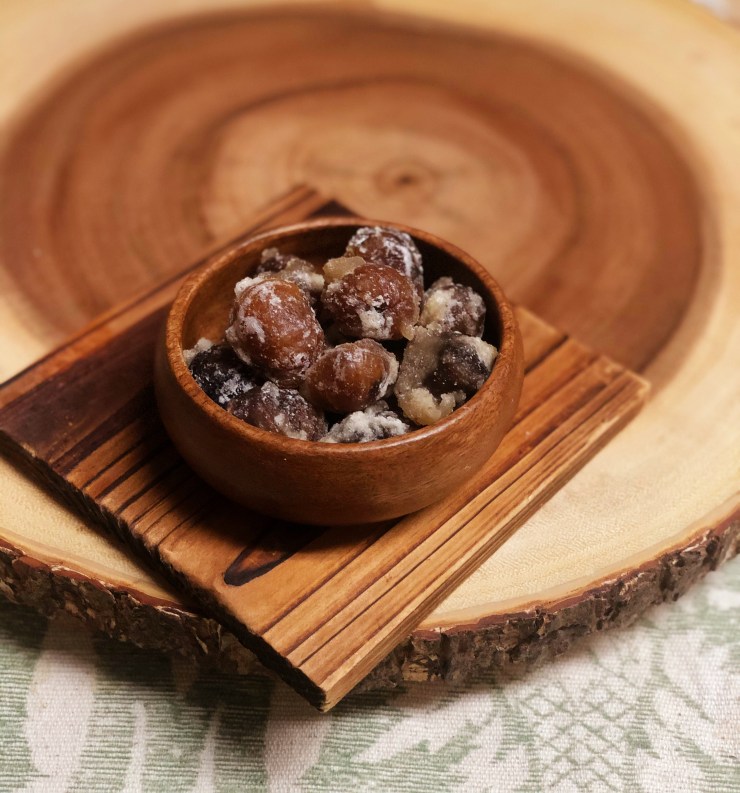
Allow the chestnuts to cool completely, and then transfer to an airtight container. They will keep at room temperature for 1-2 weeks, but it’s unlikely they will last all that long! Serve as a snack by themselves, or alongside holiday treats. Or use them as garnishes on baked goods, or chopped in cookies.
Candied Chestnuts

  • Servings: 4-8
  • Difficulty: Medium
  • Print

Among the most iconic of Redwall foods, a treat to sweeten any day.


Ingredients

-1 Pound Roasted Chestnuts

-2 Cups Granulated Sugar

-1 and 1/4 Cups Water

-1 tsp Vanilla Extract

-1/4 tsp Freshly Grated Nutmeg

-1/4 tsp Cardamom


Directions

  1. Gather your ingredients.
  2. Bring Water, Sugar, Vanilla, Cardamom, and Nutmeg to a boil over medium heat, stirring constantly.
  3. Add chestnuts and boil for ten minutes, stirring occasionally.
  4. All to cool until mixture stops bubbling and transfer to a clean container. Cover loosely. Allow to sit for 12-18 hours undisturbed.
  5. Transfer the mixture to a medium pot and bring back to boil over medium heat, stirring occasionally. Allow to boil for three minutes. Allow to cool and transfer back to container, cover loosely, and allow to sit undisturbed for 12-18 hours.
  6. Repeat step 5 3-5 times, until almost all of the syrup has been absorbed by the chestnuts.
  7. Once almost all of the syrup has been absorbed, preheat oven to 200 degrees and bring chestnuts to a boil, stirring frequently. Boil over medium heat for ten minutes. Transfer back to the container and allow them to cool until syrup starts to set.
  8. Using a spoon or your fingertips, transfer chestnuts one by one to a parchment lined baking sheet, taking care to make sure each chestnuts has some sugar crystals attached.
  9. Bake at 200 degrees for 45-60 minutes, until the nuts have firmed up and are dry and crispy to the touch.
  10. Allow to cool completely and store in an airtight container for 1-2 weeks.

No comments to show.

Colovian Roast Turkey

“Skingrad County is famous for its wines, tomatoes, and cheeses, and the town of Skingrad is one of the cleanest, safest, and most prosperous towns in Cyrodiil. Located in the heart of the West Weald highlands, Skingrad is the gem of Old Colovia, and a model of the Colovian virtues of independence, hardwork, and tough-mindedness.”

-Alessia Ottus, Guide to Skingrad, The Elder Scrolls IV: Oblivion

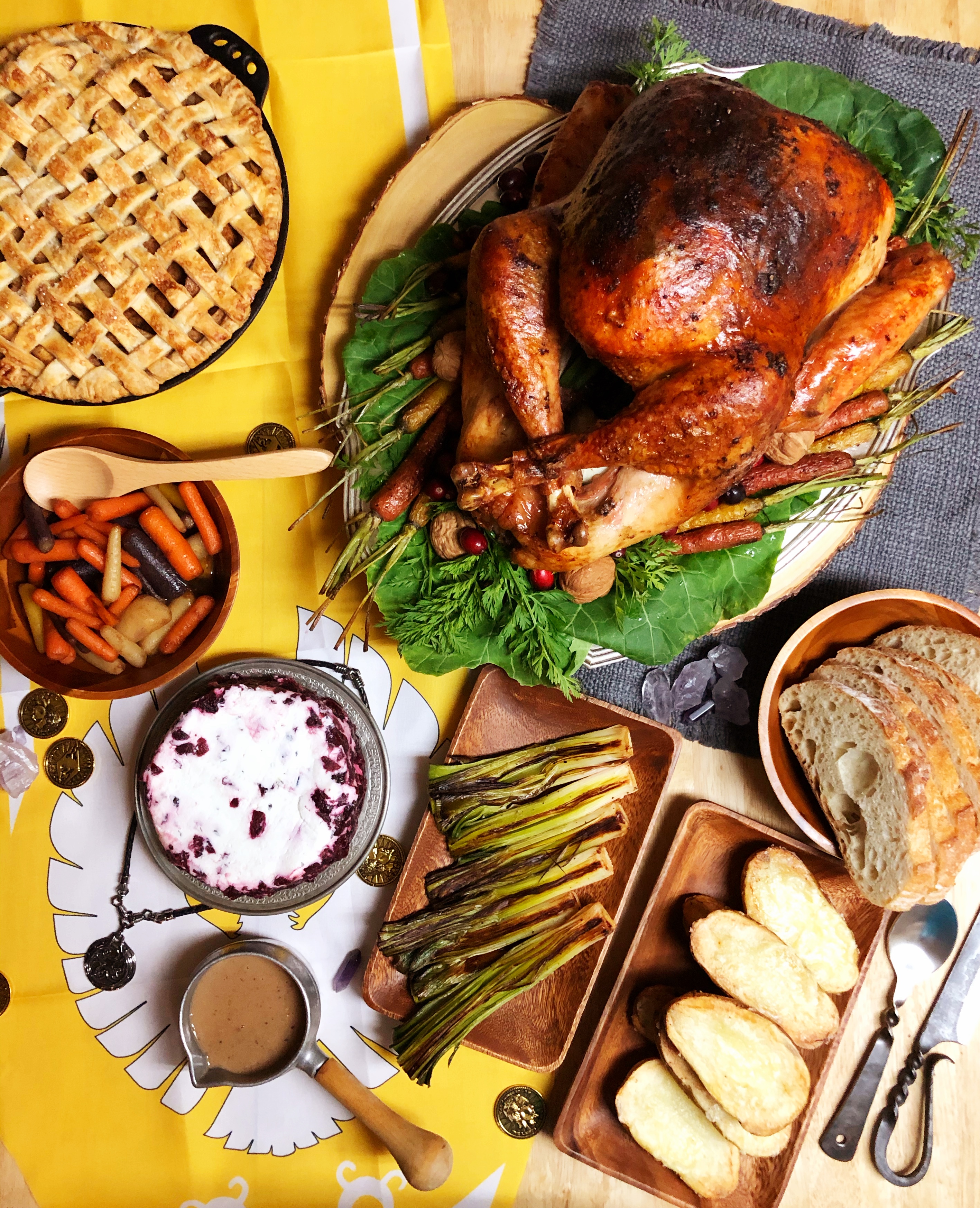
For years I’ve followed the same Turkey Recipe every Thanksgiving (and usually a few times after Thanksgiving, while Turkeys are on sale at our local supermarkets. It’s hard to resist the siren song of a cheap bird that can feed us for several days). This year however, with the Cellarhog’s Blog fresh and new, I decided it was high time we try something new.

Colovian Roast Turkey is based on a Provisioning Recipe from the Elder Scrolls Online, named for the region Colovia, a part of Cyrodiil. Colovia is known for their austere, hard-working, and self-sufficient people, the frontier-men of Colovia, who make up many of the higher ranks of the Imperial Legion. Adapting Provisioning Recipes comes with some difficulty in that there’s not much of an image of what the end product should look like, and for flavor each recipe often only includes two or three ingredients by way of explanation. So further research is necessary. The two primary ingredients of Colovian Roast Turkey in the Elder Scrolls Online was poultry and tomato.

By way of seasoning, I leapt into some research. Visually, Cyrodiil seems to be based more or less on Ancient Roman cultures, so I looked there for seasonings that may have been commonly in use during that era. I found that, not surprisingly, many of the spices I settled on are featuring as “Imperial Spices” in the Official Elder Scrolls Cookbook. I was traveling down a road that had been tread before, naturally. The seasonings I settled on were: Grains of Paradise (Aframomum melegueta), Coriander, Savory, Ground Ginger, Fresh Marjoram, Fresh Thyme, and white pepper.

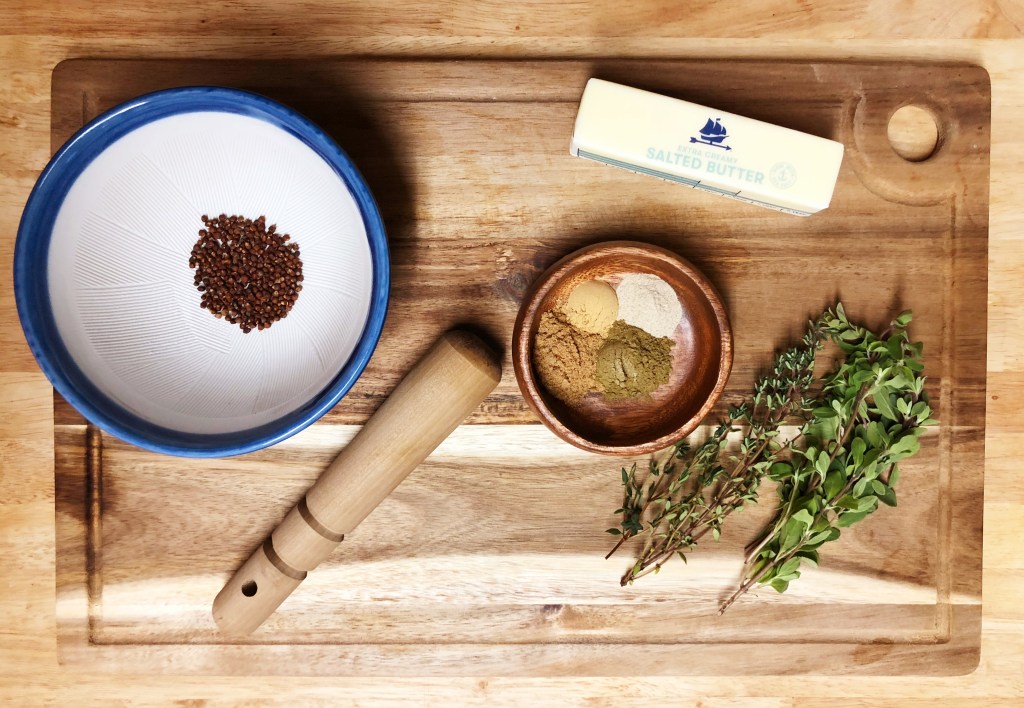
I found it difficult to find ground grains of paradise, so I ground my own using my Suribachi, which is a Japanese mortar and pestle. You can use any mortar and pestle or even an electric or burr mill spice grinder if you have one. For this recipe you will need 1 teaspoon grains of paradise, 1/2 teaspoon ground ginger, 1 teaspoon ground coriander, 1 tsp ground savory, 1/2 tsp white pepper, 1 tsp fresh minced thyme, and 1 tablespoon fresh minced marjoram, as well as one stick of salted butter softened at room temperature.

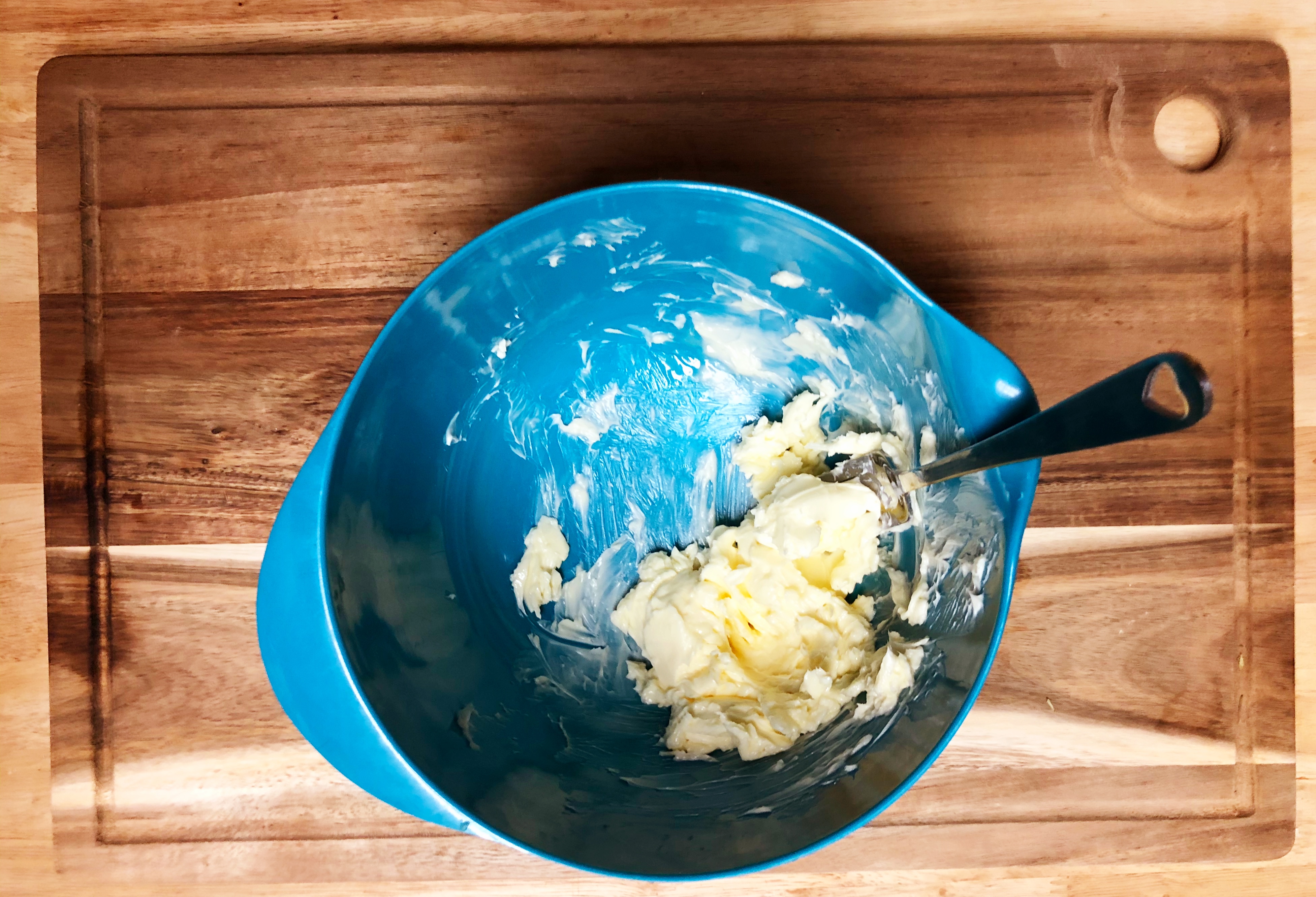
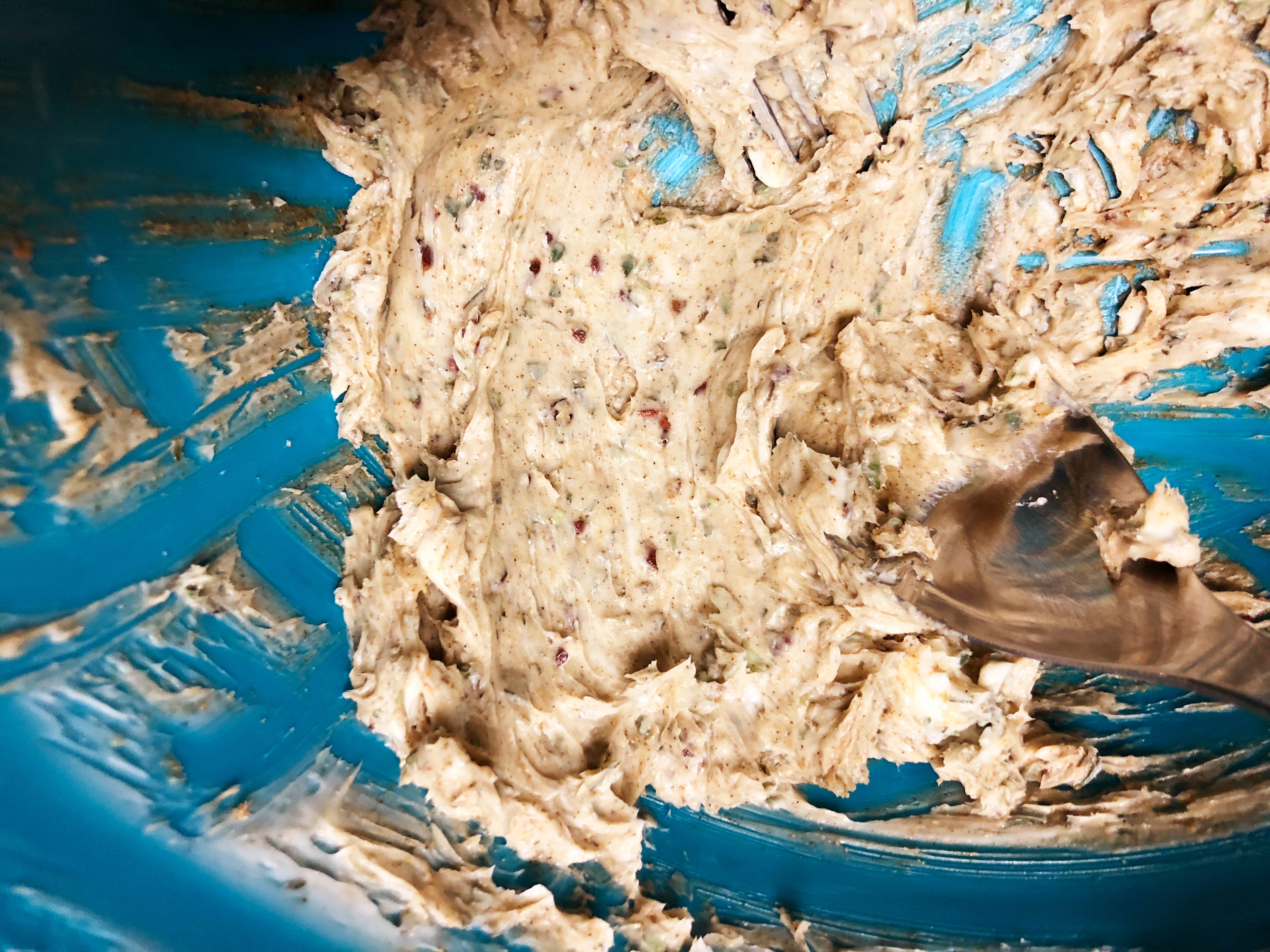
Preheat oven to 350 Degrees Fahrenheit. Using a small mixing bowl and a fork, mash the butter to soften it further, and then add the spice and herb blend and mix well. Set aside.

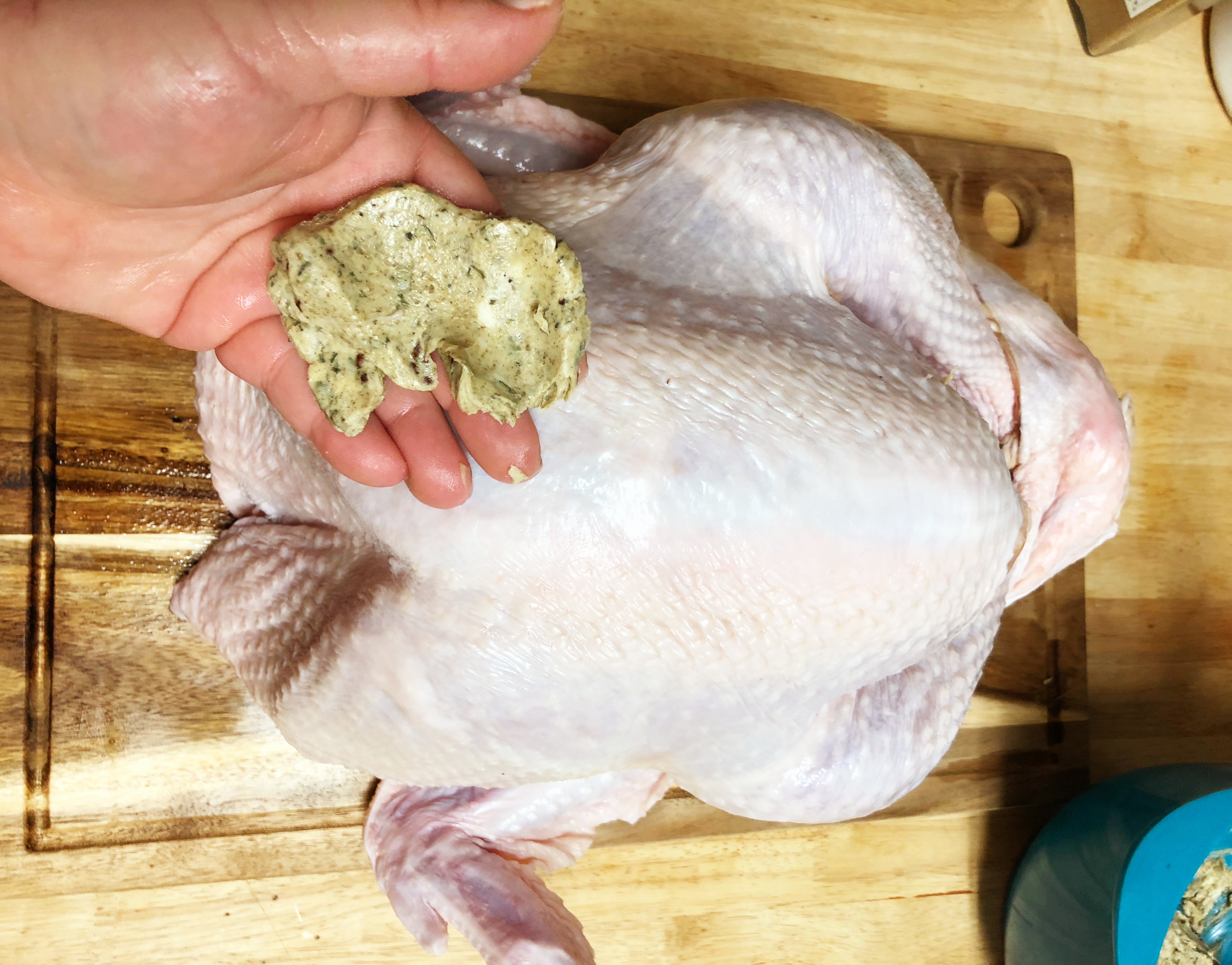
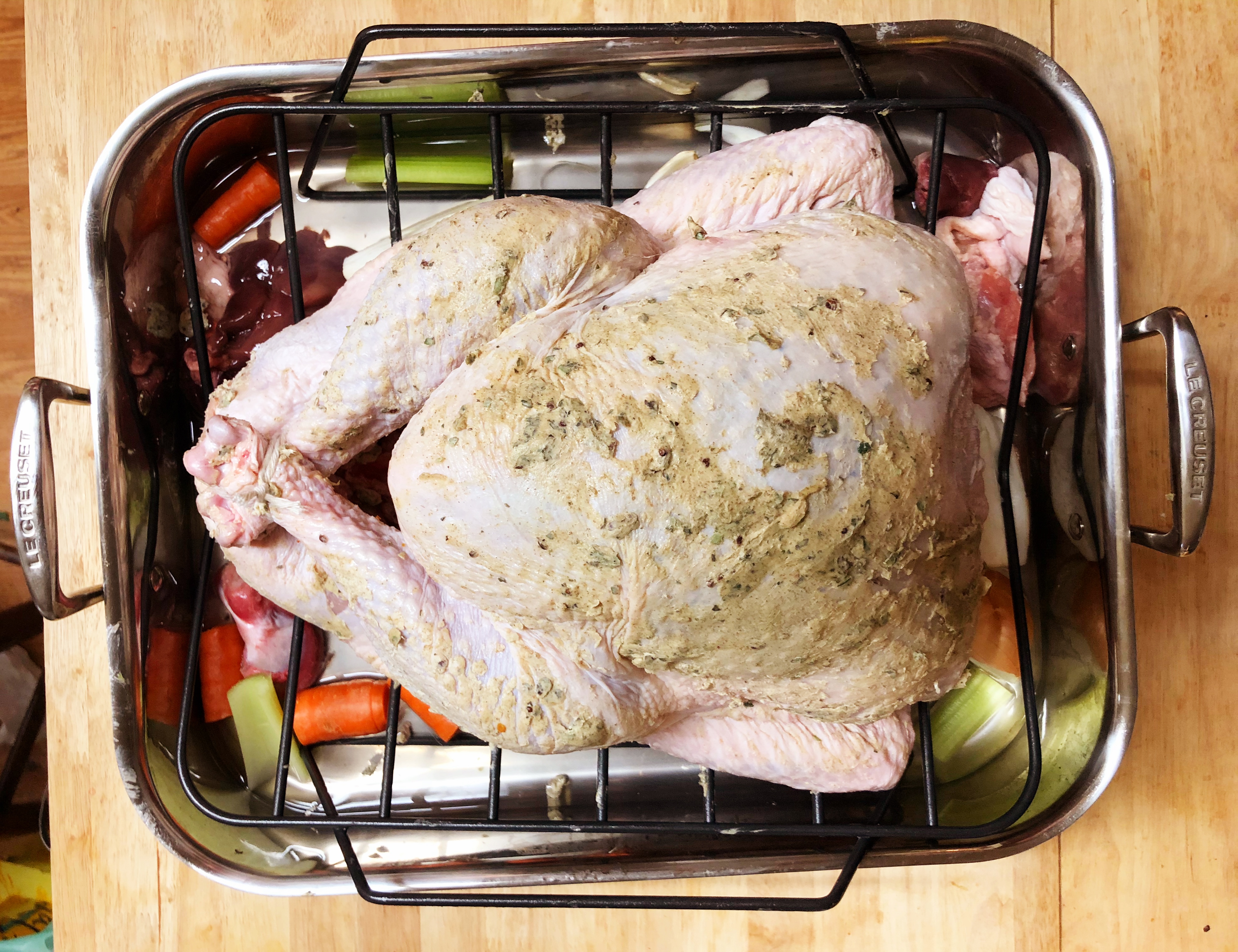
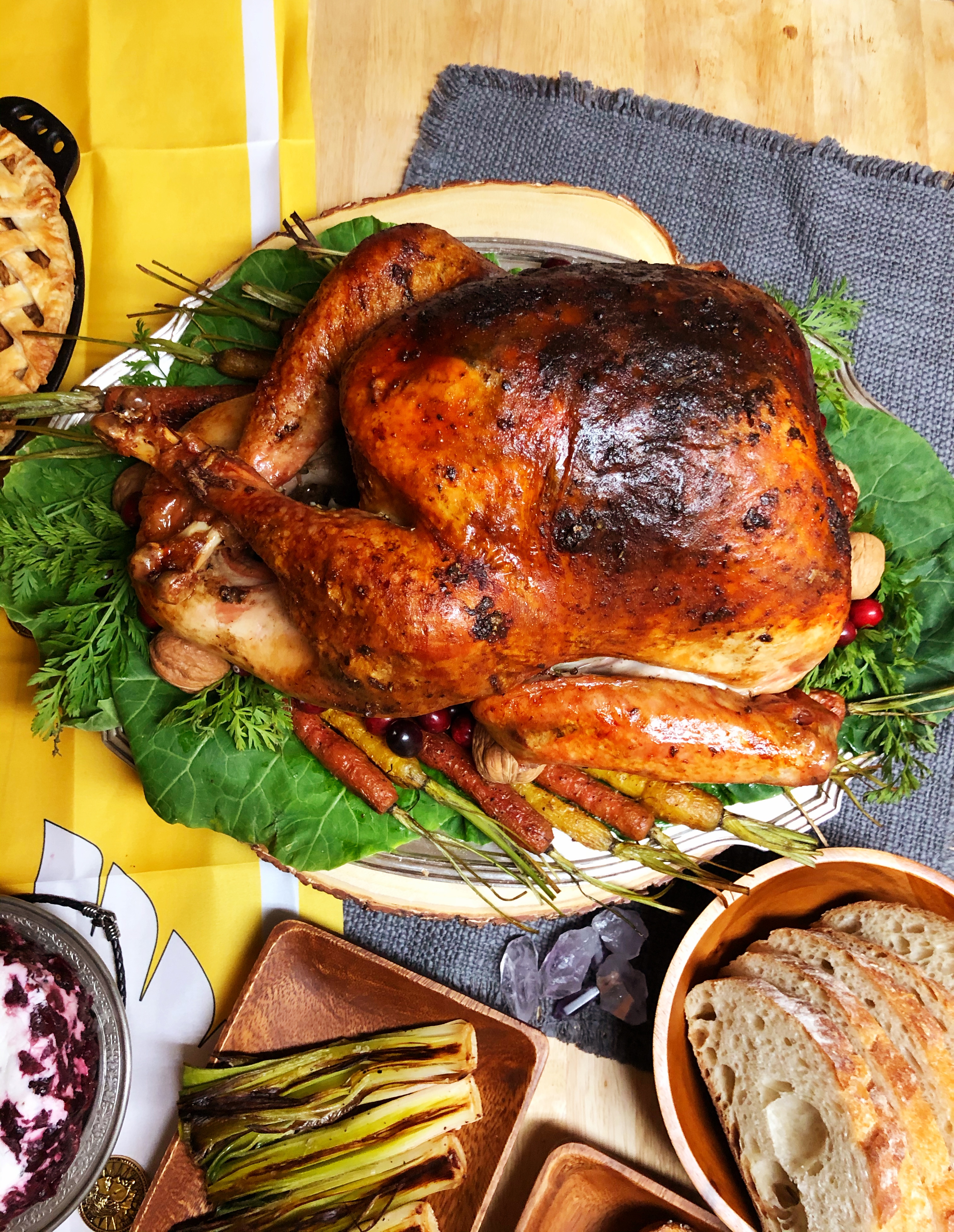
To prepare your turkey (I recommend 14-16 pounds for this recipe), first remove the giblets and neck from the cavity (remember to check both the main cavity and the neck cavity to make sure you don’t miss any. Set these items aside, you won’t want to lose out on the flavor they add to your gravy. Lay the turkey breast side up and, working from the bottom towards the neck, slide your hands under the skin to loosen it. You may need to trim away a little excess skin, if you do set it aside with the giblets. Take care not to tear the skin, and take your time to do this part gently. You should be able to completely loosen the skin from the breasts all the way up to the neck, and across the sternum. Next, using a handful at a time, soften the butter mixture in your hands and work it under the skin, thoroughly covering both breasts. Continue until you have only about one and half tablespoons of butter mixture left. Use the remaining herb butter to coat the outside of the turkey, spreading it over the entire bird. Generously salt and pepper the turkey.

Set the turkey aside and make space to work with the aromatics.

You will need twelve cloves of garlic, two large carrots, washed and dried, the greens from two leeks (save the whites and lighter green parts for another purpose, grilled leeks for example make a delicious accompaniment), three ribs of celery, two onions, and 1/2 cup of sundried tomatoes. Cut the carrot into one inch chunks, the leeks and celery into two inch chunks, peel the garlic cloves, and peel the onions and slice them into quarters.

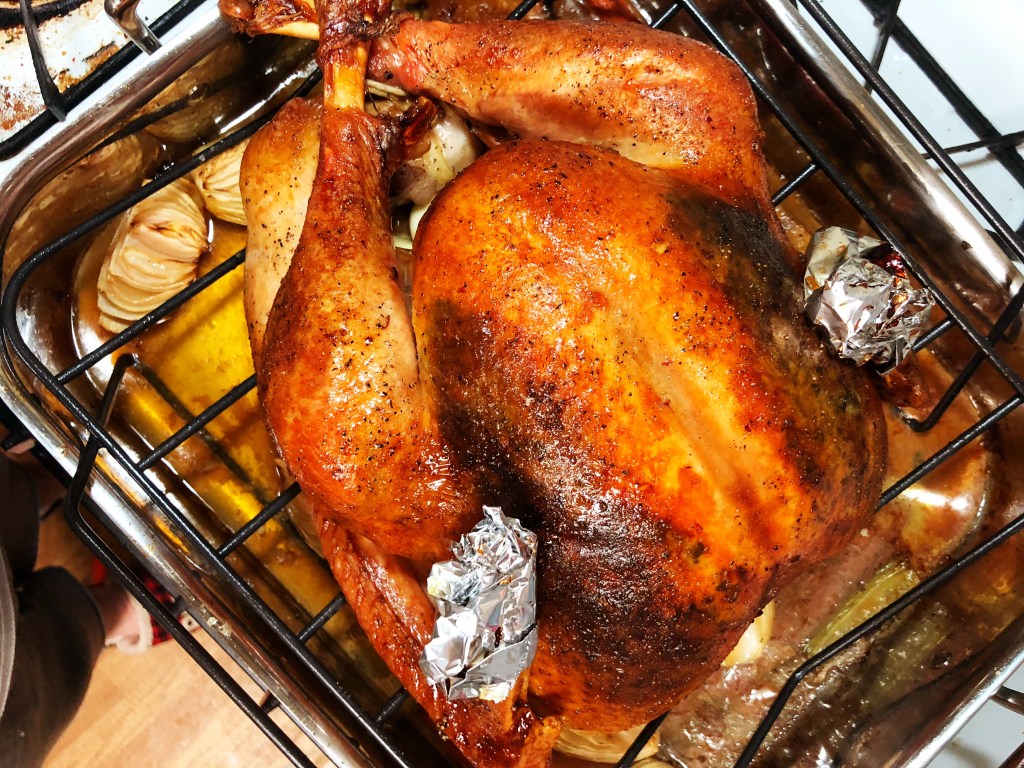
Place the carrots, celery, and all but one wedge of the onions along with the giblets, neck, and any skin trimmings in the bottom of the roasting pan. Add two cups of water to the roasting pan, and place the rack and turkey over the top of these aromatics. Carefully stuff the turkey first with the garlic, then the sundried tomatoes, followed by leeks, and finally the onion wedge. This order of stuff helps to keep everything inside the turkey. Tie the legs with kitchen twine, this is sufficient to keep the stuffing inside of the turkey. Bend the wings under the turkey, you may have to break the joints to do this, but I find with care I’m usually able to avoid it. If you do not like the appearance of the wings bent under the turkey, you can make a little tinfoil shield for each wingtip, to avoid burning.

Loosely tent the turkey with foil and roast at 350 degrees for one hour, then begin basting every thirty minutes (baste the turkey and the giblets in the pan) until an instant read thermometer inserted in the thickest part of the thigh reads 125 degrees. This will take about three hours. If the level of liquid in the roasting pan drops too far, add an extra cup of water.

Note: If your oven is older or has “hot spots” I also recommend rotating the turkey each time you baste. This will help you more thoroughly baste every part of the turkey, but also ensure that it cooks evenly.

When the thermometer reads 125 degrees, raise the temperature to 400 and continue roasting, basting every 20 minutes, until an instant read thermometer inserted into the thickest part of the thigh reads 165 degrees. This will take about an additional 45-60 minutes depending on the size of your turkey.

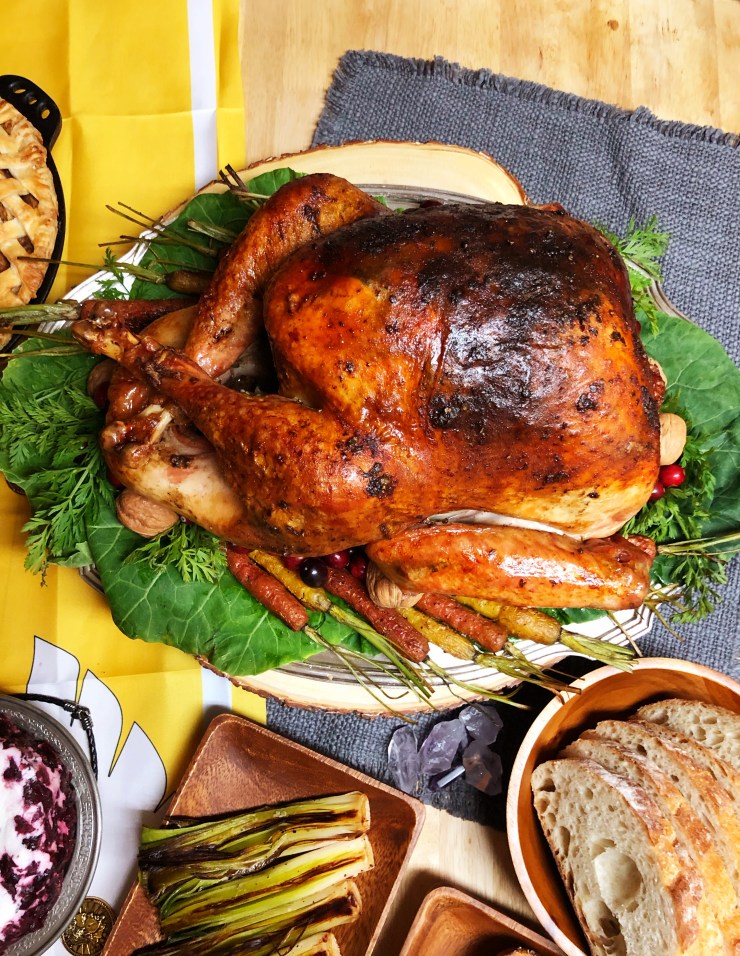
Remove the turkey from the oven and set aside, loosely tenting with foil. Allow the turkey to rest at least 30 minutes before carving to allow the juices to settle. The herb butter may cause some dark spots on the breasts of the turkey, but it is only a visual imperfection, the turkey is not burned and will still taste delicious.

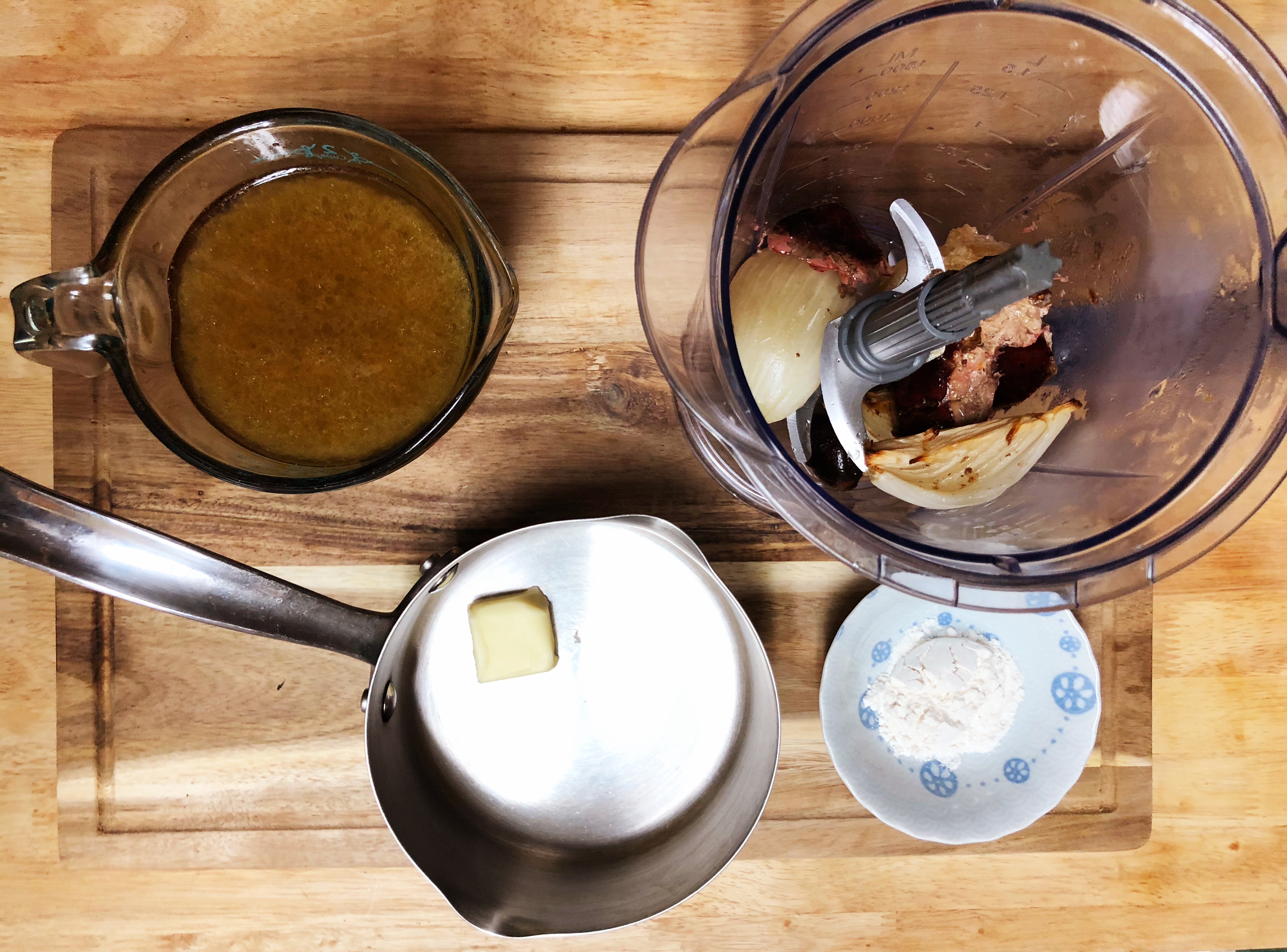
Now it is time to prepare the gravy while the turkey rests. You’ll need two cups of drippings from the pan (if you don’t have quite enough you can top it up with chicken stock), the roasted giblets and onions from the pan, two tablespoons of butter, and two tablespoons of flour. Blend the giblets and onions until they resemble a fine paste, if your blender struggles to blend them, pour about half a cup of the drippings from the pan into the blender. I save the roasted turkey neck to add to the stockpot along with the rest of the carcass after dinner (you do not want to miss out on the stock from this recipe) but if you don’t plan on making stock the meat from the neck can be added to the blender too.

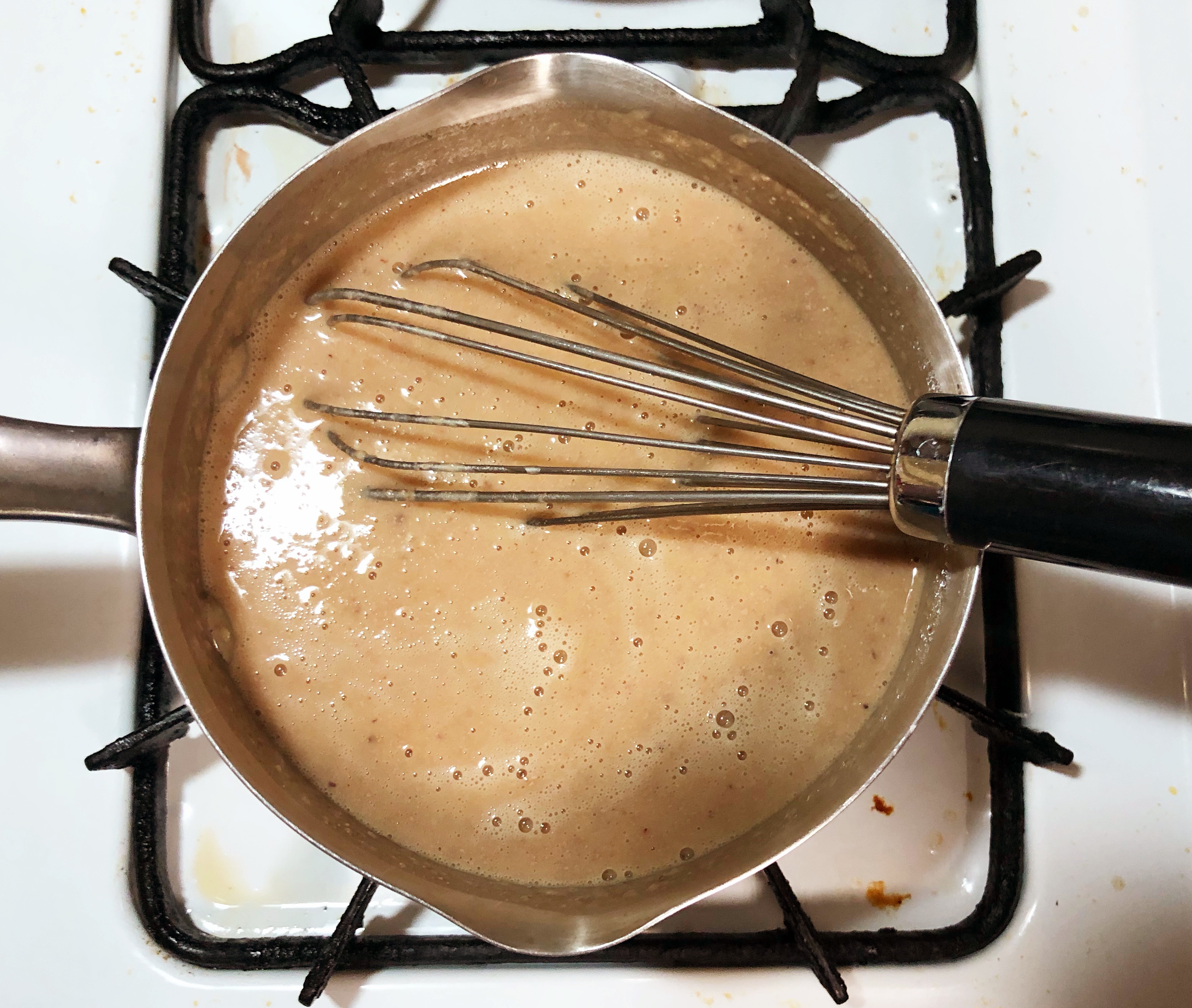
Next is the roux. Melt the butter over medium-low heat in a small pot and add the flour when it has melted. Stir continuously with a rubber spatula or wooden spoon for about one minute to cook off the raw flour flavor, taking care not to burn the butter. Add in the turkey drippings a little as a time, switching from the spatula to a whisk when the consistency becomes more liquid than solid, and continue whisking until you have added all of the drippings. Heat the gravy until just under boiling, and pour in the giblet mixture from your blender, whisking continuously as you add. Continue to simmer the gravy until it has reached the desired consistency. Salt and pepper to taste.

Note: I can feel the more squeamish of my readers balking at the use of the giblets, but hang in there: this will be one of the most rich and delicious gravies you will ever have the pleasure of eating. Our morning after Thanksgiving tradition has long been leftovers Loco Moco using gravy made from this technique.

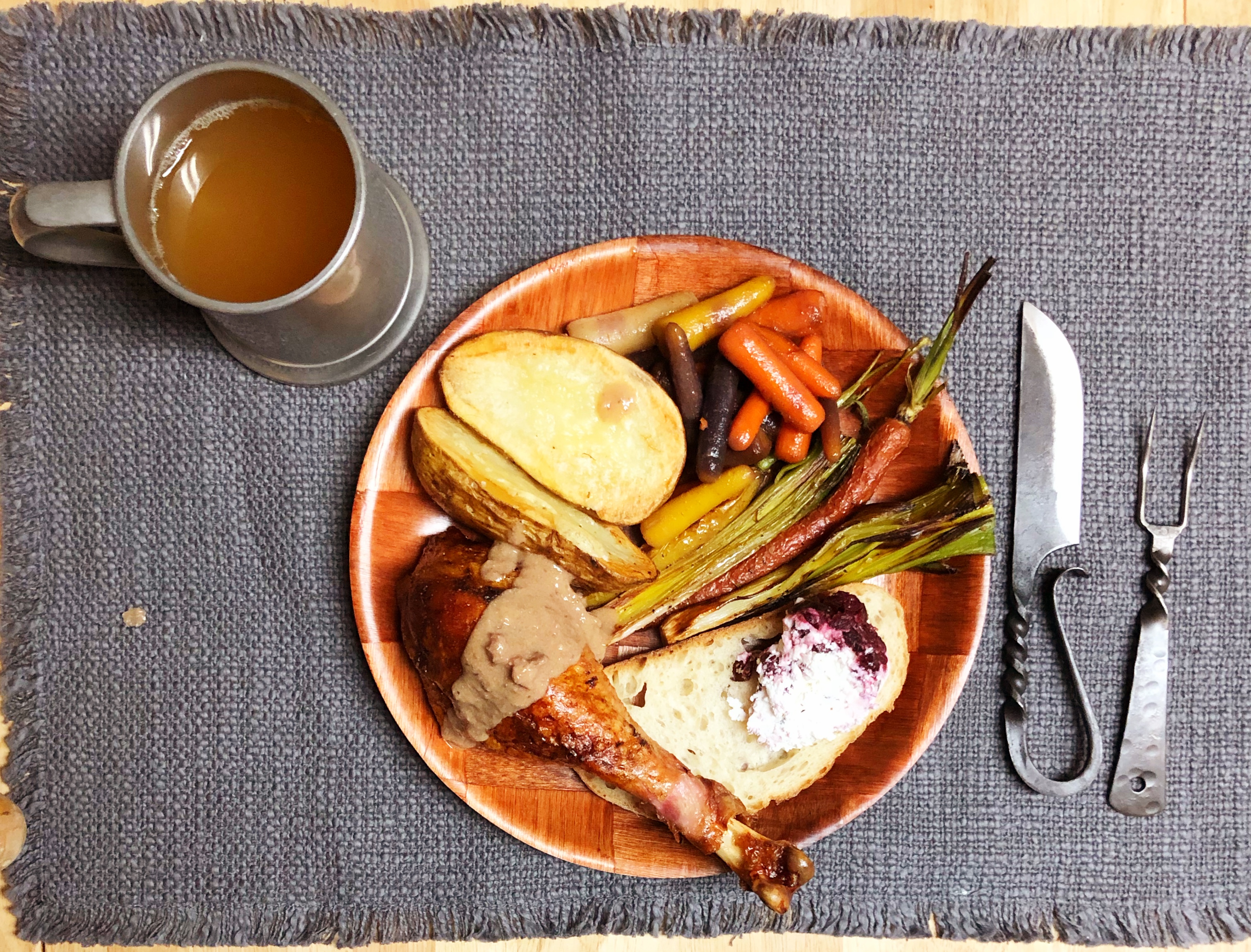
After your gravy has reached the desired consistency, your turkey should be ready to carve and serve! Serve with your favorite sides, or some Skyrim inspired ones (we used several from the Elder Scrolls cookbook, along with homemade cranberry chevre, and enough homemade metheglin to drown a horse.)

Please note that Amazon links provided are affiliate links.

Colovian Roast Turkey

  • Servings: 6-8
  • Difficulty: Medium
  • Print

A roast turkey recipe inspired by the flavors of the Colovian Estate.


Ingredients

-1 14-15lb Turkey

-2 Ribs of Celery

-2 Large Carrots

-3 Medium Onions

-12 Cloves of Garlic

-Greens of Two Leeks

-1/2 Cup Sundried Tomatoes

-1 stick plus 2 tbs Salted Butter at Room Temperature

-1 tsp Grains of Paradise

-1/2 tsp Ground Ginger

-1 tsp Coriander

-1 tsp Savory

-1/2 tsp White Pepper

-1 tsp Fresh Minched Thyme

-1 tbsp Fresh Minced Marjoram

-2 tbsp All Purpose Flour

-Salt and Pepper to taste


Directions

  1. Gather your ingredients. Preheat oven to 350 degrees Fahrenheit.
  2. Grind grains of paradise with a mortar and pestle. Further soften butter by mashing it in a small mixing bowl with a fork. Add grains of paradise, ginger, coriander, savory, white pepper, thyme, and marjoram to the butter and combine thoroughly with the fork.
  3. Remove giblets and neck from the cavities of the turkey. Carefully work your hands under the skin over the breasts, starting at the bottom and working to the top to gently separate the skin without tearing it. Using a handful at a time, work the herb butter under the skin, repeating as necessary until all but 1 and 1/2 tablespoons has been used. Use the remaining herb butter to smother all over the turkey. Generously salt and pepper the turkey and then set aside on the roasting rack.
  4. Cut carrots into 1 inch chunks, celery and leek greens into 2 inch pieces, and peel onions and cut into quarters. Add carrots, celery, and all but 1 1/4 piece of onion to the roasting pan, along with giblets and neck. Add two cups of water to roasting pan and place rack above it with the turkey.
  5. Stuff the turkey, first with the garlic cloves, then sundried tomatoes, then leek greens, and finally the remaining onion quarter. Tie legs with kitchen twice to block stuffing from coming out. Tuck the wings under the turkey gently, or cover wingtips with tinfoil.
  6. Loosely tent the turkey with tinfoil at roast at 350 degrees for one hour, then begin basting the turkey and the giblets every thirty minutes until an instant read thermometer inserted into the thickest part of the thigh reads 125 degrees, about three hours.
  7. Raise temperature to 400 and continue to roast the turkey, basting every twenty minutes until an instant read thermometer inserted into the thickest part of the thigh reads 165 degrees, about 45-60 more minutes. Remove turkey from the oven and allow to rest, loosely tented with tinfoil, for at least thirty minutes.
  8. Prepare gravy: Measure out two cups of drippings from the pan. Add caramelized onions and giblets to a blender and blend until they have a pasty consistency, supplementing with turkey drippings if necessary. Melt 2 tbsp butter in a small pot and add 2 tbsp flour. Cook the roux for about one minute taking care not to brown the butter. Add turkey drippings a little at a time while stirring continuously, switch to using a whisk when gravy is more liquid than solid. Heat until just under boiling and add contents of the blender, whisking continuously. Continue to simmer, whisking occasionally until desired consistency is reached. Add salt and pepper to taste.
  9. Carve, serve, and enjoy!

No comments to show.

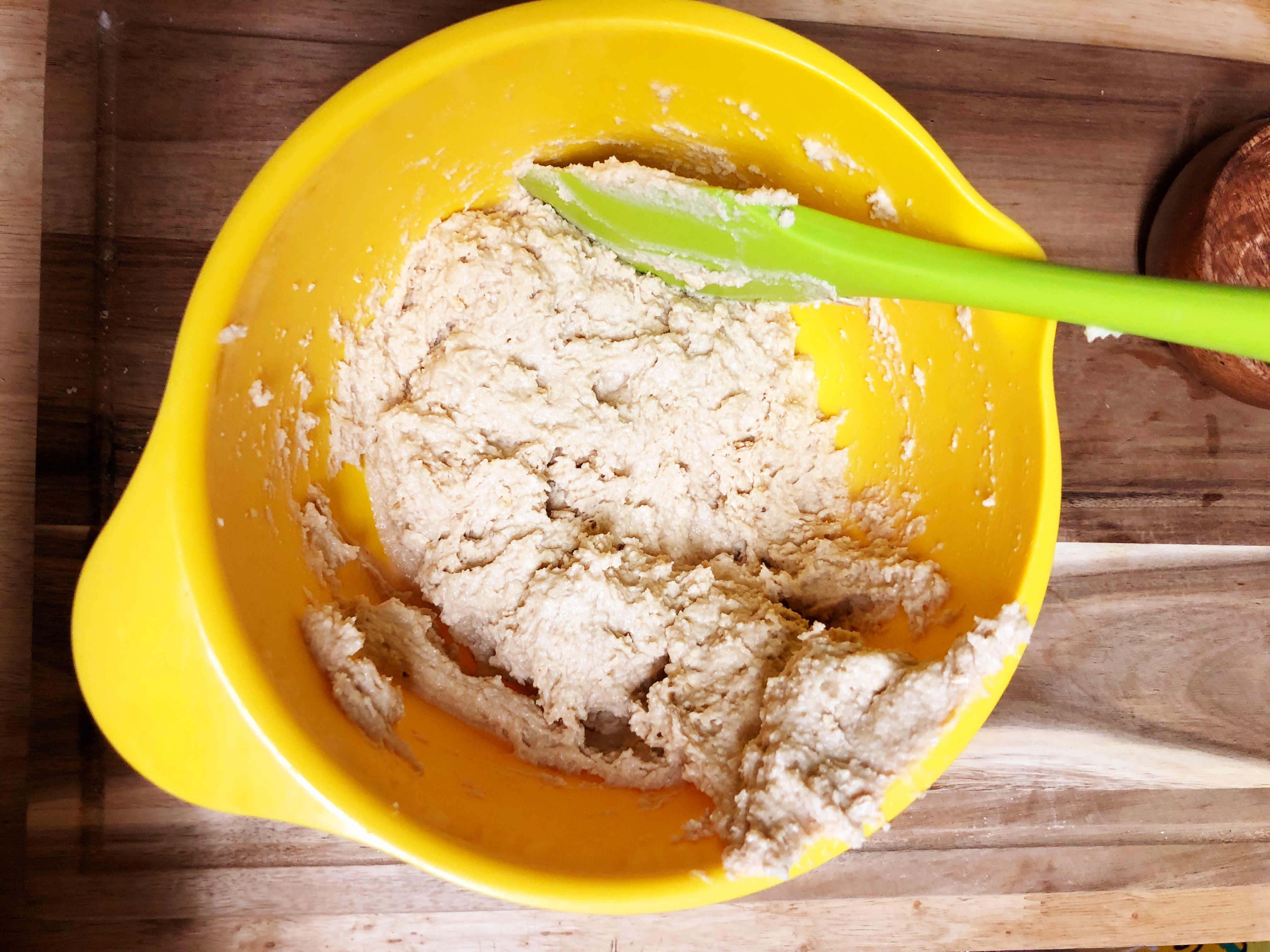
Oat and Honey Scones

“You’ll like Goody Stickle. If I did have a mother one times, then she couldn’t be any nicer than Goody. Wait till you taste her spring vegetable soup, or her oat and honey scones, piping hot and oozing butter, or her apple and blackberry pudding with spices and fresh cream, or just her new yellow cheese with hot oven bread and a stick of fresh celery, aye, and a bowl of milk with nutmeg grated on top of it…”

-Gonff the Mousethief, Mossflower by Brian Jacques, p. 50

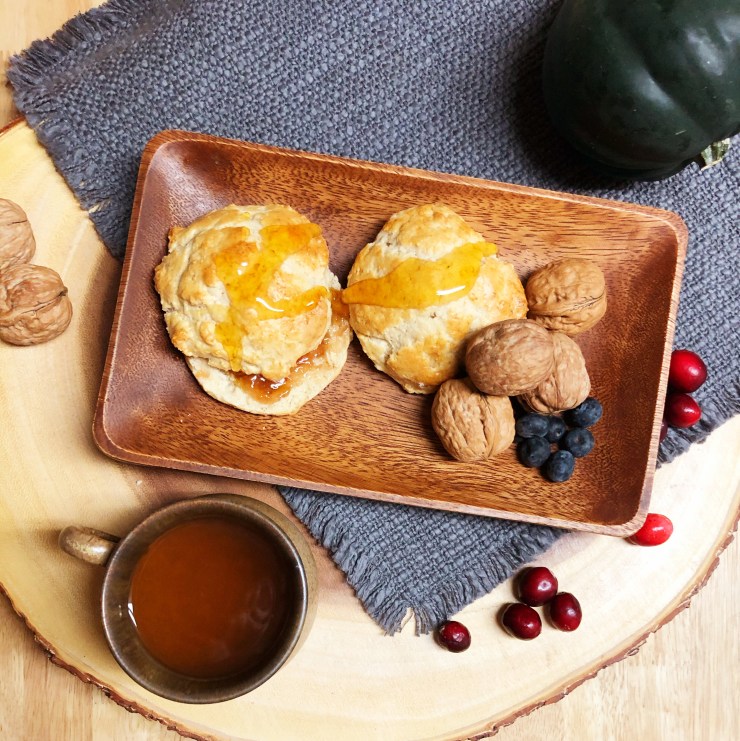
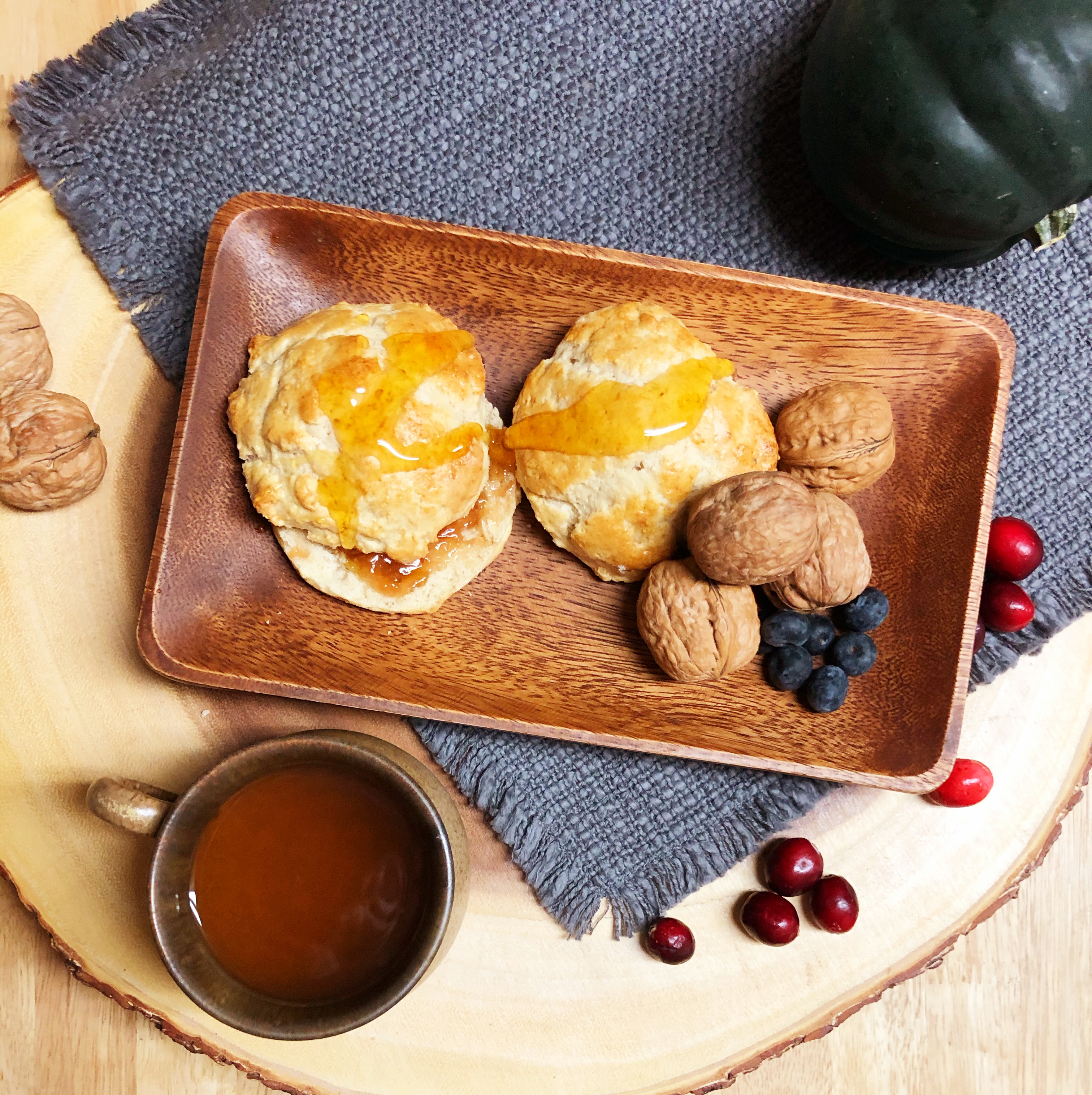
Few things in the world are quite as comforting as warm fresh scones from the oven, drizzled with honey and jam, and cup of hot herbal tea. If you’re looking for a good breakfast scone, a vessel for hot butter and honey, or just something to munch on before bed, then look no further than this recipe. A tad sweeter than Goody Stickle’s Oatfarls, and fluffier from their time in the oven, these scones prove that by tweaking a few ingredients a recipe can have a completely different outcome.

Begin, as always, by assembling your ingredients. For these scones you’ll need 1 cup all purpose flour, 1 cup oat flour, 1/4 cup old fashioned oats, 1 tbsp honey, 4 tsp baking powder, 1/2 tsp coarse kosher salt, 1/4 cup sugar, 6 tbsp unsalted butter at room temperature, 2/3 cup whole milk, and 1 large egg. Preheat the oven to 425 degrees Fahrenheit, and line a baking sheet with parchment paper.

Cube the butter and add it to a food processor along with the flour, oat flour, baking powder, sugar, and salt. Pulse a few times until everything is well blended and has developed a sandy texture. Pour the mixture into a medium-sized mixing bowl.

Add the egg to your pre-measured milk and whisk with a fork until it is well combined. Reserve 2 tablespoons of this mixture for later, and add the rest to the mixing bowl with the butter mixture, followed by the old fashioned oats, and honey. Stir with a rubber spatula or wooden spoon until it becomes too difficult to stir, at which point knead the dough against the sides of the bowl with your hand until it is thoroughly combined. It will be a wet dough, but avoid the temptation to add too much flour to the dough, or else the scones will come out tough and brittle.

Lightly flour your workspace and transfer the dough, kneading it until a soft ball forms. It will still be sticky, but continue to avoid adding too much flour or overkneading. Roll the dough out to one inch thickness, and use a scone or biscuit cutter to cut circles out of the dough. Do not twist as you cut, push down straight or the scones will not rise as high. You should be able to cut about 6-7 scones from the dough, and you can push together the scraps and get another scone or two out of them.

Arrange the scones on your parchment-lined baking sheet about two inches apart, and brush the tops with the reserved milk and egg mixture. Bake the scones for 15 minutes, until both the tops and bottoms are golden brown. Cool on a wire rack for 2-3 minutes, and serve warm with tea and honey or jam.

Oat and Honey Scones

  • Servings: 5-7
  • Difficulty: Easy
  • Print

Sweet and hearty scones to warm even the darkest hearts.


Ingredients

-1 Cup All Purpose Flour

-1 Cup Oat Flour

-1/4 Cup Old Fashioned Oats

-1 Tbsp Honey

-4 tsp Baking Powder

-1/2 tsp Coarse Kosher Salt

-1/4 Cup Sugar

-6 Tbsp Unsalted Butter at Room Temperature

-2/3 Cup Whole Milk

-1 Large Egg


Directions

  1. Gather your ingredients. Preheat oven to 425 Degrees Fahrenheit and line a baking sheet with parchment paper.
  2. Add Oat Flour, All Purpose Flour, Sugar, Baking Powder, Salt, and Cubed Butter to food processor and pulse several times until the mixture has a sandy consistency and is thoroughly combined.
  3. Add egg to pre-measured milk and whisk to combine with a fork. Reserve 2 tbsp of milk and egg mixture in a small bowl, and add the remainder to the butter mixture, along with the honey and old fashioned oats.
  4. Stir to combine first with a spatula, and then with your hands, kneading the dough against the sides of the bowl until all of the ingredients are thoroughly combined.
  5. Lightly flour your workstation and turn out dough onto the lightly floured surface. Knead until a soft ball forms, do not add excess flour.
  6. Roll out the dough to one inch thickness and use a biscuit or scone cutter to cut circles out of the dough. Combine the dough scraps to get one or two more scones.
  7. Arrange the scones on the prepared baking sheet about two inches apart, and brush the tops with the reserved milk and egg mixture.
  8. Bake at 425 Degrees for fifteen minutes, or until both the tops and bottoms are golden brown.
  9. Cool on a wire rack for 2-3 minutes, and serve warm with honey and jam.

No comments to show.